

A Zoopla survey found that 53.8% of UK homebuyers still call a fireplace an important feature. So demand has not died. What people lack is a plan for making one work in a modern room.
That gap is why living room fireplace ideas are everywhere online and why most of them let you down. You get a hundred photos from every interior design feed and zero decisions.
This guide runs the other way. Fireplace living room design works best when layout comes first, because a bad layout ruins even the most expensive stone surround. Then fifteen ideas sorted by style, room size, and budget, each with the reason it works and one move to get the look. And the numbers, the distances, and the clearances nobody else prints, all in one table below.
- Layout First: How to Design a Living Room With a Fireplace
- 15 Living Room Fireplace Ideas Worth Copying
- Fireplace Wall Ideas That Pull the Whole Room Together
- How to Decorate a Fireplace, From Mantel to Hearth
- Gas, Electric, or Wood? How to Choose Your Fireplace
- Living Room Fireplace Ideas Gone Wrong: 5 Mistakes to Avoid
- Your Fireplace Questions, Answered
- The One Rule Behind Every Great Fireplace Living Room
Layout First: How to Design a Living Room With a Fireplace
Before you save a single mantel photo, answer one question. What actually happens in this room? If the honest answer is movie nights, and the space works harder as a family room than a formal living room, the TV leads the design. If it is slow evenings and long conversations, the fireplace leads. Every choice that follows depends on that answer, and most people skip the question entirely.
The fireplace is the room’s natural focal point, and designers keep repeating the same line about it. The chimneypiece anchors everything. Furniture, materials, and even the rug size tend to key off it. Treat your fireplace as the organizing decision, and the rest of the room gets simpler. Treat it as wall decoration, and the room never quite lands.
There is a measuring side to this too. It is the part big listicles never print, so here it is in one place.
| Distance | What to aim for |
|---|---|
| Firebox to main sofa | 8 to 10 feet |
| Walking path in front of seating | 36 inches minimum |
| Top of mantel shelf | 54 to 60 inches from the floor |
| TV above a gas or wood unit | 40 to 60 cm of heat clearance, about 16 to 24 inches |
| Electric fireplace to sofa or curtains | 3 feet |
Who Wins the Room, Fireplace First or TV First?
Both answers can be right. If your household lives in front of a screen, let the TV take the main wall and style the fireplace as a warm accent beside it. Designers do exactly this in theater style rooms. If the fire is the point, face the seating toward it and move the screen where it stops competing.
Small rooms usually force a truce. A media wall, with the fire set into the same wall as the TV, is that truce done well.
Furniture Arrangement: Distances and Walkways That Work
Think of this as space planning rather than decorating. The best living room furniture ideas with a fireplace start with sofa position, not sofa style.
The most common mistake I see is also the most understandable. You push the sofa against the far wall to make the room feel bigger, and suddenly everyone sits twelve feet from the fire. That kills the point of having one. Pull the seating into a proper conversation zone instead, keep the main walking path at least three feet wide, and angle two chairs toward the sofa so the fire stays in view from every seat. If a sectional owns the room, run its long side parallel to the fireplace wall rather than boxing the fire in. In an open floor plan, let the fireplace define the living zone and keep traffic behind the seating rather than through it. Narrow living room ideas with a fireplace almost always start the same way: pull the seating into a square conversation zone partway down the room instead of lining every piece along the long walls.
And skip the perfect mirror image. Designers keep saying forced symmetry is the most overrated idea in fireplace layouts. One swivel chair off to the side does more for a room than a matched pair ever will.
TV Above the Fireplace? Check These Numbers First
Can you put a TV above a fireplace? Sometimes, yes. Heat comes first. A wood-burning or gas unit pushes warm air straight up, and most setups need 40 to 60 cm of clearance before a screen is safe, so read both manuals before you drill anything. Viewing height is the second problem, and nobody talks about it. A screen mounted over a mantel often sits too high, and your neck notices within one movie. This is why almost every comfortable media wall you have seen runs on an electric fireplace. The heat is gentle, controllable, and kind to electronics.
15 Living Room Fireplace Ideas Worth Copying
Every fireplace idea for a living room photo list tells you what is popular. Almost none tell you why it works. Each one below does both.
Clean and Modern, Ideas 1 to 4
Modern does not mean cold. These four keep the minimal look livable.
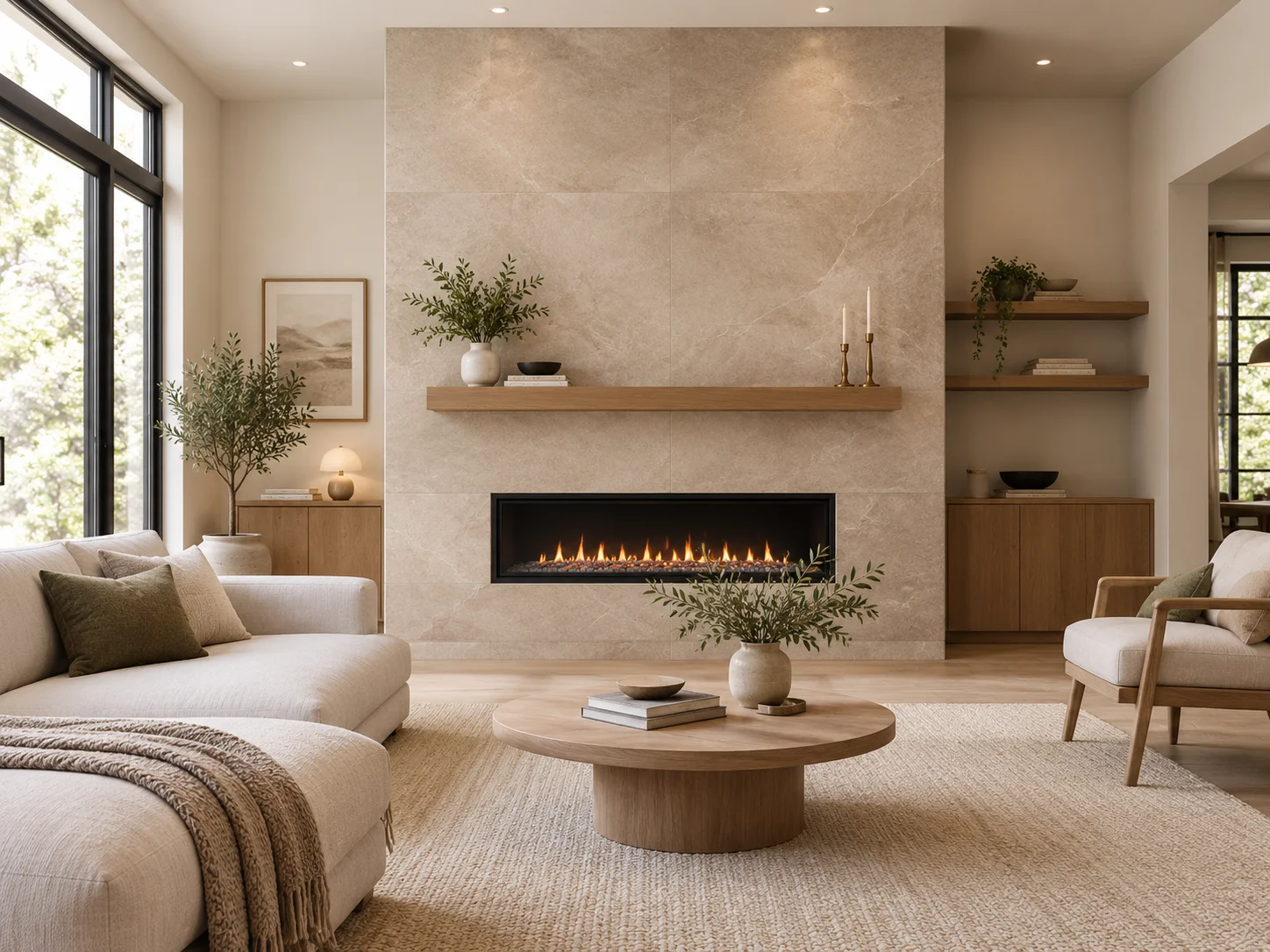
1. Tile the whole wall, floor to ceiling. Full-height tile is the fireplace wall move of the moment, and it works because one material covers a whole wall without a single seam to interrupt it. Large-format porcelain gives you the stone look for less money and less upkeep.
2. Go long with a linear fireplace. A wide, low gas ribbon suits low modern furniture and makes an open-plan room read even wider. If your saved photos share one ancestor, it is this modern fireplace design.
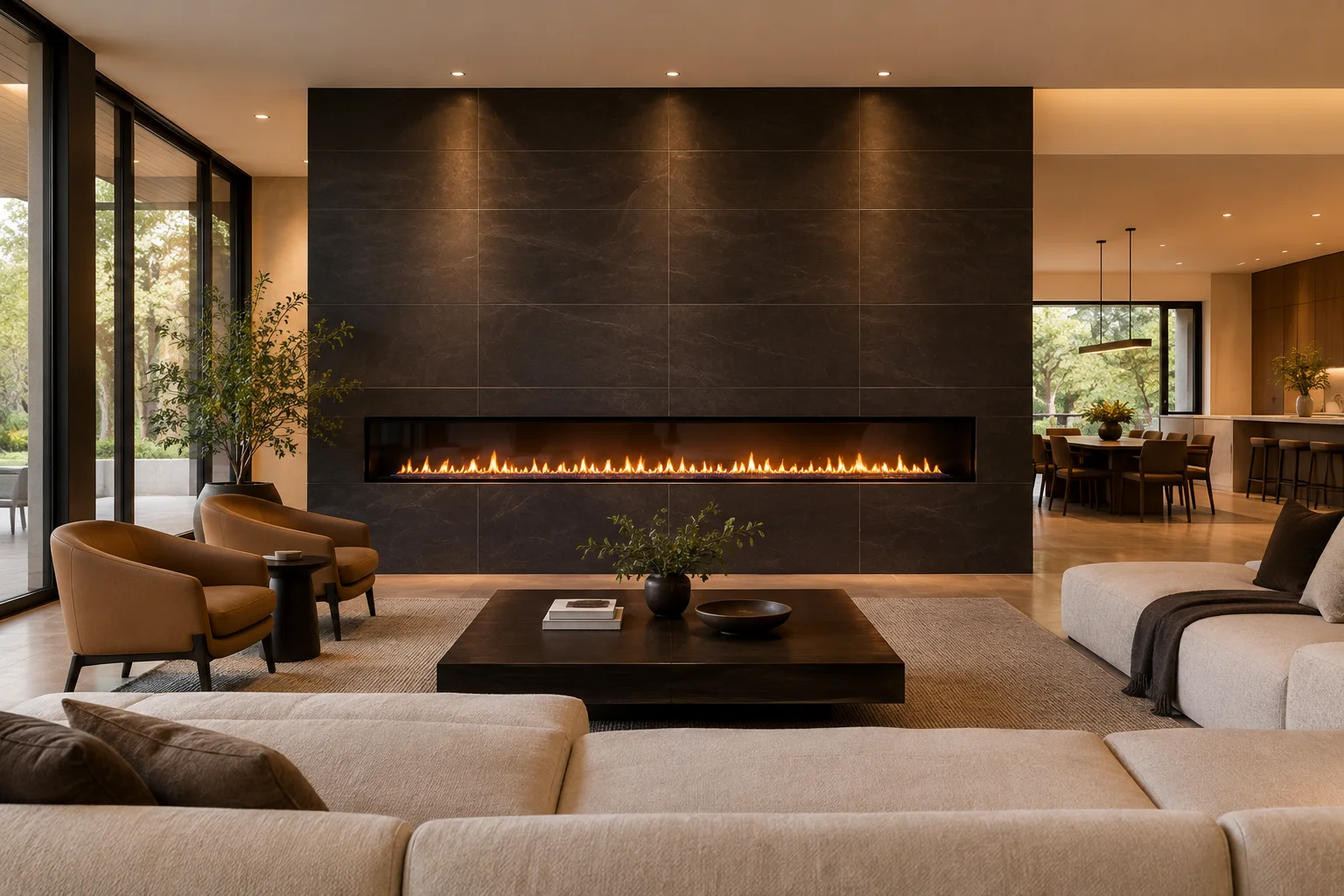
3. Mix two materials, no more. Black steel edged with warm wood, or marble framed in concrete, adds depth a single material cannot. Two materials look intentional. Three look like a showroom sale.

4. Try flush plaster for a sculptural look. A plaster or microcement surround with no trim turns the fireplace into quiet architecture. It is also the cheapest minimalist fireplace idea on this list, because plain plaster costs a fraction of cut stone.

Warm and Rustic, Ideas 5 to 8
Rustic rooms feel warm because of texture, not clutter.
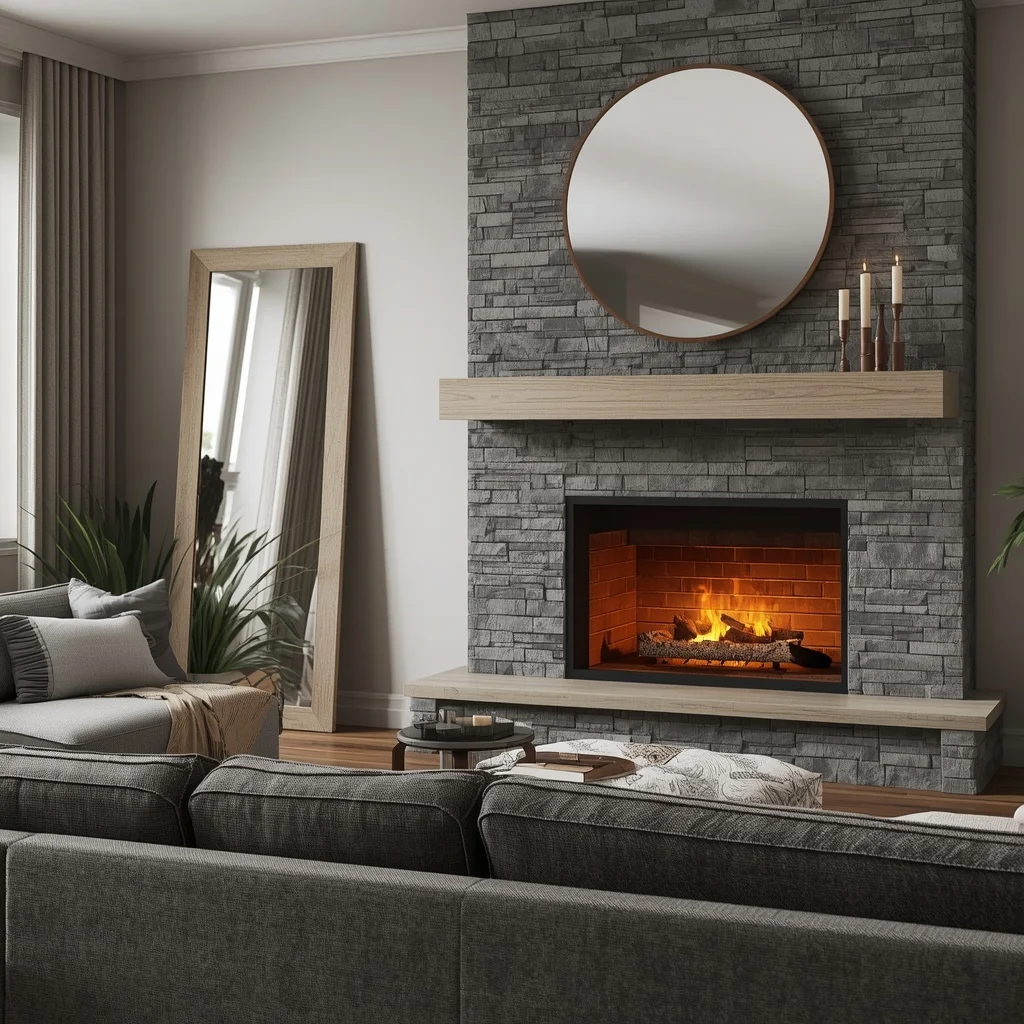
5. Stack stone for real warmth. A stone fireplace in rough, stacked pieces adds the weight modern rooms lose, and a thick wood mantel completes it. Of all stone fireplace living room ideas, this one ages the best, because the material only looks better worn. Keep the surround in proportion, though, since heavy stone eats a small wall alive.

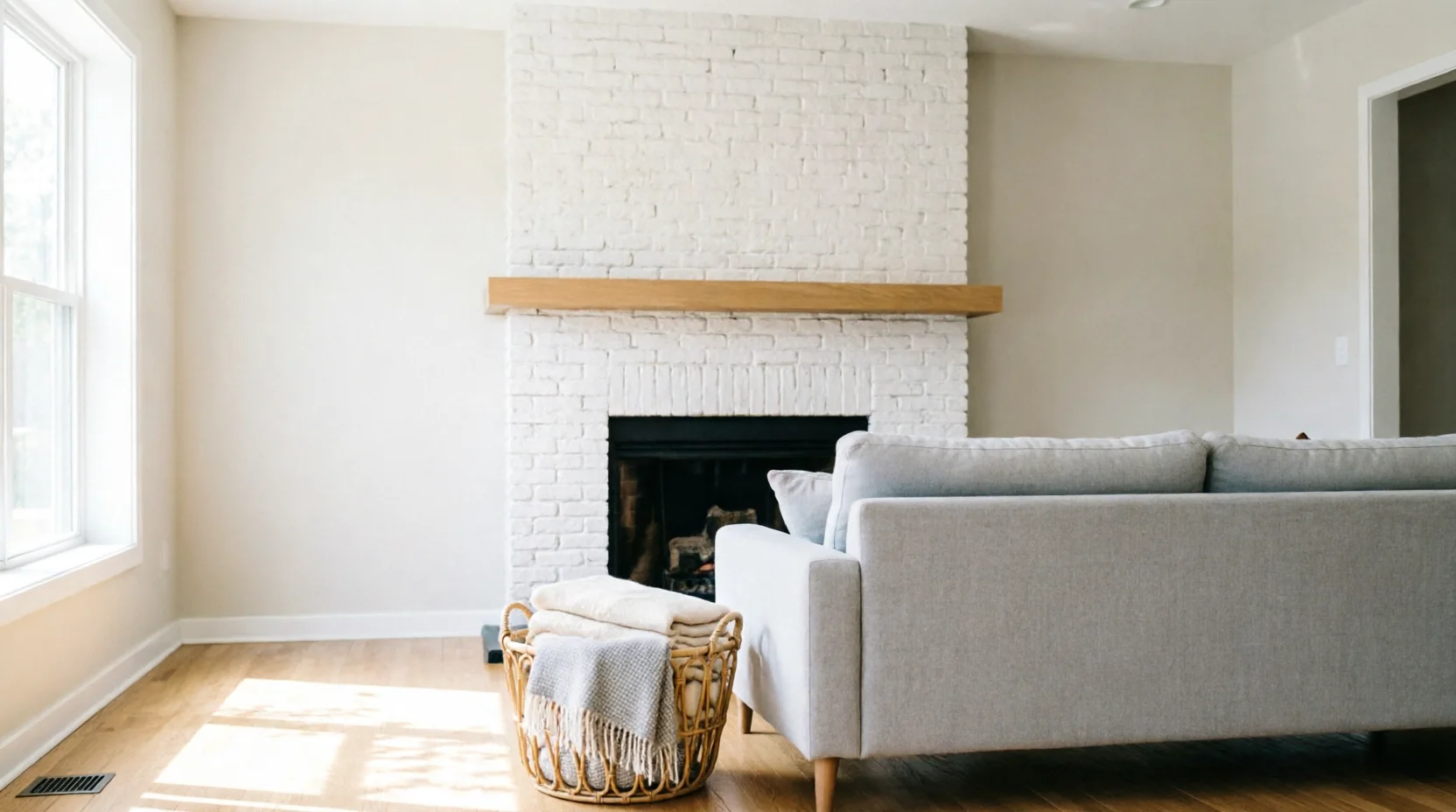
6. Paint the brick you already have. Nothing transforms a dated red brick fireplace faster than two coats of white or warm gray. Of all the living room fireplace paint ideas out there, this one is the safest bet, because it is a weekend project, it costs almost nothing, and the brick character stays right where it was.
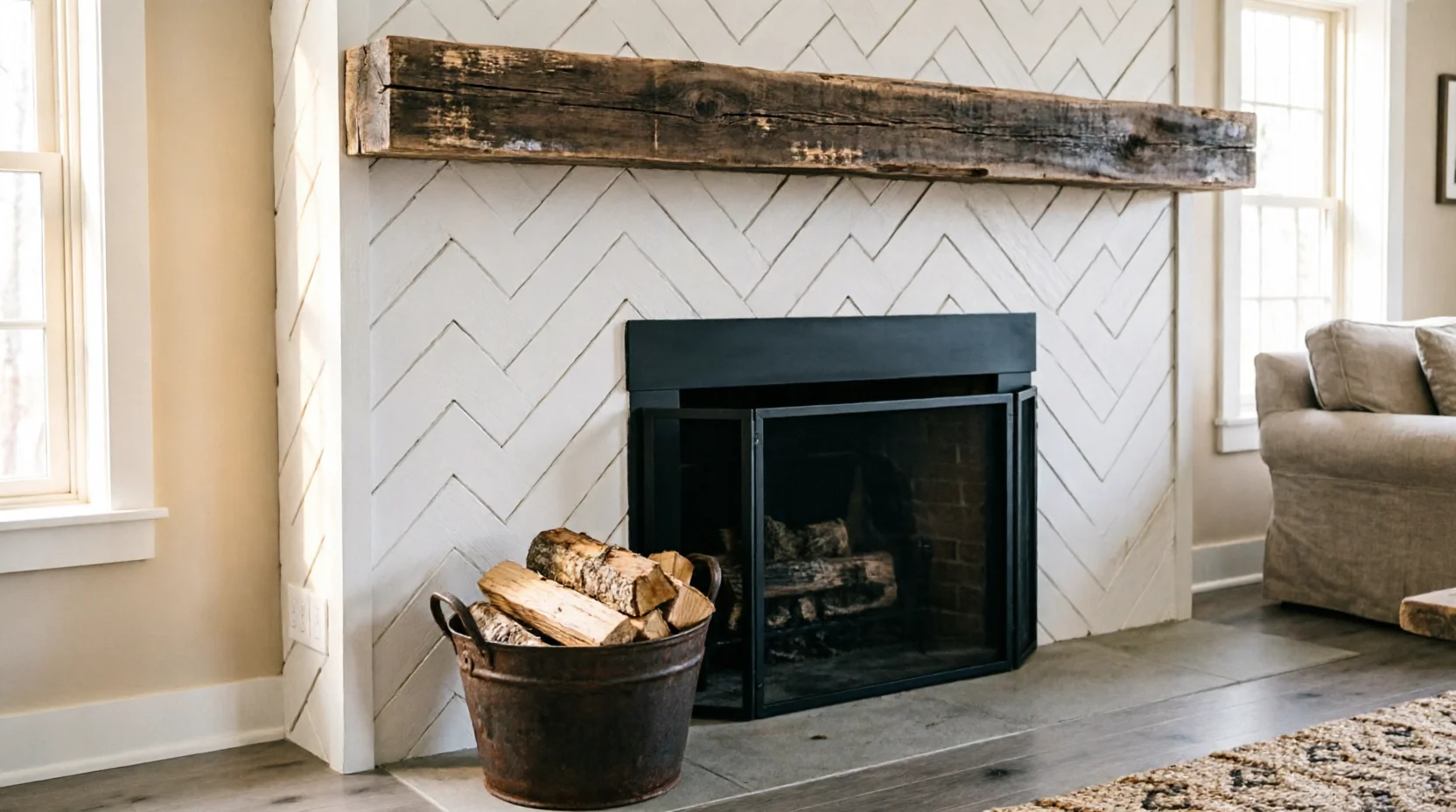
7. Shiplap in farmhouse style. A shiplap fireplace wall with a chunky reclaimed mantel nails the farmhouse look without touching the room’s bones. A black screen and a log basket finish the picture.
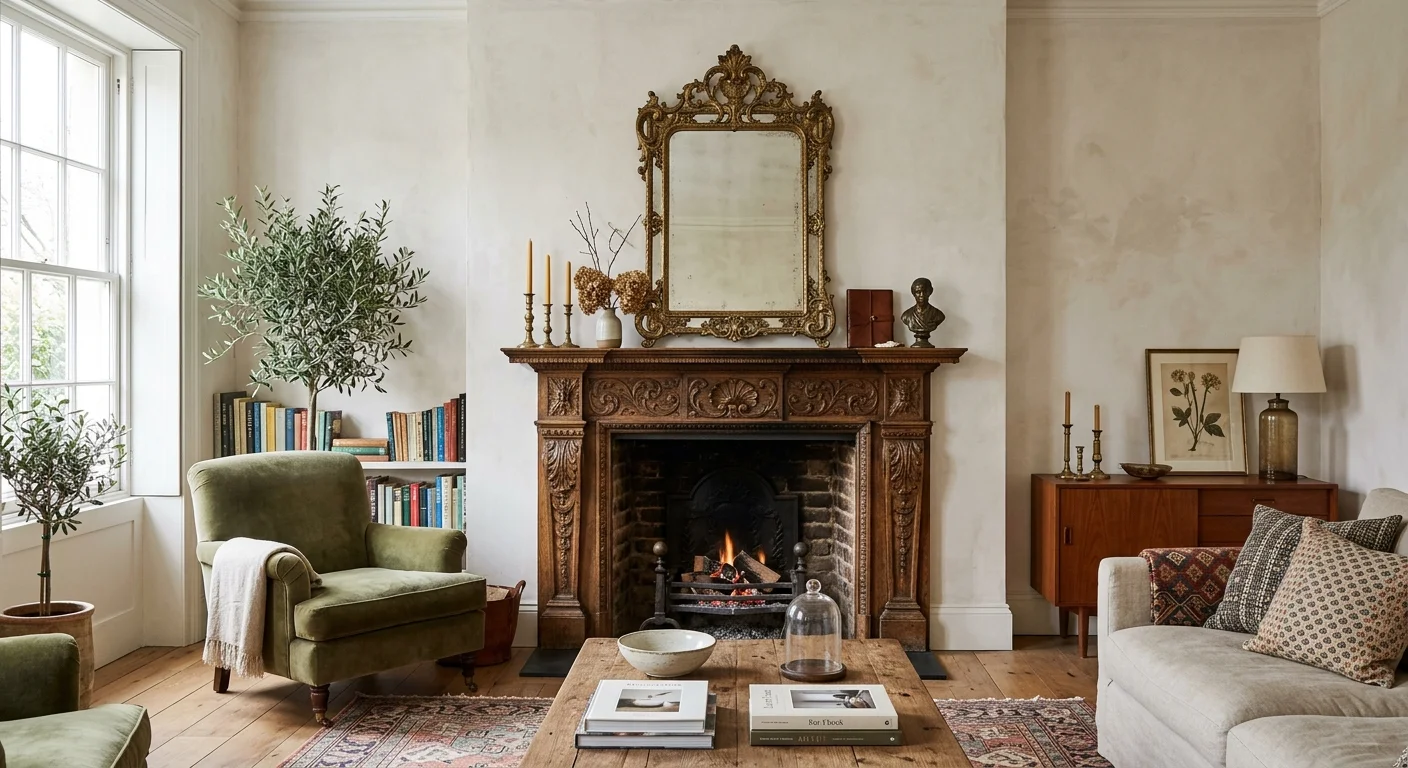
8. Hunt one vintage piece. A salvaged mantel, an antique mirror, or a beam with old tool marks gives a new build a history it cannot buy new. Pair it with plain walls so the piece does the talking.
Small and Awkward Rooms, Ideas 9 to 12
Small does not mean skip the fireplace. These four prove it.
9. Own the corner. A corner fireplace living room layout frees your main wall for furniture and turns an awkward angle into the best seat in the house. Angle two chairs into the corner and the dead space becomes the cozy spot.
10. Choose a slim built-in insert. Modern gas inserts run as shallow as 12 to 16 inches deep, and electric units are thinner again. Built-in models beat freestanding ones in small rooms every time because they become part of the wall instead of an obstacle in it.
11. Follow the one-third rule. A fireplace should occupy roughly one third to one half of its wall width. Bigger is not better, and oversized fireplaces are the number one mistake in small living room layouts.
| Wall width | One third | One half |
|---|---|---|
| 10 ft | 40 inches | 60 inches |
| 12 ft | 48 inches | 72 inches |
| 14 ft | 56 inches | 84 inches |

12. Use a pale surround to borrow light. Light stone, cream paint, or a whitewashed finish bounces window light around a small room, and that single choice shows up in almost every small living room idea with a fireplace that actually works. A dark surround does the opposite, and in a north-facing room you feel the difference within a week.

Double Duty and Statement Pieces, Ideas 13 to 15
One bold move can carry an entire room.
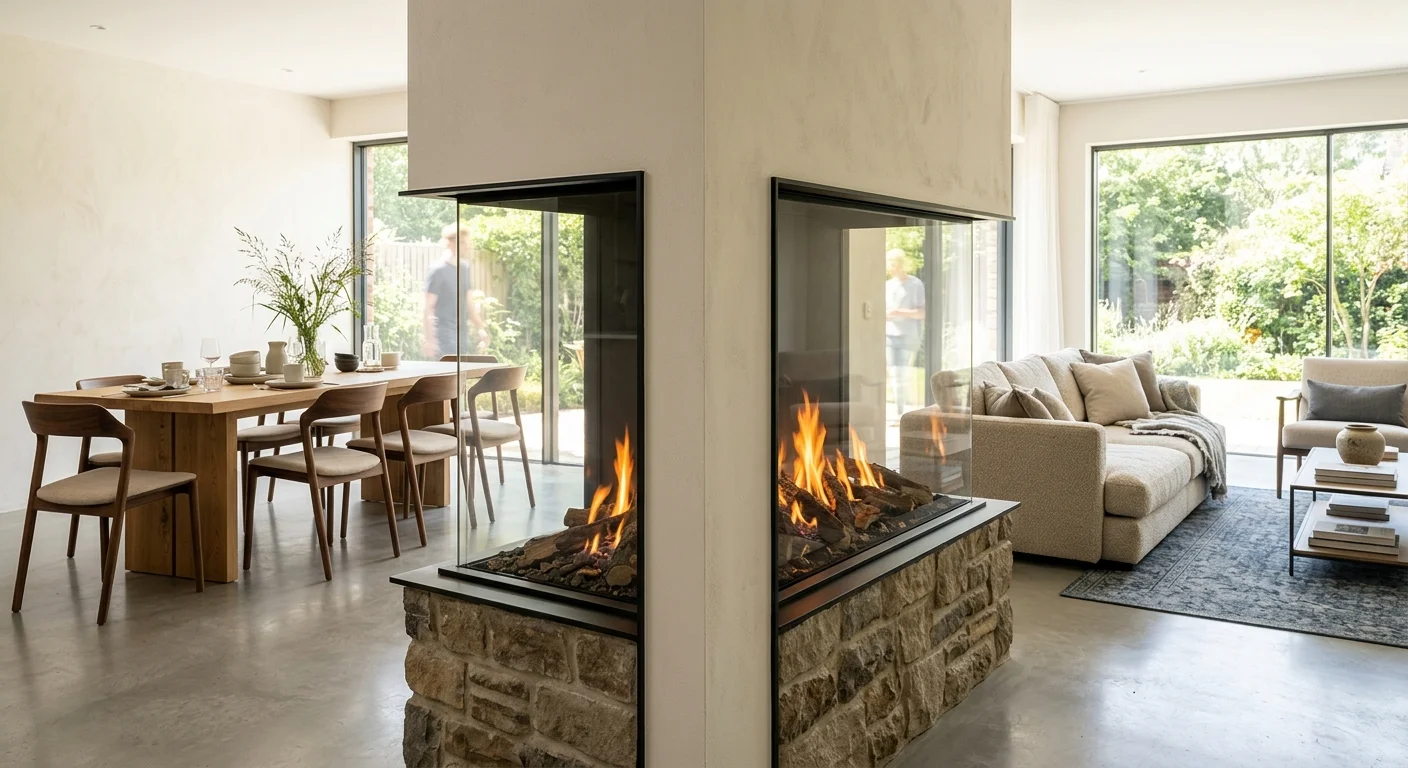
13. Divide an open plan with a double-sided fireplace. A see-through unit separates the living and dining zones without stealing light from either side. Of all living room ideas with a fireplace, this might be the most practical for open-plan homes.

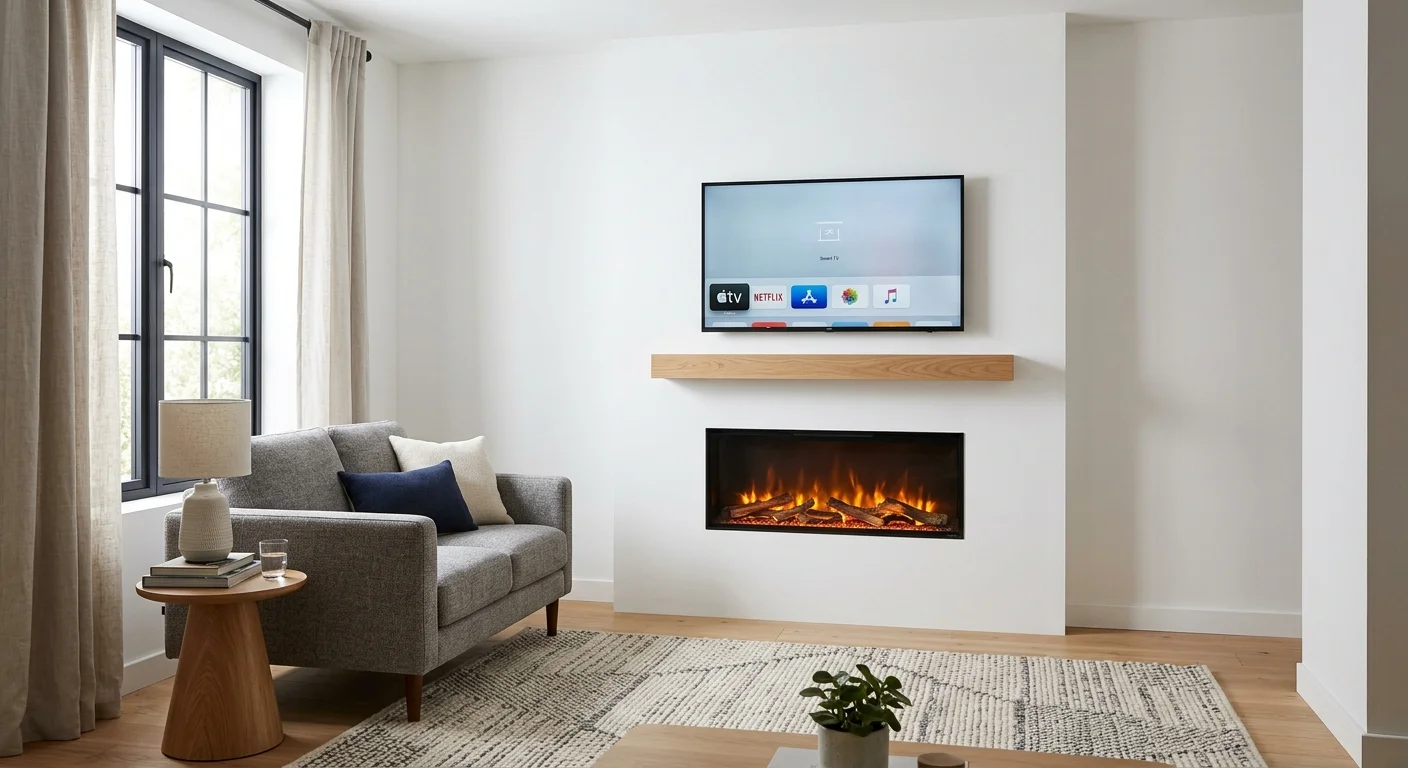
14. Build a media wall around an electric fire. Modern electric flames have gotten genuinely convincing, and app control means the fire is on before you pull into the driveway. Screen, shelving, and fire share one wall, which is exactly what a small room wants, and it is the reason electric fireplace ideas with a TV above keep beating every other media wall search.
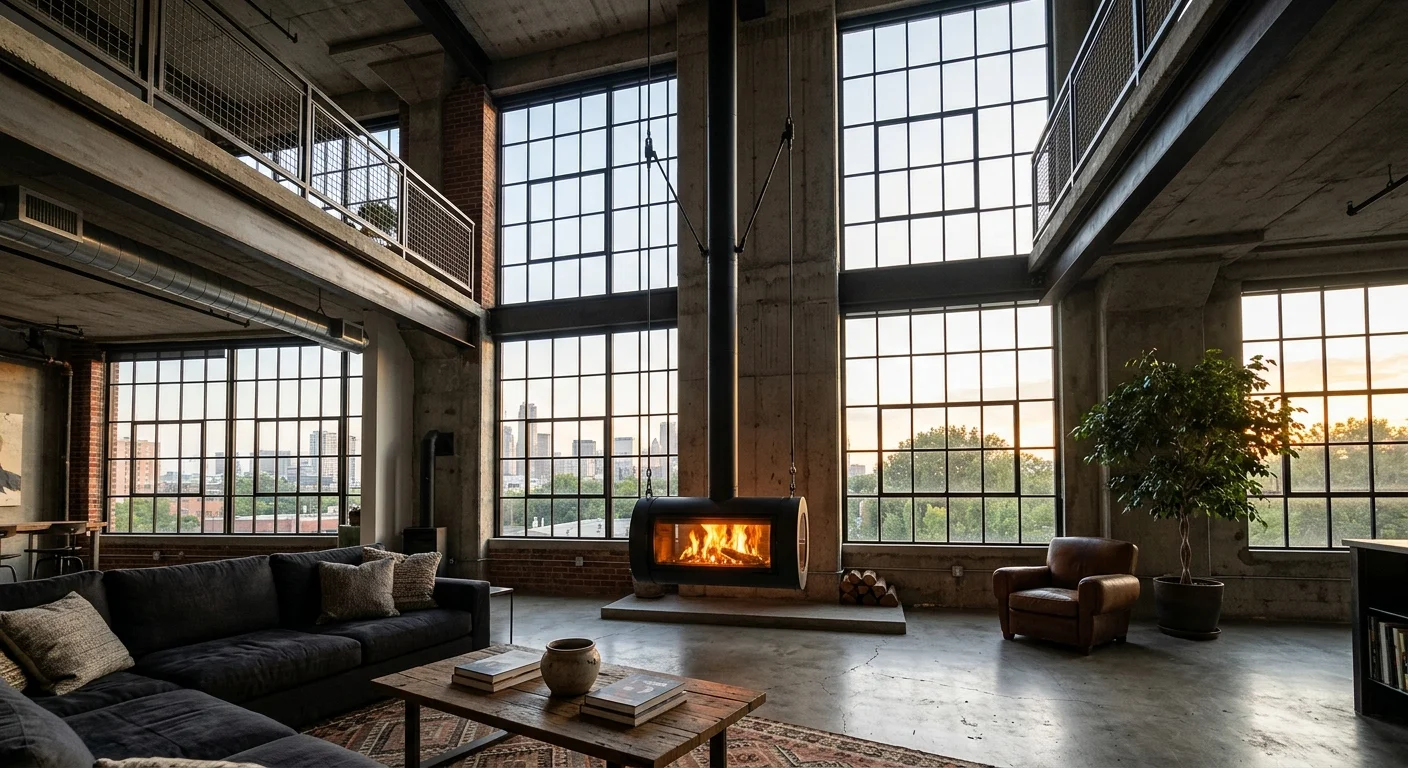
15. Hang a statement piece if the room can carry it. Suspended and rotating fireplaces sit at the expensive end of this list, and they need ceiling height and confidence. In the right loft or double-height space, nothing else comes close.
Fireplace Wall Ideas That Pull the Whole Room Together
The wall around the fire is half the design, and it usually gets half the budget. Flip that. The surround is what you see when the fire is off, which in most homes is most of the year.
Pick the material by how you live, not just how it photographs. Natural stone suits rooms that want weight and permanence. Large-format porcelain or ceramic tile gives a similar look with easier cleaning and a friendlier price. Marble reads classic the moment it goes in. Shiplap brings cottage warmth and takes new paint well when you redecorate. Concrete or limewash keeps things soft and modern. And plain paint in a deep color is still the fastest fireplace wall idea there is, especially as an accent wall in a neutral room.
Then decide what happens on either side of the firebox. Matched built in shelving on both sides looks formal and settled. Asymmetry, floating shelves on one side and a reading chair on the other, looks looser and lives better. I land on asymmetric more often than not, and so do most designers I read.

One warning that costs real money to ignore. A heavy surround next to big windows can swallow the room’s natural light, so in a dim room keep the fireplace wall slim and pale. And whatever material you choose, confirm it is rated for the heat of your fireplace type before it goes on.
How to Decorate a Fireplace, From Mantel to Hearth
Most mantels fail in one of two directions. They hold nothing but a TV remote, or they drown under eleven small objects nobody can name. The fix is a layering method I use every time.
Start with one anchor. A mirror or a single large piece of art, leaning against the wall rather than hanging. Leaning looks relaxed and saves you from drilling into brick. Add two or three taller pieces beside it, candlesticks or vases, with heights that step up and down. Finish with something alive, greenery, dried stems, or a bowl of seasonal things. Three layers, odd numbers, done. Fireplace decorations rotate with the seasons in that last layer while the anchor stays put.
Height matters before styling does. Most mantels sit 54 to 60 inches from the floor, and a wood mantel should clear the firebox opening by at least 12 inches. Keep candles and anything flammable out of the heat zone, and if small children or pets share the room, a fireplace screen earns its place on the hearth.
The hearth itself wants one thing, not five. A log basket, a pair of fire tools, and stop.
If you want fireplace mantel decor ideas that never fail, photograph the mantel before you shop. The photo shows you exactly which layer is missing.
And an empty or decorative fireplace? Cluster pillar candles at different heights inside the firebox, stack birch logs, or tuck a basket of blankets in for summer. An unused fireplace is storage with potential, not a problem.
Gas, Electric, or Wood? How to Choose Your Fireplace
Most people start with the living room fireplace design ideas they have saved, then discover their home cannot support half of them. Fuel comes first. Style gets the attention, but the fuel decision shapes your budget, your walls, and your winters.
| Fireplace type | Heat | Install needs | Typical project cost | Best for |
|---|---|---|---|---|
| Electric | Gentle, zone heating | Wall outlet only | Roughly $350 to $5,500 | Apartments, media walls, small rooms |
| Gas | Strongest, suits big rooms | Direct vent or venting | $2,500 to $6,000 | Large and open plan living rooms |
| Wood burning | Real flame, high heat | Working chimney or stove install | $4,000 to $15,000 for a full build | Renovations that already have a chimney |
Electric is the easiest entry by a wide margin. An electric fireplace needs no chimney, no gas line, and no venting, which means apartments and condos can have one too. Trade cost guides put simple installs in the hundreds of dollars and full custom media walls in the low thousands. Most people buy electric units at big box home improvement stores, fireplace showrooms, or online, and the smart move is measuring the wall first, because widths vary more than product listings admit. Choosing a smart fireplace comes down to three checks before price: app control quality, thermostat accuracy, and whether the flame effect runs with the heat off, which you will want on summer evenings. The heat is real, but best suited to taking the chill off a room rather than heating a house.
Gas is the middle path with the strongest flame. A direct vent unit throws serious heat into large or open plan living rooms, and installation usually lands between $2,500 and $6,000 because venting is involved. What separates top rated gas fireplace installs in the US market right now is rarely the brand. It is the venting plan and how well the unit size matches the room. Modern gas inserts now come as slim as 12 to 16 inches deep, built for compact walls.
Wood burning is the full experience, crackle and smell and all, and it carries the most responsibility. Chimney sweeping, code checks, and real maintenance come with it. A freestanding wood stove is its own path, often cheaper and sometimes better for an extension, but it changes the room’s focal geometry. Already own a working chimney? An electric or gas fireplace insert drops straight into the existing firebox, which turns an old wood burner into a low maintenance unit without any rebuild.
One honest note on the numbers. Every figure above shifts with your walls, your region, and your local trades, so treat them as a budget ladder rather than quotes. The expensive mistake is picking a unit for its looks and discovering your infrastructure disagrees. Pick the fuel first. The surround can change in a weekend later. The fuel cannot.
Living Room Fireplace Ideas Gone Wrong: 5 Mistakes to Avoid
Most fireplace regrets fall into two piles. Measurement failures, where the numbers were skipped, and isolation failures, where the fireplace never joined the rest of the room. Here are the five I see most often, with the fix for each.
1. Forcing perfect symmetry. Designers name this the most common fireplace layout mistake, ahead of furniture and sizing. Mirror image chairs feel correct in theory and stiff in practice. Break the pair with one offset chair or a swivel.
2. Buying bigger than the wall. An oversized fireplace makes a small room feel tighter, not grander. Run the one third rule before you fall in love with a unit. On a 10 foot wall, that means nothing wider than about 48 inches.
3. Squeezing the walkways. Chairs packed against the surround mean you move furniture every time you load the fire or open a door. Keep 36 inches of clear path in front of seating and real access to the firebox.
4. Mounting a TV on hope. Skip the manual check and you risk cooked electronics and a sore neck in the same week. Clearance first, drill second.
5. Treating the fireplace as a lonely showpiece. A bold surround, a random rug, and decor with no connection to how the room gets used. Designers call this the most frequent error they see, and the room ends up looking decorated rather than designed. Design from the fireplace outward and the whole space agrees with itself.
Your Fireplace Questions, Answered
How do you style a living room with a fireplace?
Let the fireplace lead. Place the main seating 8 to 10 feet from the fire, keep walking paths at least 36 inches wide, and layer the mantel in threes, an anchor piece, tall accents, and something seasonal. The fireplace works as the organizing point of the room, not one decoration among many.
What are the fireplace design trends for 2026?
Full height tile that runs floor to ceiling, linear gas ribbons, mixed materials like black steel with stone or wood, and smart electric fires controlled by app. Suspended and rotating fireplaces are the emerging statement trend. The overall direction is clean lines with warm, honest materials.
What is a fireplace in a living room called?
The full unit is a fireplace, and its parts have names. The firebox is the opening, the hearth is the floor area in front of and around it, the mantel is the shelf above, and the surround is the material framing the sides. Knowing the words makes shopping and searching far easier.
Can you put a TV above a fireplace?
Sometimes. Keep 40 to 60 cm of heat clearance above a gas or wood unit, check both appliance manuals, and mind the viewing height, since mantel mounted screens often sit too high. Electric fireplaces are the safest bet for a TV above the fire.
What is the best fireplace for a small living room?
A slim built in unit, electric or gas. Electric needs no chimney or venting, and some gas inserts run just 12 to 16 inches deep. Follow the one third rule so the fireplace fills a third to a half of the wall width, and no more.
Do electric fireplaces really heat a room?
Yes, modern ones do. They will not replace central heating in a large house, but they comfortably warm a small living room or one zone of an open plan space, and they cost far less to run and install than gas.
What can you put in an empty fireplace?
Pillar candles at mixed heights, a neat stack of birch logs, a basket of blankets, or a potted plant. All of these turn a non working firebox into a feature instead of a hole.
Where should a fireplace be placed in a living room?
On the wall you see first when walking in, centered on its longest clear stretch, directly facing the main seating. In open plan rooms, a fireplace works best placed to divide two zones, and in square rooms a center fireplace with seating wrapped around it is the classic answer.
The One Rule Behind Every Great Fireplace Living Room
Every great fireplace room I have ever walked into does the same thing. It starts at the fireplace and works outward. Furniture distance, wall material, mantel styling, even the rug, all of it follows the first decision instead of fighting it.
So run the sequence. Measure the layout, pick one of the fifteen ideas that fits your walls and budget, dress the wall, then style the mantel last.
That is the whole method behind the best living room fireplace ideas, including the ones your neighbors will copy from you. Tape measure first, paint swatches second, fuel type somewhere in between. That order rarely fails.

Pingback: Ranch Style House Interior Design: Modern Ideas That Work
Pingback: Interior Design Styles Explained: 12 Smart Choices
Pingback: Contemporary Interior Design: What It Is and How to Use It
Pingback: Home Interior Design for Small Homes: 10 Simple Smart Ideas
Pingback: Modern Decorating with Antiques: Simple Tips That Work
Pingback: Neutral Color Palette Interior Design: 7 Simple Room Combos
Pingback: Best Materials for Industrial House Interiors: 12 Picks