
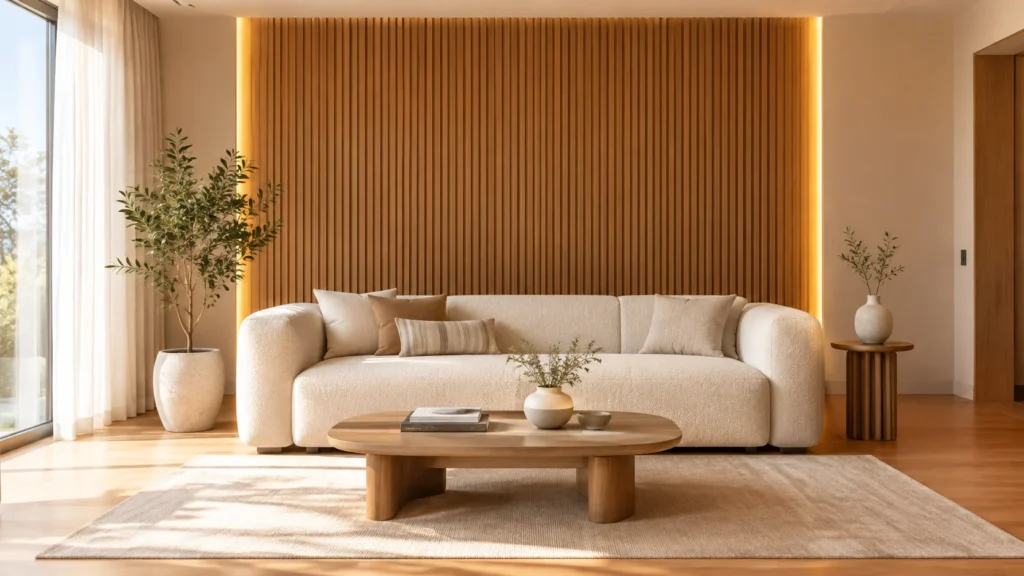

An accent wall is one wall finished differently from the rest of the room in color, texture, pattern, or material so the eye has a place to land. The best ideas for accent walls in living room spaces fall into four groups: paint, wallpaper, wood, and stone. Paint is the cheapest and fastest. Wallpaper and wood add texture at a moderate cost. Stone and custom millwork make the biggest statement and usually need a professional.
Below are 18 ideas sorted by material, each with its best use, difficulty, and time. If you want the short version, start with the quick-pick table.
In This Guide
- Quick-pick table: all 18 ideas at a glance
- Accent wall vs. feature wall
- How to choose the right wall
- Paint accent wall ideas for living room (Ideas 1-6)
- Wallpaper and peel-and-stick ideas (Ideas 7-10)
- Wood accent wall ideas (Ideas 11-14)
- Brick, stone, and statement walls (Ideas 15-18)
- Fireplace and electrical safety
- What an accent wall costs
- Renting: what is safe to stick on the wall
- Mistakes that ruin an accent wall
- Are accent walls still in style in 2026?
- Lighting and styling
- FAQ
Quick-Pick Table: Accent Wall Ideas at a Glance
| Idea | Best for | Cost level | DIY difficulty | Time | Renter-friendly |
|---|---|---|---|---|---|
| Dark paint (charcoal, navy, emerald) | Rooms with good daylight | Low | Easy | 1 day | Only with landlord approval |
| Painter’s tape stripes or color blocks | First-time DIYers | Low | Easy | 1 day | Only with landlord approval |
| Lime wash or plaster-look paint | Warm, earthy rooms | Medium | Medium | 1 weekend | No |
| Peel-and-stick wallpaper | Renters, short-term changes | Medium | Easy | 1 afternoon | Yes, on smooth, fully cured walls |
| Grasscloth or textured wallpaper | Cozy rooms, TV walls | Medium to high | Medium | 1 day | No |
| Fluted or slat panels | Modern sofa or TV wall | Medium | Medium | 1 weekend | No |
| Shiplap | Farmhouse or warm modern rooms | Medium | Medium | 1 weekend | No |
| Board-and-batten or picture-frame molding | Classic, traditional rooms | Medium | Medium | 1 weekend | No |
| Brick veneer or whitewashed brick | Industrial style, dark rooms | Medium to high | Medium to hard | 1-2 days | No |
| Stacked stone or marble-look slabs | Fireplace wall, luxury look | High | Hard (hire a pro) | 2+ days | No |
| 3D wall panels | Statement media wall | Medium to high | Medium | 1 weekend | No |
| Faux green wall or mural | Low-light rooms | Medium | Easy | 1 day | Partly |
Accent Wall vs. Feature Wall
“Accent wall” is the common US term, and “feature wall” is more common in the UK, Australia, and many other markets. They describe the same idea: one wall that gets special treatment. Some designers use “accent” for color-based walls and “feature” for walls built from materials such as panels or stone, but in everyday use you can treat them as the same thing, and every idea below works for both.
How to Choose the Right Wall
The most common accent wall mistake is a wall problem, not a paint problem. If the wrong wall gets the treatment, even a perfect finish will not help. Choose the wall first, then the look.

The Sight Line Test
Stand in the doorway you use most. The first wall your eyes land on is usually the one worth treating. Often that wall holds the fireplace or the TV. Walls broken up by doors and windows rarely work, because the pattern gets chopped into pieces. Stick to one wall: two accent walls compete, and the room feels busy.
A common trap is painting the wall that is easiest to reach, such as the one behind the sofa, instead of the wall you actually see. If you rearrange the furniture later, the effect disappears.
Accent Wall Behind the TV: What to Plan First
The TV wall is a strong candidate because your eyes already go there. Screens, however, create glare and cable clutter, and both can undercut a good finish. Before you commit, plan cord hiding and lighting. If a desk or monitor shares the wall, our guide to computer desk in living room ideas covers cable and glare planning. The safest choices behind a TV are matte paint, grasscloth, fluted panels, and board-and-batten, because they do not reflect light.
No Fireplace? Use the Sofa Wall or the Longest Wall.
If your living room has no fireplace or TV focal point, choose the longest uninterrupted wall the seating faces. With a sectional, that wall runs even longer and carries more visual weight, so the treatment matters more. Our guide to living rooms with sectionals shows how large seating changes the layout. Setting up the seating so it frames the wall instead of blocking it is covered in our living room furniture set-up guide.
Small Living Rooms
A small room does not rule out a dark or bold wall. Placement matters more than size. A dark color on the far short wall can pull the room forward and add depth. Vertical lines and light-reflecting finishes make a tight room feel taller. Test both ideas with samples in your own room before buying anything.
Paint Accent Wall Ideas for Living Room: 6 Weekend Projects
Paint is the best starting point if you want a fast, low-cost accent wall. It is easy to change later, and most of these ideas fit inside a weekend.
Two practical notes before you start. First, finish matters. Matte hides wall flaws and suits low-traffic walls, eggshell is slightly wipeable and works for most living rooms, and satin handles more wear but shows imperfections. Second, if indoor air quality matters to you, look for low-VOC or zero-VOC paint, which gives off fewer fumes while it dries. Always follow the can’s instructions for primer and drying times.
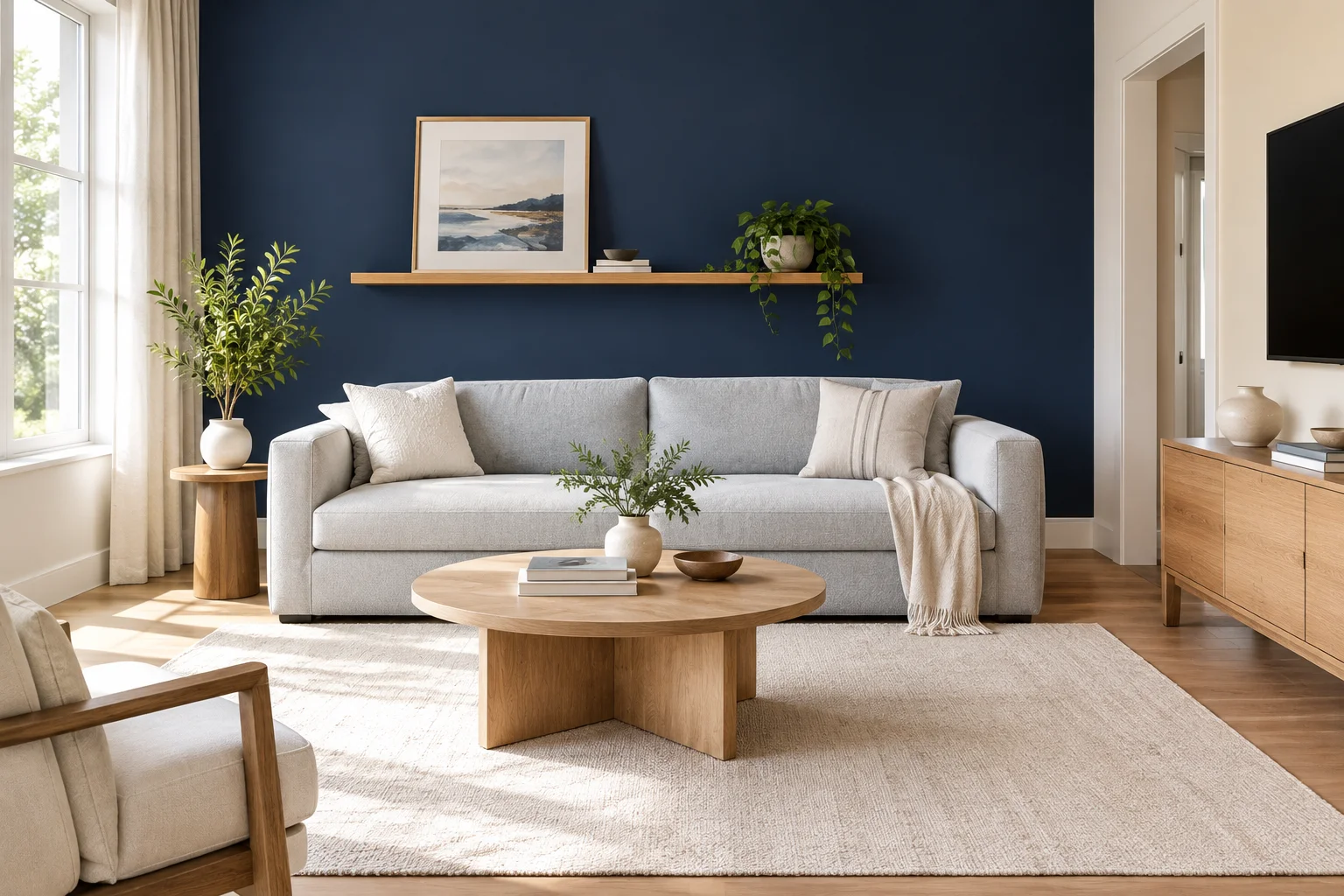
Idea 1: Moody and Dark (Charcoal, Navy, Emerald, or Black)
A deep charcoal or navy behind the sofa makes a seating area feel intimate and defined. Emerald green works well when the room already has warm wood or brass. A black accent wall in a living room looks dramatic, but it needs good lighting and a few lighter surfaces nearby so it does not swallow the room. These tones look best in rooms with decent daylight, because evening light makes them moodier.
Idea 2: Yellow or Terracotta for a Warmer Room
Warm colors add energy. A sunny yellow is the brightest option, and terracotta is a quieter, earthier version. The catch is the undertone: yellow shifts with the light in your room. Paint a large sample on the wall and check it for two full days, morning and evening, before buying a full can.
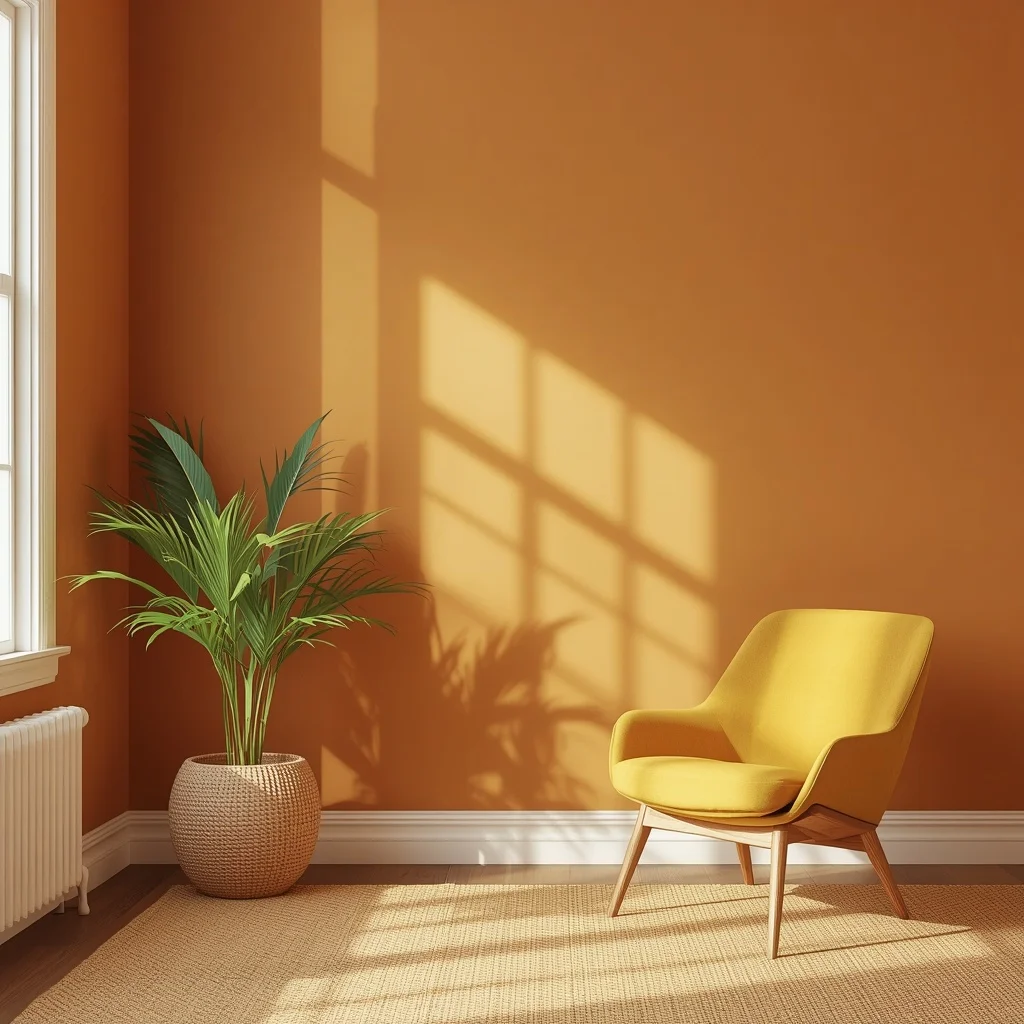
Best for: north-facing or dull rooms. Difficulty: easy. Time: 1 day.
Idea 3: Painter’s Tape Stripes and Chevrons
Stripes, chevrons, and clean color blocks need only tape and one extra color. To stop paint bleeding under the tape, seal the tape edge with a thin coat of your base wall color first, then apply the accent color. Remove the tape while the top coat is still slightly tacky for sharp lines.
Best for: first-time DIYers. Difficulty: easy to medium. Time: 1 day.

Idea 4: Two-Tone Diagonals and Color Blocking
A diagonal split across the wall, or one large color block behind the sofa, looks current and deliberate. Terracotta with soft clay is a popular pairing because it feels considered without feeling loud.
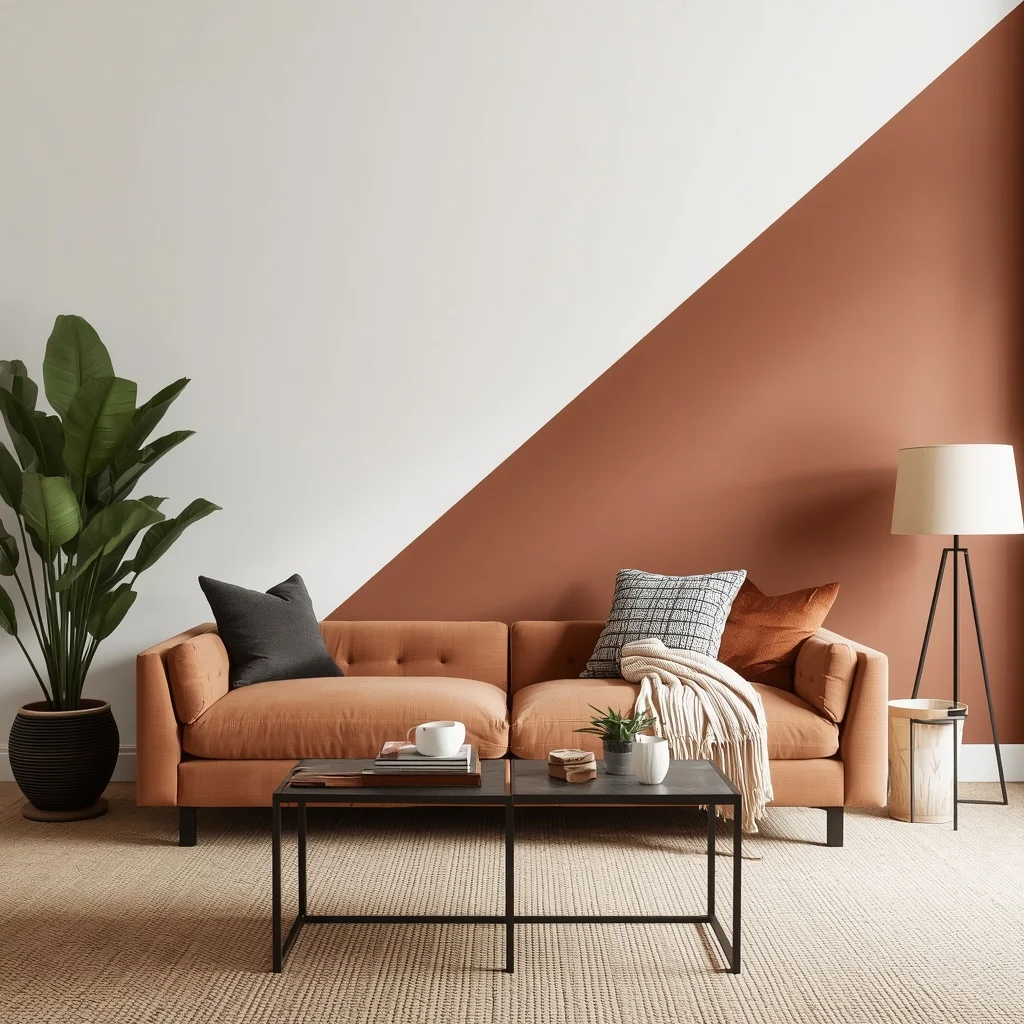
Best for: modern rooms. Difficulty: medium (taping accuracy matters). Time: 1 day.
Idea 5: Lime Wash and Matte Plaster Finishes
Lime wash is a mineral-based paint that dries with soft, cloudy variation, so the wall looks different as daylight changes. It is applied with a wide brush in crisscross strokes, and the slight imperfection is the look, which makes it forgiving for DIY. Glossy or previously painted walls usually need a compatible primer, so check the product label.

Best for: rooms with large windows and earthy palettes. Difficulty: easy to medium. Time: 1 weekend.
Idea 6: The Soft Gradient Wall
A gradient that fades from deep umber at the bottom to a lighter tone at the top grounds a room without a hard line. It suits media walls where a solid dark block would feel heavy. Blend with a dry brush while both colors are still wet, and practice on a board first.

Best for: media walls and calm, modern rooms. Difficulty: medium. Time: 1 day.
Sample first. Colors on a screen or under store lighting look different at home. Paint a sample patch on the actual wall and check it morning and night.
Wallpaper and Peel-and-Stick: 4 Accent Wall Ideas
Wallpaper changes the character of a room in one afternoon, with no color matching or drying time. The rule that works: busy wall, quiet furniture.
Idea 7: Oversized Botanical Prints
Large botanical prints bring a garden feeling indoors at wall scale. Keep the sofa and other large pieces neutral so the wall does the talking.
Best for: neutral rooms that need personality. Difficulty: medium. Time: 1 day.

Idea 8: Bold Geometric Wallpaper (Art Deco Style)
Geometric patterns add modern energy, and metallic lines bring a touch of Art Deco glamour that catches evening light. Avoid pairing bold wallpaper with bold everything else: at least one thing in the room should stay calm.
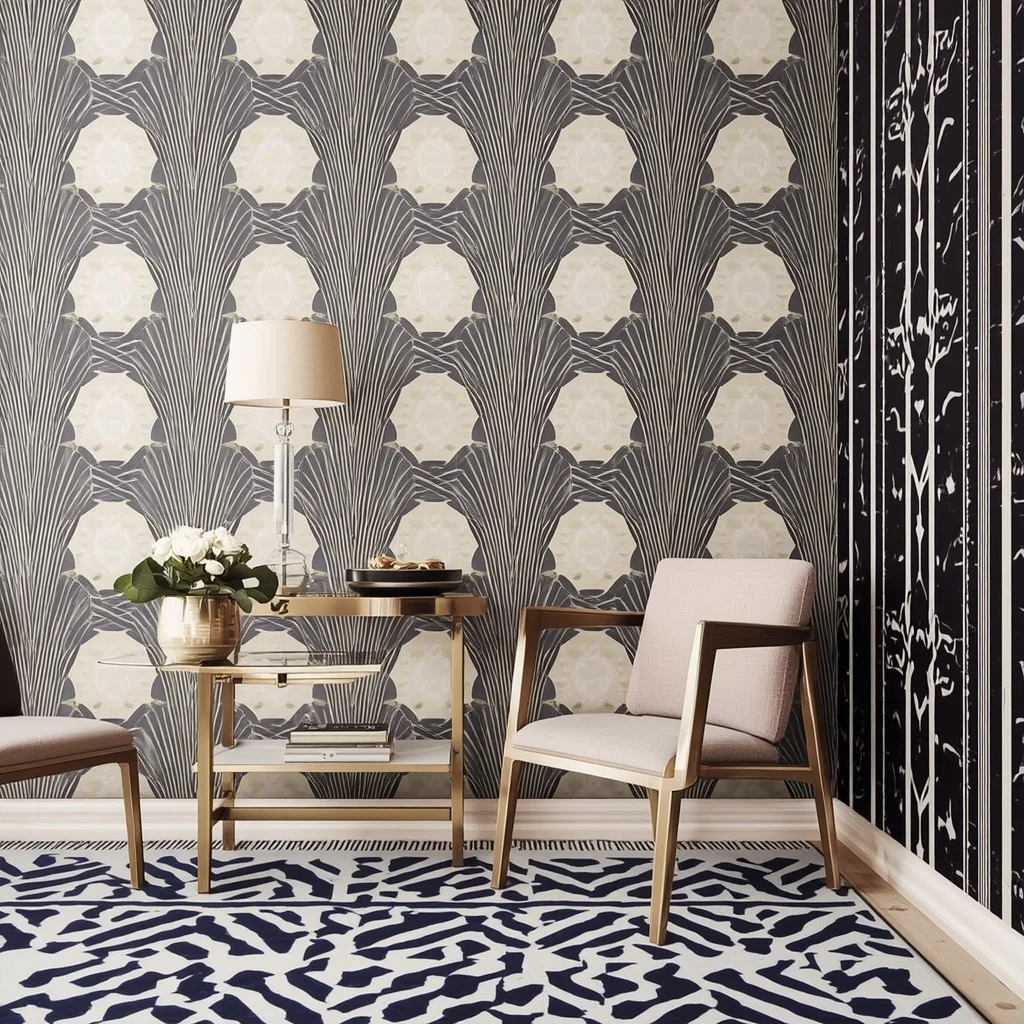
Best for: formal or glam rooms. Difficulty: medium to hard (pattern matching). Time: 1 day.
Idea 9: Grasscloth and Linen-Look Texture
Grasscloth and linen-style wallpaper add warmth that flat paint cannot. Soft textured coverings also absorb a little sound, which helps in a room dominated by a TV. Grasscloth can be marked from moisture and pressure, so install it away from splash zones and handle seams carefully.
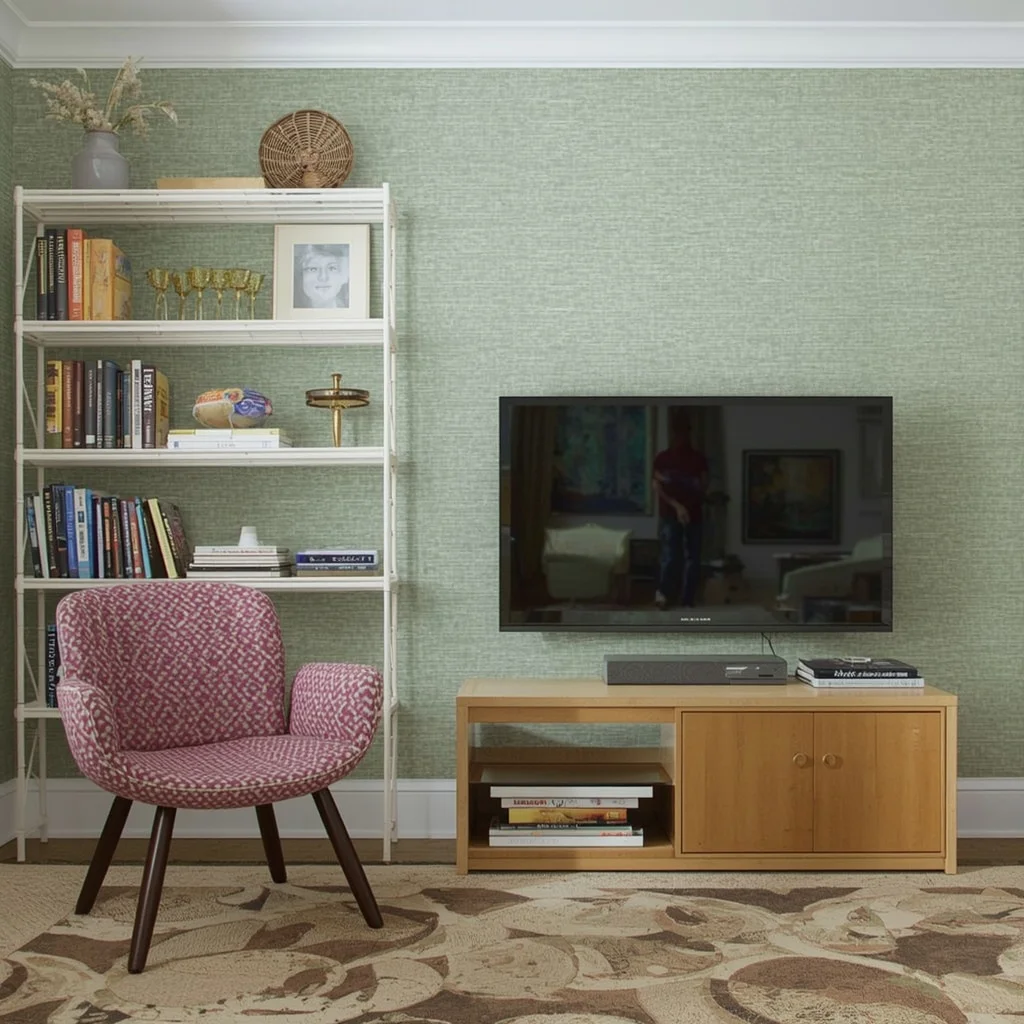
Best for: cozy rooms and TV walls. Difficulty: medium. Time: 1 day.
Idea 10: Paintable Textured Wallpaper
Paintable wallpaper lets you install the texture now and choose the color later. It suits anyone who cannot decide at the paint counter, and the raised pattern hides minor wall flaws.

Best for: undecided colors, imperfect walls. Difficulty: medium. Time: 1 day plus painting.
Peel-and-Stick Wallpaper: What to Know
Peel-and-stick goes up in an afternoon and comes off without paste, but “removable” is a product category, not a guarantee of no damage. See the renter section below for the conditions that matter.
Wood Accent Wall Ideas for Living Room: 4 Warm Options
Wood adds warmth, and warmth is what many living rooms lack. Wood walls differ mainly in price and in how much patience the install needs.
Idea 11: Reclaimed Wood
Reclaimed boards carry history in the grain and suit rustic and industrial rooms. Let the boards sit in the room for a few days before installation, because wood moves with humidity and a rushed job shows gaps later.

Best for: rustic, industrial or warm rooms. Difficulty: medium to hard. Time: 1-2 days.
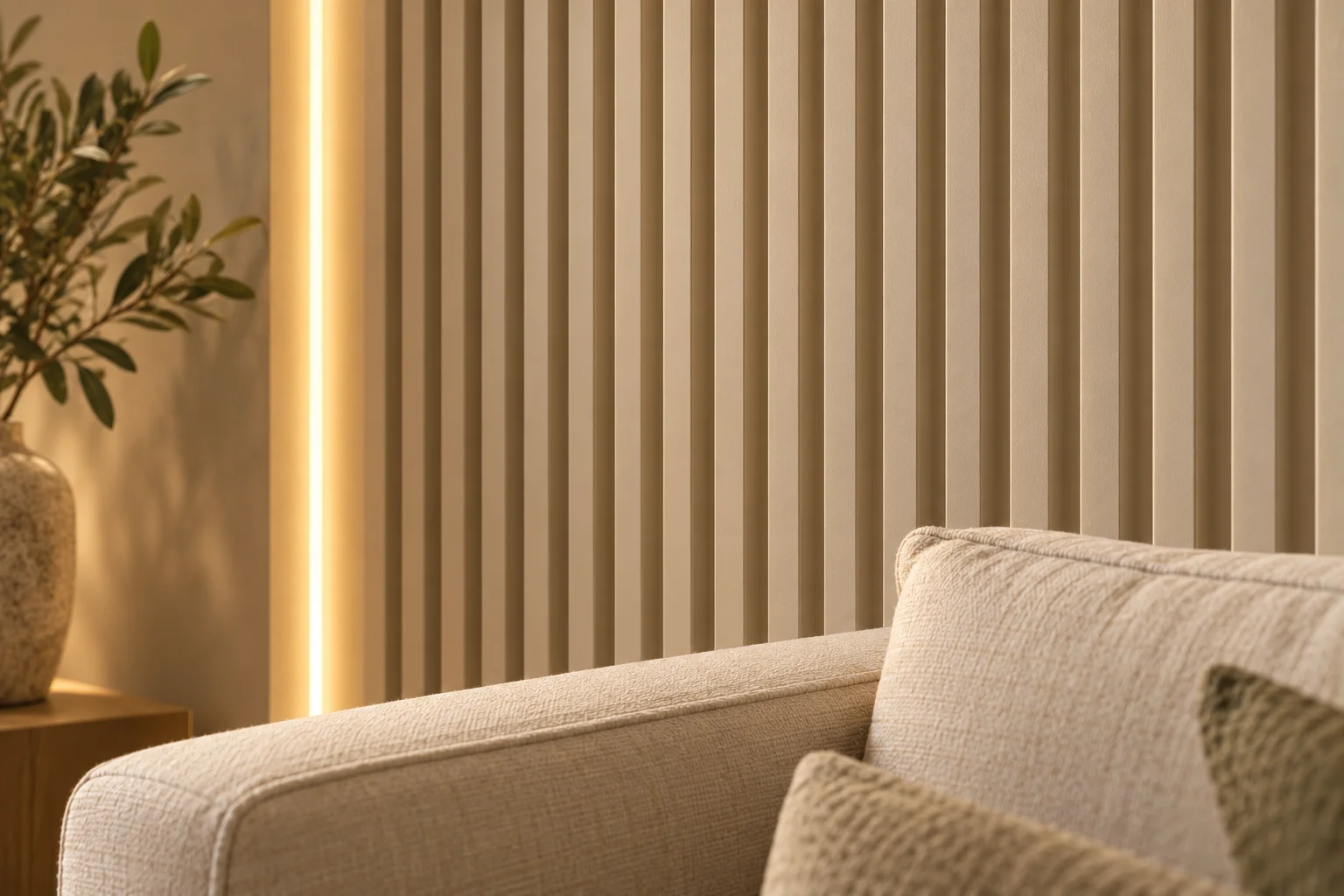
Idea 12: Vertical Slats and Fluted Panels
Vertical fluted or slat panels in sand beige, olive gray or natural oak are among the most popular current looks. Warm backlighting makes them look more expensive. Fluted MDF panels can be painted and cost far less than solid wood. They also make a ceiling look taller.
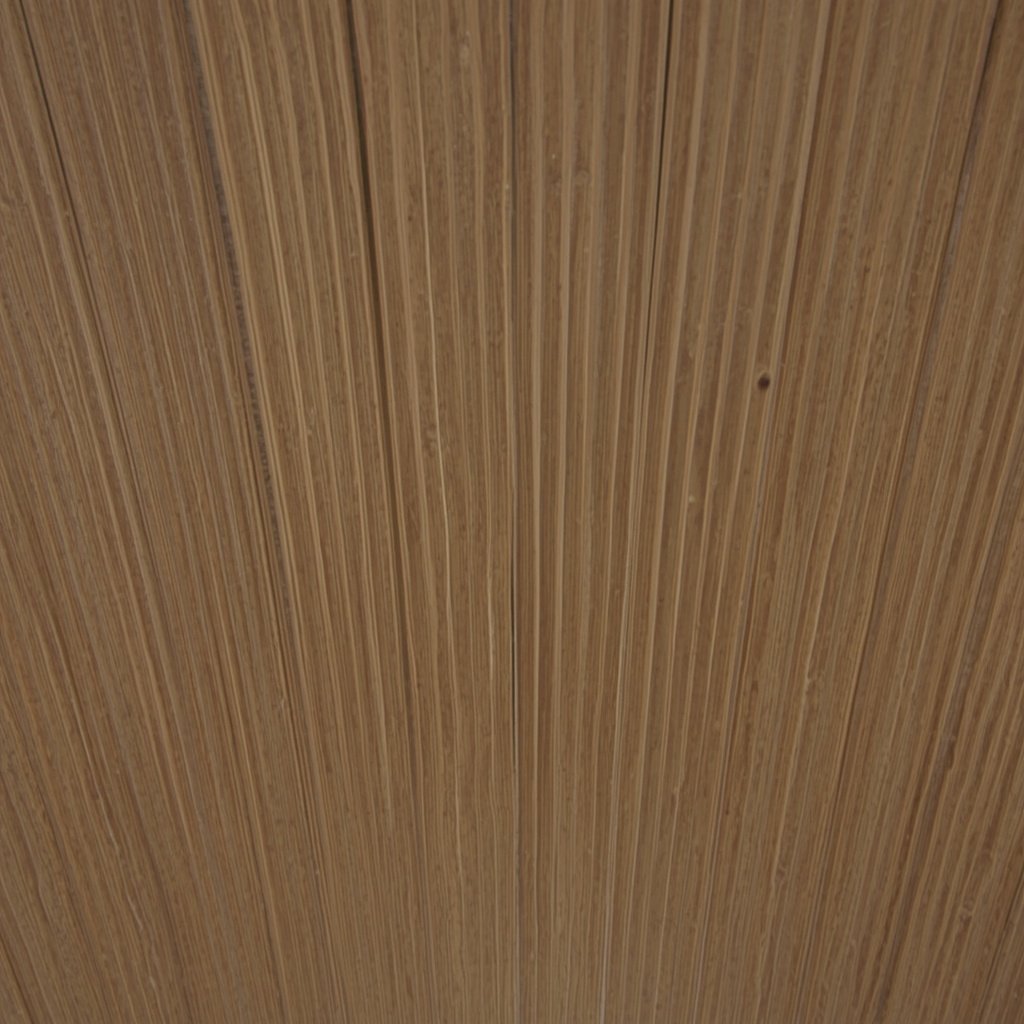
Best for: modern sofa or TV walls. Difficulty: medium. Time: 1 weekend.
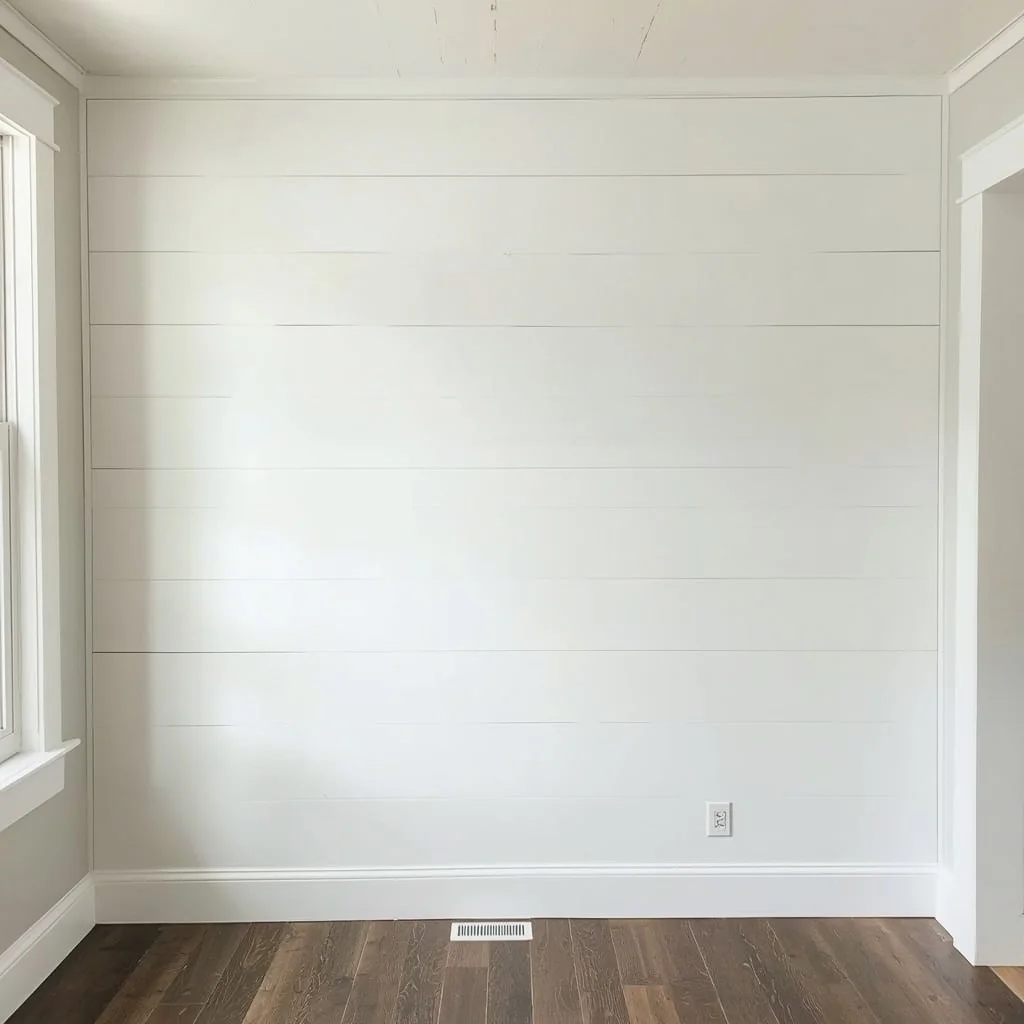
Idea 13: Shiplap, Horizontal or Vertical
Horizontal shiplap makes a wall look wider and vertical boards lift the ceiling line. Painted white it reads farmhouse. Stained or natural it warms up a modern room. Cut carefully around outlets and switches so the board rhythm stays continuous.
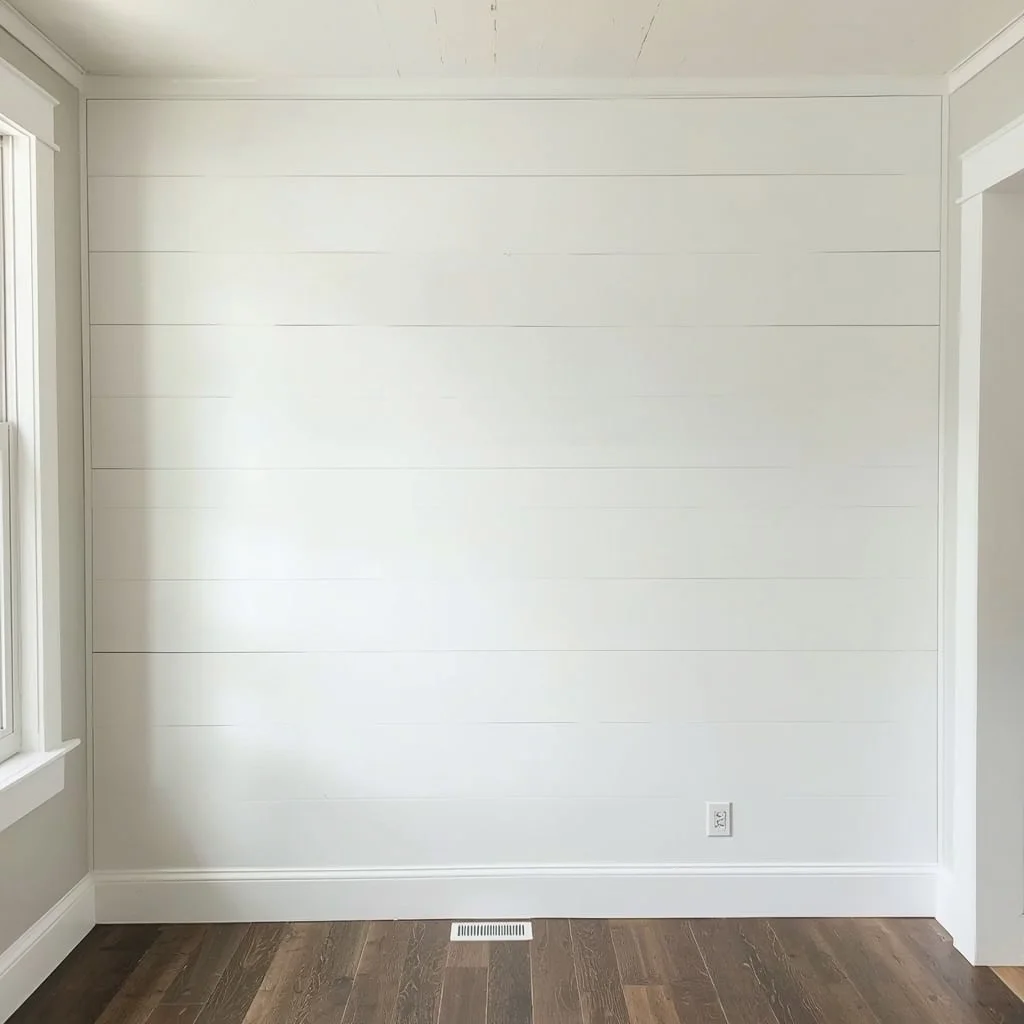
Best for: farmhouse and warm modern rooms. Difficulty: medium. Time: 1 weekend.
Idea 14: Board-and-Batten and Picture-Frame Molding
Both treatments add architecture to a flat wall using a nail gun, a level and patience. The shadow lines do the decorating. Paint the trim the same color as the wall for quiet elegance, or one shade lighter or darker for definition.
Best for: traditional and transitional rooms. Difficulty: medium. Time: 1 weekend.
Brick, Stone and Statement Walls: 4 Bold Ideas
Sometimes a room needs a wall that takes over. Three of these four have budget versions.
Idea 15: Exposed, Faux or Whitewashed Brick
Real exposed brick is a gift when your building has it. If not, brick veneer panels and brick wallpaper are practical stand-ins, and whitewashing softens any of the three. Whitewashed brick works well in darker rooms because it keeps the texture and reflects more light.
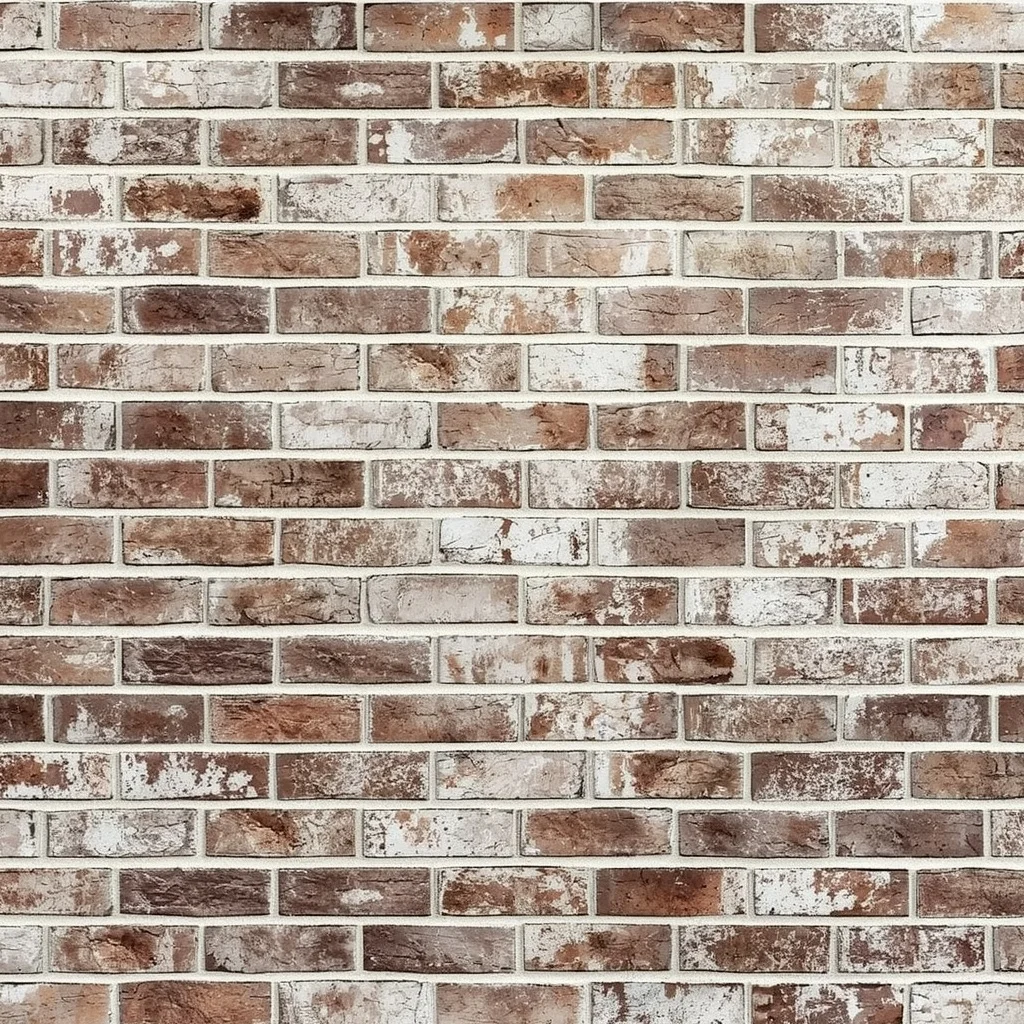
Best for: industrial and loft-style rooms. Difficulty: medium to hard. Time: 1-2 days.
Idea 16: Stacked Stone and Marble-Look Slabs
Stacked stone adds real visual weight, and marble with strong veining adds polish. Look-alike panels and wallpapers have improved, and the price gap between real and look-alike stone is large. For a more luxurious overall mood, see our high-end living room ideas.

Best for: fireplace walls and luxury rooms. Difficulty: hard (heavy materials, hire a pro). Time: 2+ days.
Idea 17: 3D Wall Panels
Sculptural 3D panels in waves or geometric grids throw soft shadows that shift through the day. Pair them with the lighting ideas below, because side lighting makes the texture visible.
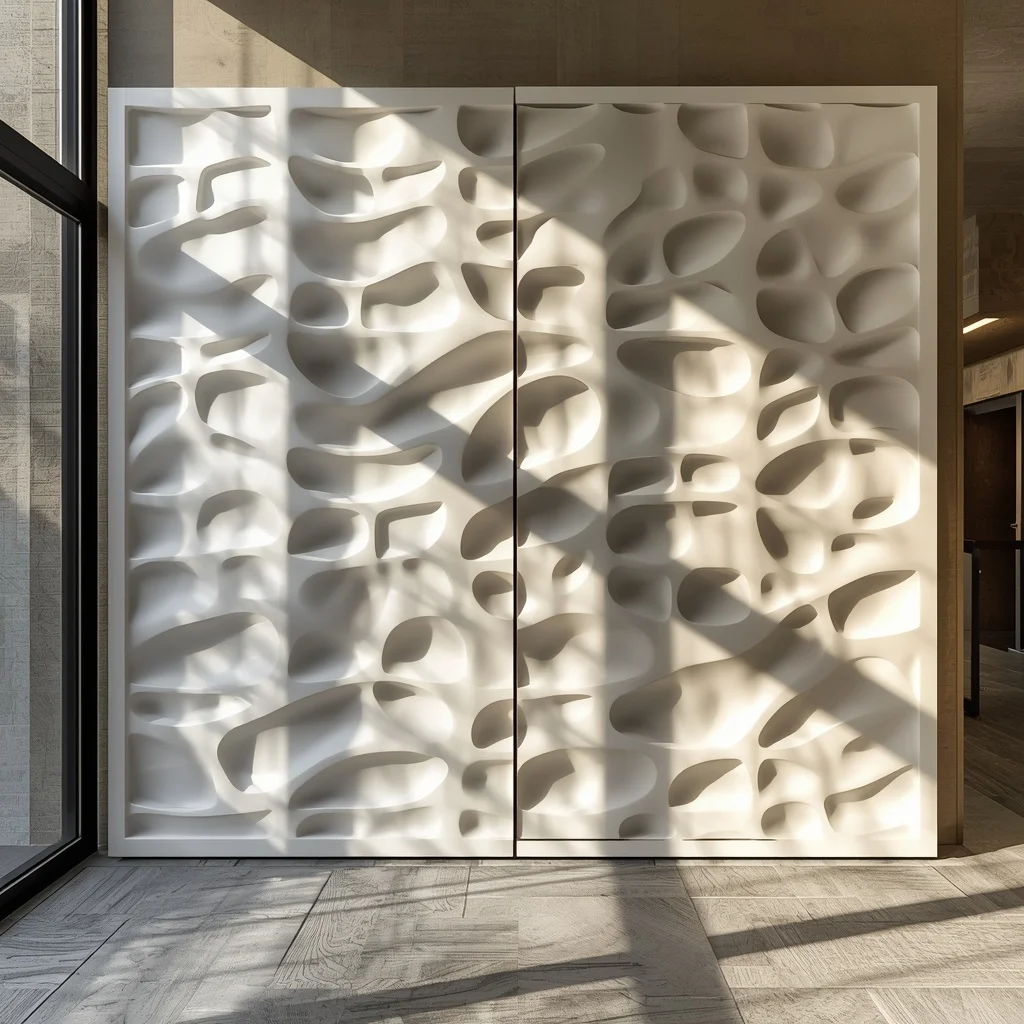
Best for: media walls and modern rooms. Difficulty: medium. Time: 1 weekend.
Idea 18: Living Green Walls and Murals
A living green wall is the most alive option, but it needs light, watering and drainage. Faux plant panels need no care, and a painted or printed nature mural gives the same mood with zero maintenance.
Best for: rooms with plenty of light (living) or low light (faux or mural). Difficulty: easy (faux) to hard (living). Time: 1 day to 1 weekend.
Fireplace and Electrical Safety
- Fireplace clearance: Keep wood slats, MDF, shiplap and wallpaper outside the clearance distances set by your fireplace manufacturer and local building code. Close to the firebox, stick to stone, brick, tile or painted masonry.
- Outlets and switches: Switch off the breaker before removing cover plates. When panels make the wall thicker, use outlet box extenders so the outlets stay safe and flush.
- TV walls: Plan cable routes and ventilation before covering the wall, and make sure mounted TVs sit on proper wall anchors, not just on the decorative layer.
What an Accent Wall Costs
Costs range from under USD 100 for a DIY paint wall to several thousand dollars for professionally installed stone. The figures below are typical US DIY material estimates and vary by market, wall size and product quality, so check current prices at your local store before budgeting.
| Tier | Typical materials | Approx. DIY materials cost | Labor |
|---|---|---|---|
| Entry | Paint, tape, primer, rollers | roughly USD 50 to 150 | DIY |
| Middle | Wallpaper, shiplap, fluted panels, board-and-batten | roughly USD 150 to 600 | DIY or hire |
| Premium | Real stone, marble, custom millwork | USD 1,000 and up | Usually hired |
In professional quotes for premium work, labor often costs more than materials.
DIY or Hire a Pro?
DIY is realistic for paint, peel-and-stick and flat paneling. Hire a professional for floor-to-ceiling stone, complex patterns and anything structural. A useful rule: if a mistake would take more than a day to fix, pay someone who has done it before.
How to Hire a Contractor for an Accent Wall
- Ask for at least three written quotes that list materials, labor, prep and cleanup separately.
- Ask whether wall repair, priming and removal of old wallpaper are included.
- Ask to see photos of similar finished walls.
- Confirm the timeline and what happens if the wall needs extra prep.
Costs People Forget
Primer, painter’s tape, rollers and brushes, wall patch for old holes, color samples, outlet extenders and removal costs later if you chose a temporary product. These small items are where many budgets break.
Where to Buy Wall Panels, Wallpaper and Paint
Paint and basic wallpaper are widely available at home improvement stores. Wood slat and 3D panels are sold at home improvement stores and online panel sellers, usually per panel or per kit. Compare coverage per box, material (solid wood, MDF or PVC), included mounting hardware and return policy before you order.
Renting: What Is Safe to Stick on the Wall
Peel-and-stick wallpaper can be renter-friendly, but it can also pull paint or drywall paper off when removed. Check these four conditions first: textured walls, paint that has not fully cured, humid rooms and cheap adhesive. Freshly painted walls need weeks to cure before anything sticky goes on them. Always run a 24-hour test patch in a hidden corner.

Removable products also get riskier the longer they stay up, because adhesive settles into the paint over months. Plan your removal before you install.
Other renter-friendly options include leaning mirrors, large framed art, removable art ledges and freestanding screens. Always check your lease before painting. If you are decorating a rental, our living room theme ideas for apartments pair well with a temporary accent wall.
Mistakes That Ruin an Accent Wall
Planning Mistakes
- Choosing the wall that is easiest to reach instead of the wall you see first.
- Treating two walls, which splits the focus.
- Picking color in the store or on a screen instead of sampling on the wall.
- Matching the other walls too closely. An accent wall needs contrast in tone, finish or texture.
- Ignoring existing architecture. If beams or built-ins already own the wall, reinforce them.
Execution Mistakes
- Skipping prep: holes, dust and rough patches show through thin finishes.
- Rushing the tape work, which causes bleed and chipped lines.
- Over-styling afterward. Leave negative space around the wall.
- Forgetting the extra costs listed above.
Are Accent Walls Still in Style in 2026?
Yes, but the execution has changed. Flat, loud single-color walls now look dated to many designers, while texture, pattern and material treatments such as fluted panels, lime wash and board-and-batten feel current. Some designers argue the accent wall is being replaced by color drenching and painted ceilings. Others say it has simply moved from bold color to texture. The underlying need has not changed: one focal surface, a controlled budget and a big visual change.
Does an Accent Wall Add Value?
An accent wall adds daily enjoyment first and resale value second. Fresh paint is often listed among the cheapest pre-sale updates, but there is no reliable figure that ties an accent wall to a specific price increase. Neutral, restrained treatments are the safest choice if you plan to sell, because buyers may see bold or highly personal walls as repainting work.
If your home has both a family room and a living room, put the accent wall in the one where you spend the most evening time.
Lighting and Styling That Keeps the Wall the Star
Lighting often decides whether an accent wall looks good or great.
- Wall sconces on either side of art or a mirror add warm depth.
- Picture lights highlight a framed piece or textured section.
- LED strips behind panels or shelves create a soft halo effect. Choose warm white light for a cozy look.
- Plan lighting with the wall, not after it, so wiring and placement fit.
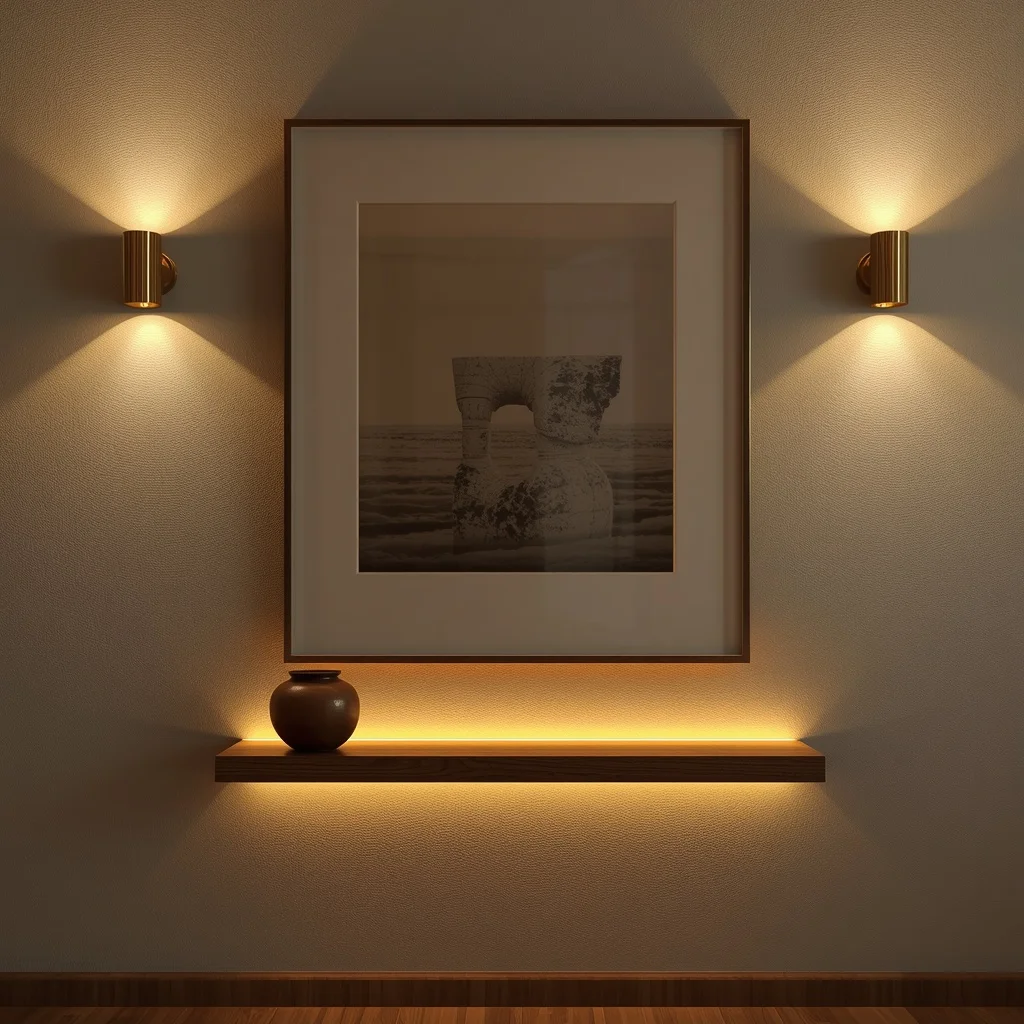
For styling, leave negative space so the wall stays the focal point. Mirrors near the accent wall bounce light and make a small room feel larger. Floating shelves add display and storage, but too many layers turn the star into clutter. For small pieces and accessories that suit the room, see our guide to things in the living room.
FAQ: Accent Walls in the Living Room
How do I choose which wall gets the accent in my living room?
Stand at the main entrance and notice which wall your eyes reach first. That wall, or the one with the fireplace or TV, is the best choice. Skip walls broken up by doors and windows.
Which wall should be the accent wall in a living room?
Usually the wall you face when you sit down or walk in: the fireplace wall, the TV wall or the longest uninterrupted wall. Choose one wall only.
Are accent walls still in style in 2026?
Yes, in updated form. Texture, pattern and material treatments such as fluted panels, lime wash and board-and-batten feel current, while flat bold color as the default look has faded.
Will an accent wall make my small living room look smaller?
Not automatically. Placement and finish decide it. A dark wall on a far short wall can add depth, and vertical lines or reflective finishes make a tight room feel taller.
What is the cheapest way to do an accent wall?
Paint. One gallon, a day of work and a single color can change the room. Painter’s tape patterns stretch one extra color into a custom look. Budget for supplies like primer, tape and rollers.
Can renters create an accent wall without losing their deposit?
Conditionally, yes. Quality peel-and-stick on smooth, fully cured walls, a test patch and limited installation time make it workable. Risk grows the longer the adhesive stays up, so remove it early.
What is the easiest accent wall to do yourself?
A single-color paint wall, or peel-and-stick wallpaper under the right conditions. Tape patterns, panels and shiplap are the next steps up. Stone and millwork are usually best left to professionals.
Should the accent wall be behind the TV or the sofa?
Choose the wall your eyes reach first. TV walls make strong focal points but need glare and cable planning. If you have a fireplace, that wall usually wins.
Does an accent wall add value to a home?
Restrained, widely appealing treatments can support value, while highly personal designs can put buyers off. Think of daily enjoyment as the main return.
Final Thoughts
The best accent wall starts with the right wall, a finish that matches your budget and patience, and good lighting. Choose one wall, sample before you commit, and keep the rest of the room calm so the wall can do its job.


Pingback: Living Room Fireplace Ideas: 15 Simple & Cozy Designs
Pingback: Ranch Style House Interior Design: Modern Ideas That Work
Pingback: Interior Design Styles Explained: 12 Smart Choices
Pingback: Contemporary Interior Design: What It Is and How to Use It
Pingback: Home Interior Design for Small Homes: 10 Simple Smart Ideas
Pingback: DIY Room Decor for Small Apartments: 10 Space-Saving Ideas
Pingback: Neutral Color Palette Interior Design: 7 Simple Room Combos
Pingback: Guest Room Decorating Ideas: 20 That Actually Work - sfdecorstyle.comGuest Room Decorating Ideas: 15 Simple Touches Guests Love
Pingback: Best Materials for Industrial House Interiors: 12 Picks
Pingback: Yellow Bedroom Ideas: 15 Easy Looks That Feel Calm and Warm