
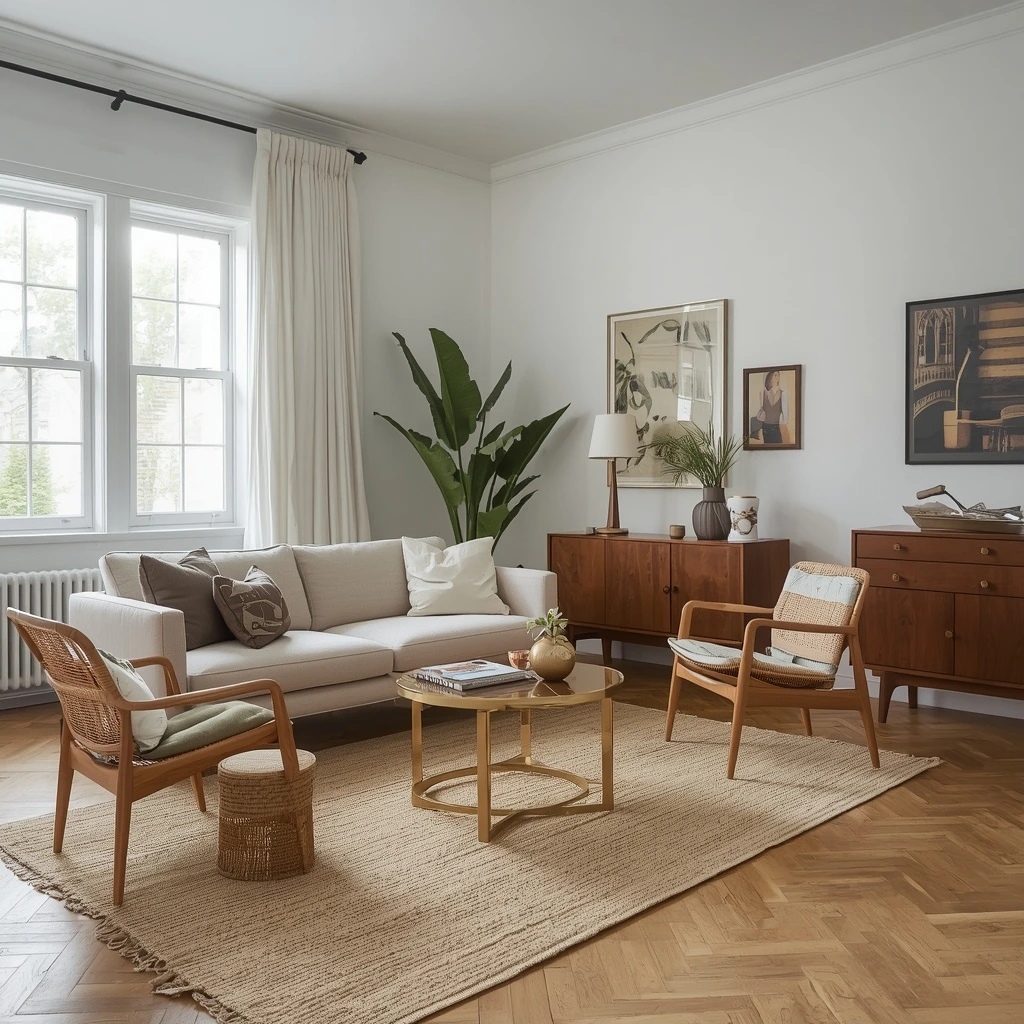

In the 2026 1stDibs Designer Trends Survey of 468 designers, maximalism came out as the most requested style at 39 percent, with eclecticism right behind at 38 percent. Then a Talker Research poll of 2,000 American homeowners found 56 percent describe themselves as minimalist, against 23 percent who pick maximalism.
So which is it? Both, as it turns out. People describe themselves one way and hire designers to do something louder.
That gap is why I wrote this. An interior design style is a repeated set of choices about color, material, furniture shape, and mood that together give a room one recognizable character. Below is the full list of 14 interior design styles explained the way I actually use them in real rooms. What each style is, what it costs to start, whether it survives a rental, and the one mistake that flattens it.
How Many Interior Design Styles Are There?
There is no official count. Design schools usually teach five to seven core families; most home guides list somewhere between ten and twenty, and once you add regional and revival labels, the number passes fifty.
I work with 14. That covers nearly every room I have walked into, without inventing categories that only exist on mood boards.
Table of contents
- What Are Interior Design Styles? A Plain Definition
- What Is My Interior Design Style? Five Questions to Ask
- The Full List of 14 Interior Design Styles
- The 14 Styles at a Glance
- Modern vs Contemporary vs Transitional
- How to Choose an Interior Design Style That Fits Your Life
- How to Mix Styles Without Making a Mess
- What Each Style Costs to Start
- Renting? How Each Style Works Without Drilling a Hole
- Timeless Is Not a Color Palette
- Five Style Mistakes That Lead to Regret
- Styles People Ask About That Most Guides Skip
- Where to Start This Week
- Frequently Asked Questions
What Are Interior Design Styles? A Plain Definition
An interior design style is a pattern of repeated decisions, not a shopping list. Palette, materials, furniture shapes, and the general mood of the room. Repeat those four choices with some consistency and you have a style. Buy one rattan chair and you have a chair.
That distinction matters more than people expect. I have seen rooms holding a dozen genuinely lovely objects that still feel unsettled, because nothing in them agrees with anything else.
Three words get used as if they mean the same thing. They do not, and the difference changes what you buy.
| Term | What it actually means | How long it lasts |
|---|---|---|
| Decor | The individual objects in the room | As long as you keep them |
| Interior design style | The logic that connects those objects | Decades |
| Trend | A preference moving through several styles at once | Two to five years |
Get the style right and the decor almost chooses itself.
Styles are not fixed categories either. Japandi did not exist as a named style twenty years ago. Grand millennial is barely five years old. Interior design styles get named after enough people decorate the same way at the same time, which is why the list keeps growing and why no two guides agree on the total.
And here is the part most guides bury. Almost nobody lands on one pure style. Most homes run one dominant style with a second one borrowed from, and that blend is the normal outcome rather than a failure to commit.
What Is My Interior Design Style? Five Questions to Ask
Forget the mood board for ten minutes. Answer these five honestly and your style narrows itself down.
1. How much visual activity do you actually enjoy? Not in photos. In your own home at the end of a long day. Some people relax in a quiet room. Others feel cold in one.
2. What do you already own and genuinely love? Pull three pieces you would never give away. They are usually pointing somewhere.
3. How much upkeep will you really do? Pale linen, open shelving, and glossy surfaces all need attention. Be honest here or the style will quietly defeat you.
4. How much natural light does the room get? This decides more than taste does. Dark, moody palettes need light to push against. A north facing room with one small window will fight you.
5. What can you spend in the next six months? Not the dream number. The real one.
Now count your answers. If you leaned quiet, low upkeep, bright and modest budget, you are circling Scandinavian, minimalist or coastal. Busy, high tolerance, strong light and a flexible budget points toward bohemian, eclectic or maximalist.
Somewhere in the middle on everything usually means transitional, and that is not a cop out. Most people land there, which is exactly why transitional shows up in so many finished homes.
One more thing worth knowing before you commit. In that Talker Research poll, while most homeowners described themselves as minimal, 38 percent of Gen Z respondents chose bold color and eclectic combinations instead. Your age group does not decide your taste. It does tell you the quiet neutral room is a default, not a rule.
The Full List of 14 Interior Design Styles
Here is the interior design styles list I work from, with a one line definition for each. The detailed profiles follow underneath, with examples of what each style looks like in a finished room and the mistake I see most often inside it.
| # | Interior design style | What it is in one line | Origin or era |
|---|---|---|---|
| 1 | Scandinavian | Light, functional rooms built on pale wood and white walls | Nordic, mid 20th century |
| 2 | Modern Farmhouse | Rustic materials handled with clean modern lines | American, 2010s |
| 3 | Mid-Century Modern | Low, tapered furniture in warm woods with bold accents | 1945 to 1969 |
| 4 | Transitional | A controlled blend of traditional shapes and modern restraint | Late 20th century |
| 5 | Bohemian | Layered textiles, plants and collected objects with no matching | 19th century onward |
| 6 | Industrial | Raw structure left exposed in brick, steel and concrete | Post industrial lofts |
| 7 | Coastal | Airy whites, sandy neutrals and soft blue with natural texture | Seaside vernacular |
| 8 | Minimalist | Deliberate editing, clean lines and usable empty space | Mid 20th century |
| 9 | Traditional | Symmetry, rich woods and classic European silhouettes | 18th and 19th century |
| 10 | Contemporary | Whatever is current, now meaning curves and mixed metals | Always the present |
| 11 | Eclectic | Deliberate contrast across eras held together by one thread | 20th century onward |
| 12 | Japandi | Japanese craft and imperfection joined to Nordic function | 2010s fusion |
| 13 | Art Deco | Geometry, gloss, brass and jewel tones in sharp stepped forms | 1920s and 1930s |
| 14 | Maximalist | Saturated color and layered pattern, collected on purpose | Revival of 19th century layering |
Scandinavian Design
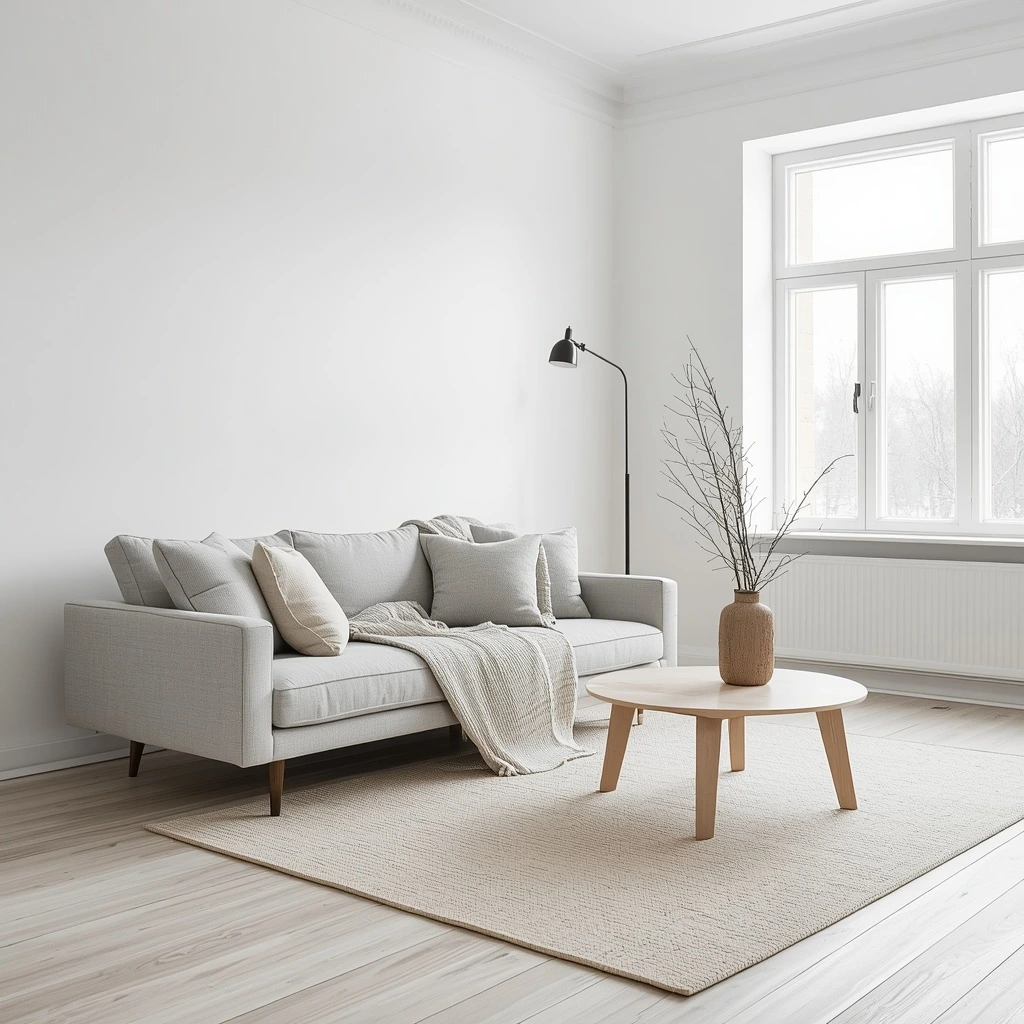
Scandinavian interior design is a light, functional style built around pale wood, white walls, and natural texture. Think whites, soft grays, and pale woods like oak and ash, softened with wool and linen. The whole approach grew out of making the most of very short winter daylight, which is why it works so well in small apartments and north-facing rooms. It is also the one style that almost never sits on carpet. Bare floors are part of how the light travels, which is why a living room without carpet reads larger than the same room with it
Here is the test I use. Cover every white surface in the room with your hand and ask what is left. If the answer is nothing, you have a blank room rather than a Scandinavian one.
The mistake: stopping at white and forgetting texture, which leaves the room cold rather than calm.
Modern Farmhouse
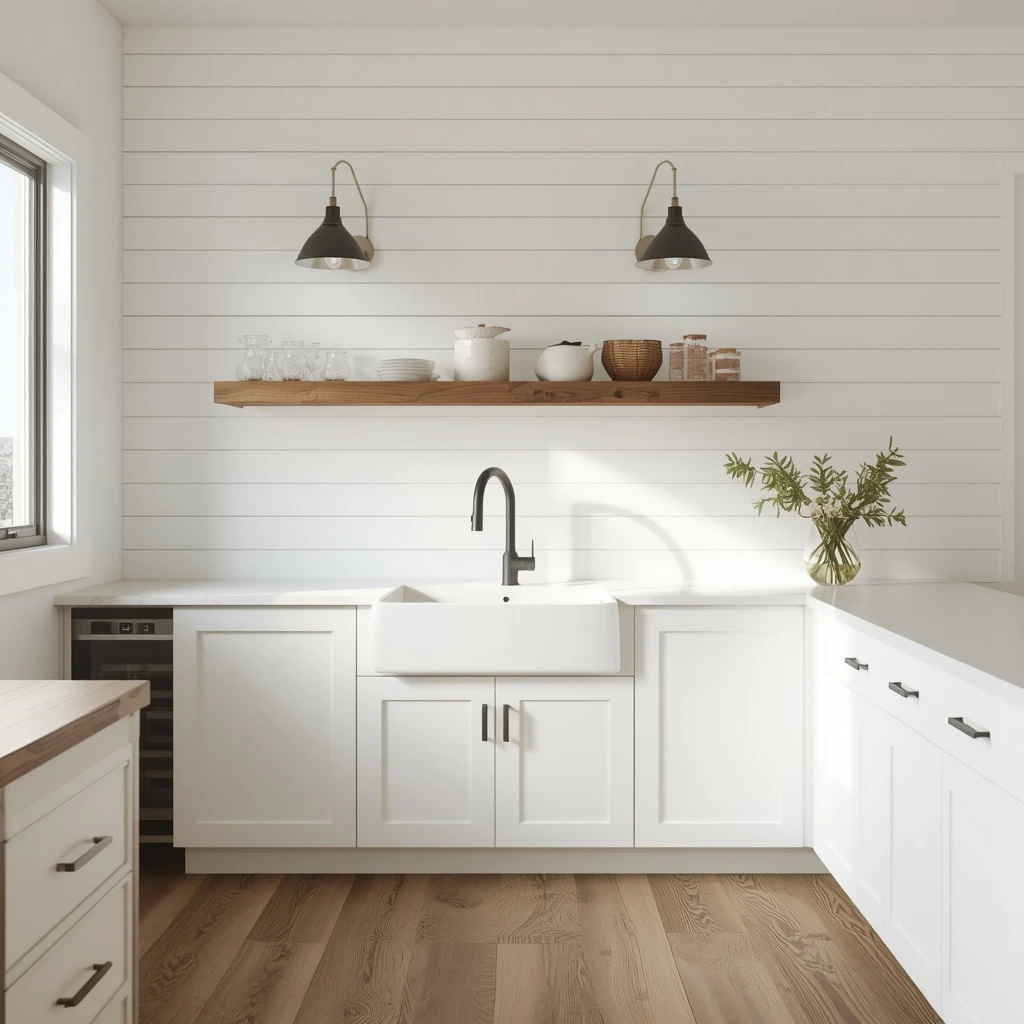
Modern farmhouse interior design is a warm, rustic style handled with clean contemporary lines. White walls, warm neutrals, matte black fixtures, reclaimed wood. The tells are shiplap, apron front sinks and wide plank floors. It suits family homes and open kitchens better than anywhere else.
The mistake: treating it as a collection of signs and signals instead of a material choice, which is how it tips into theme park territory.
Mid-Century Modern
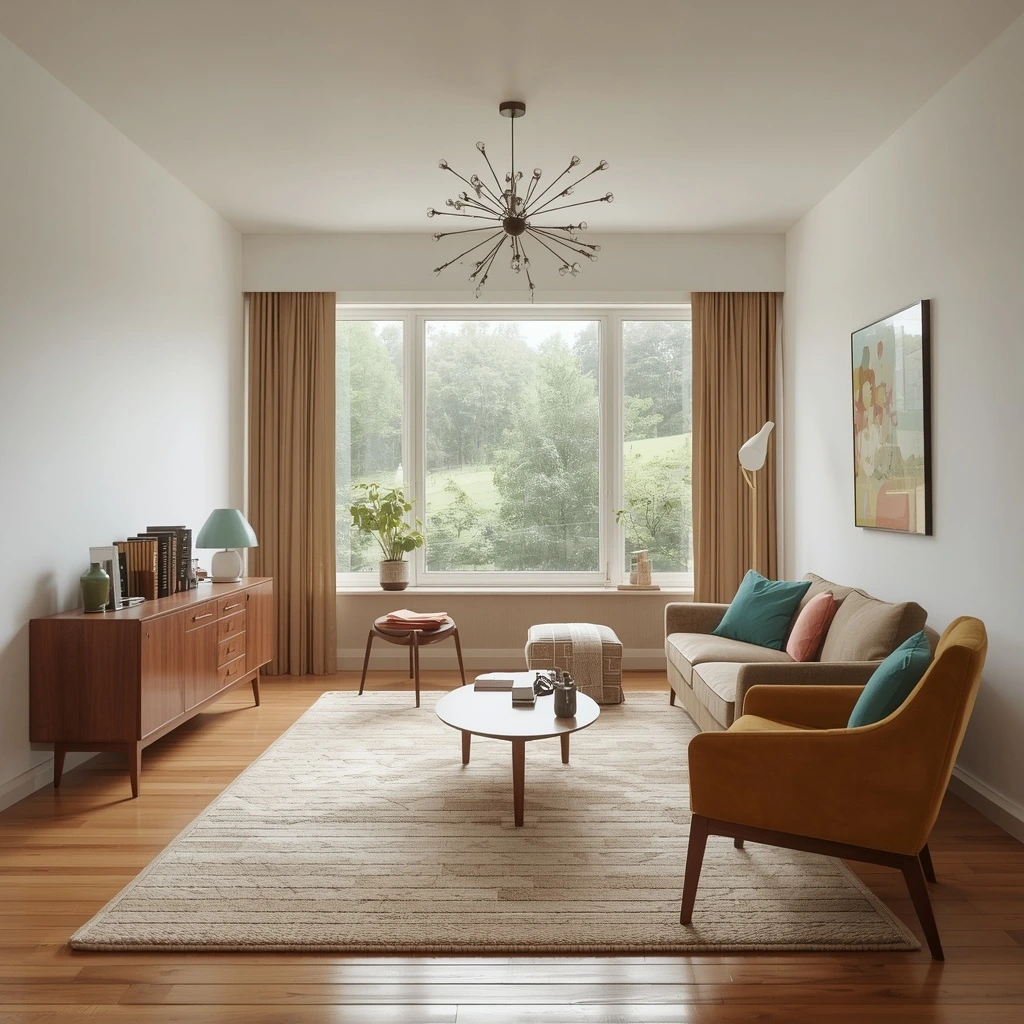
Mid-century modern interior design is a warm, low slung style from the 1945 to 1969 period, defined by tapered legs, clean organic curves and rich wood tones. Look for walnut and teak, low profiles, and sputnik style light fixtures. Mustard, olive and teal show up as accents.
It is the easiest style on this list to shop for, because high street retailers have been copying its furniture shapes for twenty years. Originals from the known makers cost real money. Good reproductions put the silhouette within reach.
The mistake: buying the right silhouette in the wrong wood tone. An orange toned reproduction next to a true walnut piece reads as a mismatch immediately, and it kills the warmth the whole style depends on.
Transitional
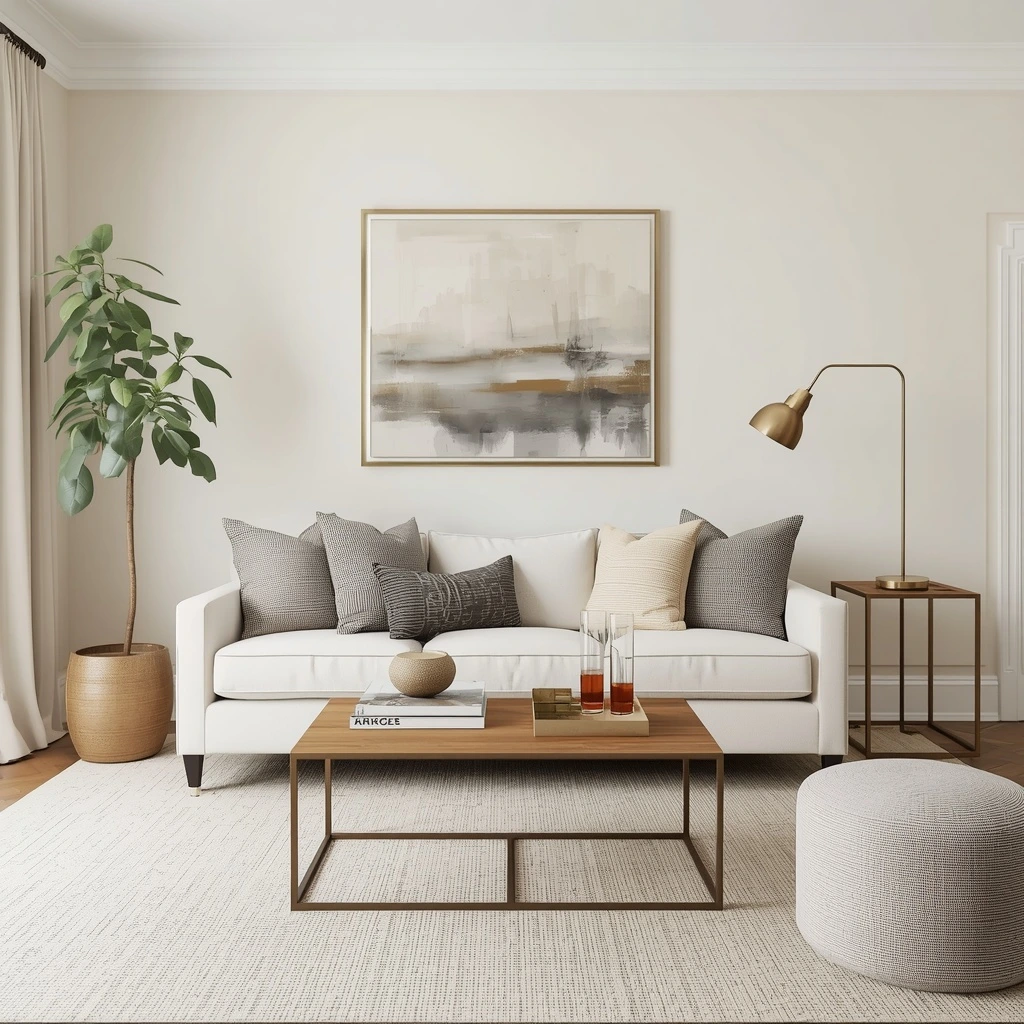
Transitional interior design is a deliberate middle ground between traditional and contemporary, keeping classic furniture shapes but stripping away the ornament. Soft neutral palettes, mixed wood and metal, comfortable proportions. It works best in newer homes that have no strong architectural character of their own.
The mistake: going so neutral that nothing anchors the room. Transitional still needs one piece with an opinion.
Bohemian Style
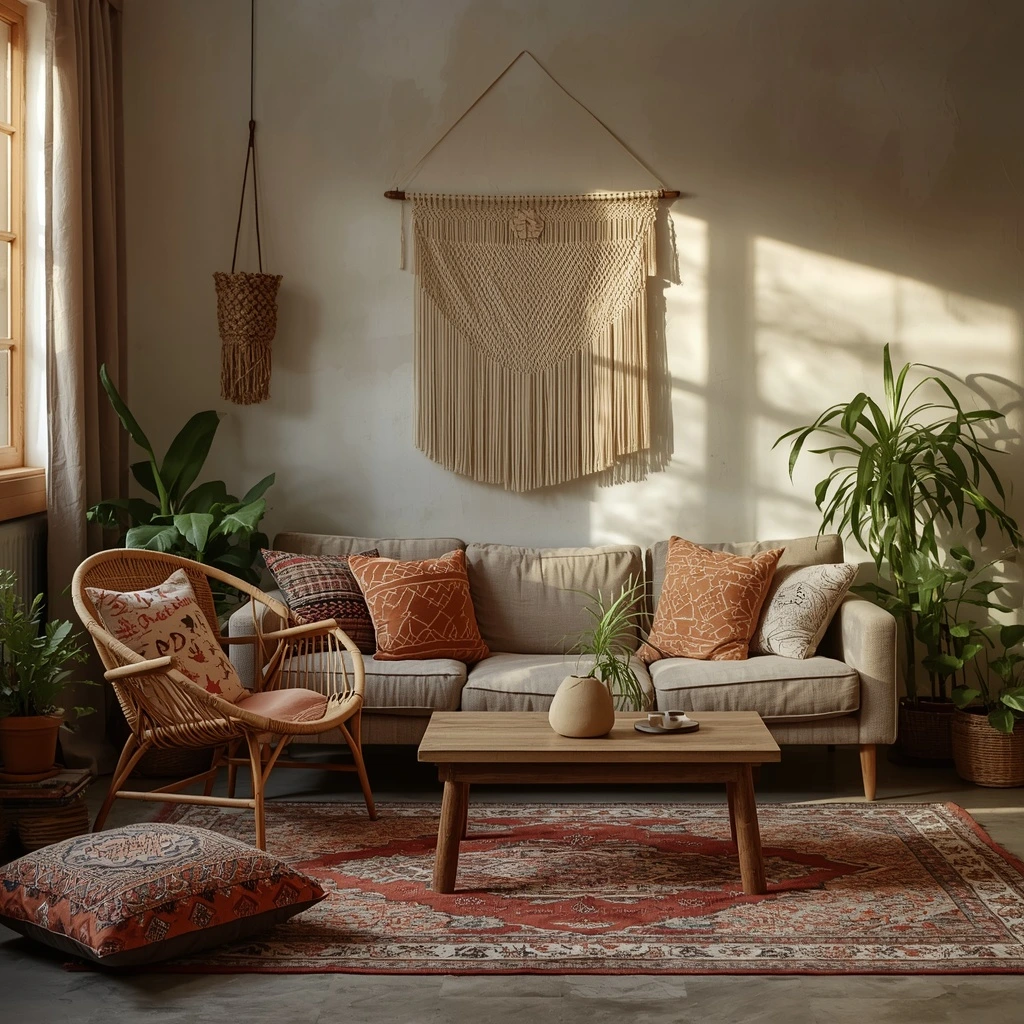
Bohemian interior design is a layered, collected style that mixes global textiles, natural materials, and plants with no concern for matching. Rattan, cane, macrame, and textiles stacked on textiles. Colors run either warm neutral or fully saturated.
This is the cheapest style to start well, because secondhand shops and marketplaces are where it genuinely belongs. A bohemian room full of new matching pieces misses the point entirely.
The mistake: accumulating rather than curating. Those are different activities, and only one of them produces a room you want to sit in.
Industrial Design
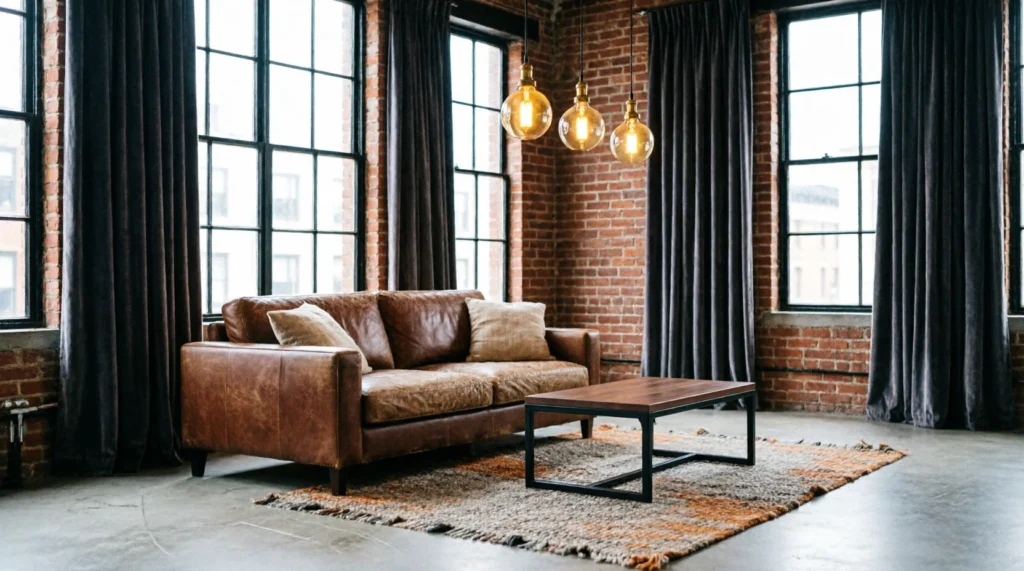
Industrial interior design is a raw, structural style that leaves brick, steel, concrete and ductwork visible instead of hiding them. Aged leather, Edison bulbs, a palette of gray, black, rust and brown. Honest in a loft, harder in a standard apartment.
The fix I keep coming back to is one soft surface for every hard one. A wool rug under a steel table. Heavy curtains against a brick wall. Without that ratio the room photographs well and feels like a waiting area.
The mistake: softening nothing at all.
Coastal Interior
Coastal interior design is a light, airy style built on whites, sandy neutrals and soft blue, with weathered wood, linen, jute and rattan carrying the texture. The real version skips the seashells.
Here is the test. If you removed every blue object from the room, would it still read as coastal? If the answer is no, the style is sitting in the accessories instead of the materials, and it will date within a year.
The mistake: confusing coastal with nautical. Anchors and rope make it a theme, not a style.

Minimalist Decor
Minimalist interior design is a style of deliberate editing, built on clean lines, a limited palette, hidden storage and empty space used as a design element. Working designers push back hard on the cold white box definition, and the rooms they publish prove it. Minimalist interiors regularly include antiques, deep color and inherited pieces.
The difference is that each one earns its place. In a minimalist room a single carved chest becomes the focal point precisely because so little competes with it.
The mistake: confusing empty with minimal. Nothing is harder to live in than a room with no personality and no storage.

Traditional Interior Design
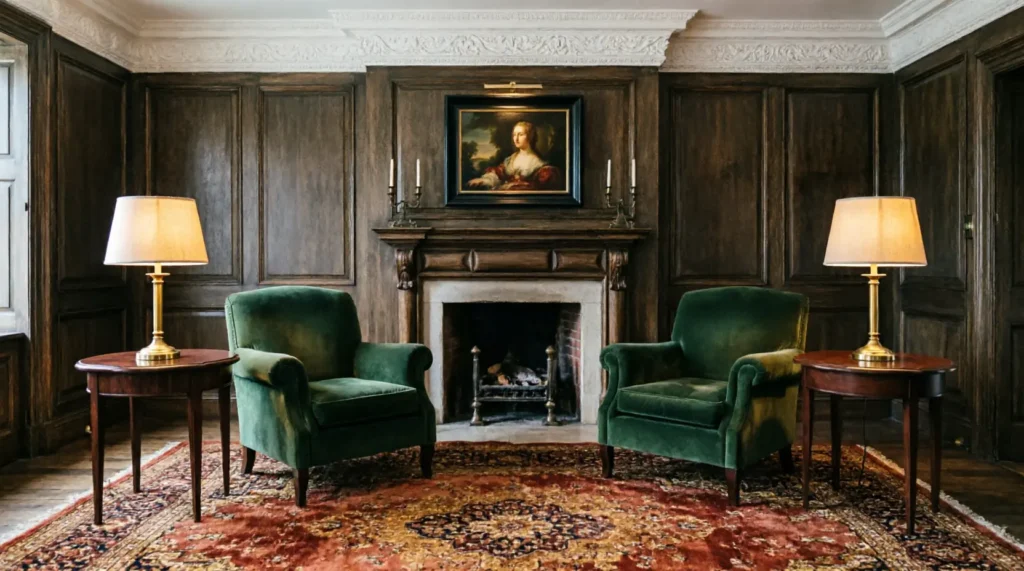
Traditional interior design is a formal, symmetrical style drawn from eighteenth and nineteenth century European rooms. Rich woods, molding, layered textiles, and classic furniture silhouettes. It ages well precisely because it was never built on a trend, and it looks best in homes that already have some architectural bones.
A fireplace is usually the one people are working around, and traditional handles it better than any other style, because the symmetry finally has something to build from. Different fireplace treatments push a room in quite different directions, so settle that before you choose a paint color.
The mistake: assuming it has to be dark and formal. Lighten the wall color, cut the pattern count in half, keep the good furniture, and traditional reads as collected rather than stuffy.
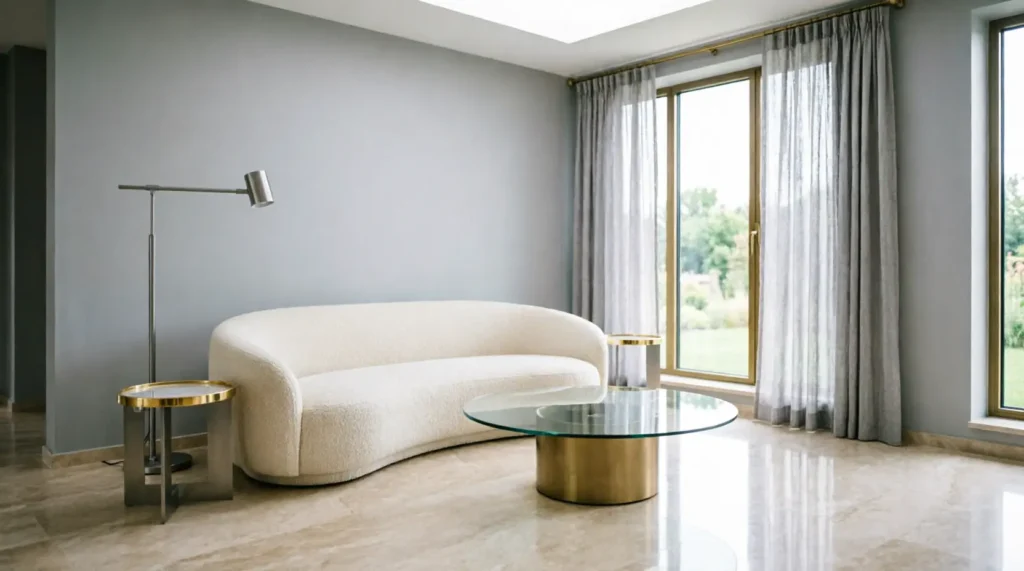
Contemporary Interior Design
Contemporary interior design is whatever the present moment looks like, which right now means soft curves, rounded furniture, grayscale neutrals and mixed metals. It is flexible by definition, and it shifts every few years.
The mistake: using it as a synonym for modern. The two are not the same thing, and the difference is explained properly further down this page.
Eclectic Style
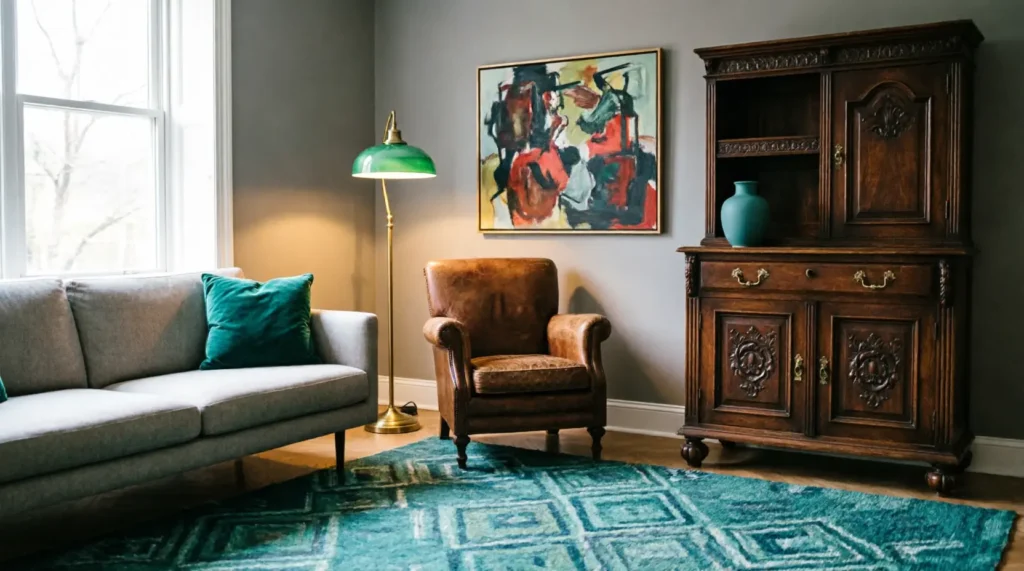
Eclectic interior design is a style of deliberate contrast, pulling pieces from different eras and cultures and holding them together with a repeated shape or a shared color. It came in nearly tied for most requested style among designers at 38 percent in the 2026 1stDibs survey.
The mistake: believing eclectic means no rules. The eclectic rooms that work are held together by one repeated element, usually a color that appears at least three times. Remove that thread and the same furniture reads as a storage unit.
Japandi Design
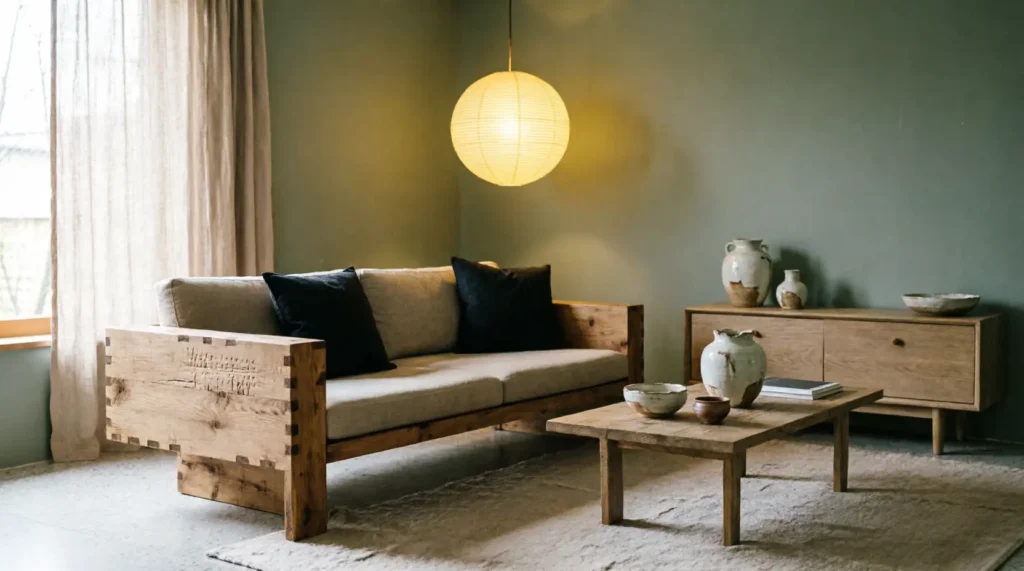
Japandi interior design is a fusion style that joins Japanese wabi sabi, which values imperfection and visible craft, to Scandinavian function and warmth. Low wooden furniture, exposed joinery, paper, ceramics, earthy neutrals with muted green and charcoal.
The mistake: treating Japandi as Scandinavian with a few Japanese objects added on top. The palette runs earthier and darker than Scandinavian, and the furniture sits lower. Those two differences are the whole style.
Art Deco
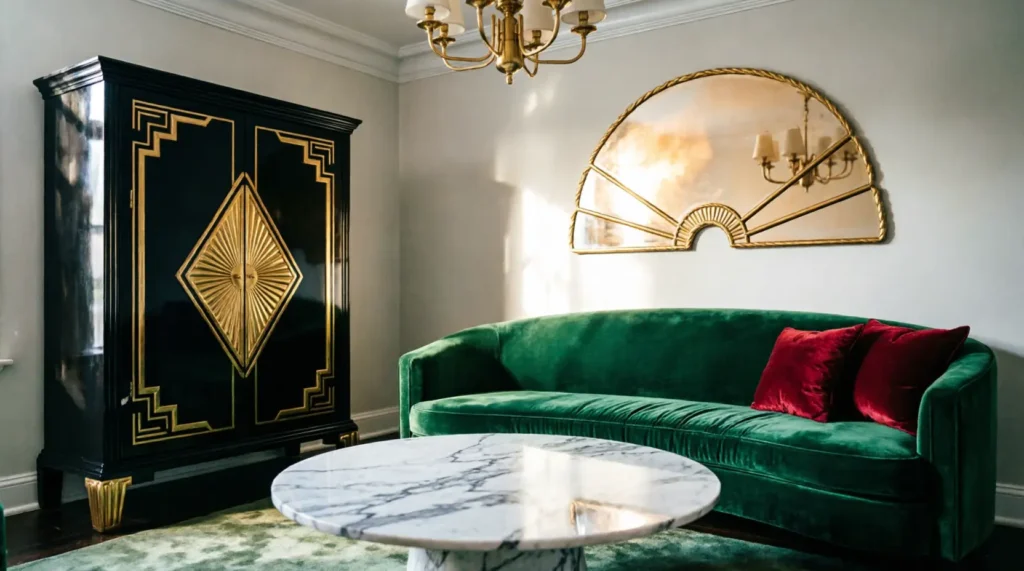
Art Deco interior design is a bold, polished style built on geometry, gloss and symmetry, using black lacquer, brass, chrome, marble, velvet and jewel tones. Sharp stepped forms, fan shapes, strong vertical lines.
A style most people file under history is quietly growing again. Designer favor for Art Deco and Bauhaus rose from 23 percent in the 2023 figures to 28 percent in the 2025 1stDibs survey.
The mistake: distressing anything. Art Deco has no patina setting. Every surface in it was meant to look new, sharp and expensive, and one weathered piece undoes the whole room.
Maximalist Design
Maximalist interior design is a style of deliberate abundance, layering saturated color, mixed pattern, open collections and heavy texture on purpose. Despite its reputation as a niche choice, maximalism topped the 2026 1stDibs list at 39 percent of designer requests.
The mistake: no editing. Maximalism needs one color repeating across the layers or the eye has nowhere to rest. The rooms that work are far more controlled than they look.
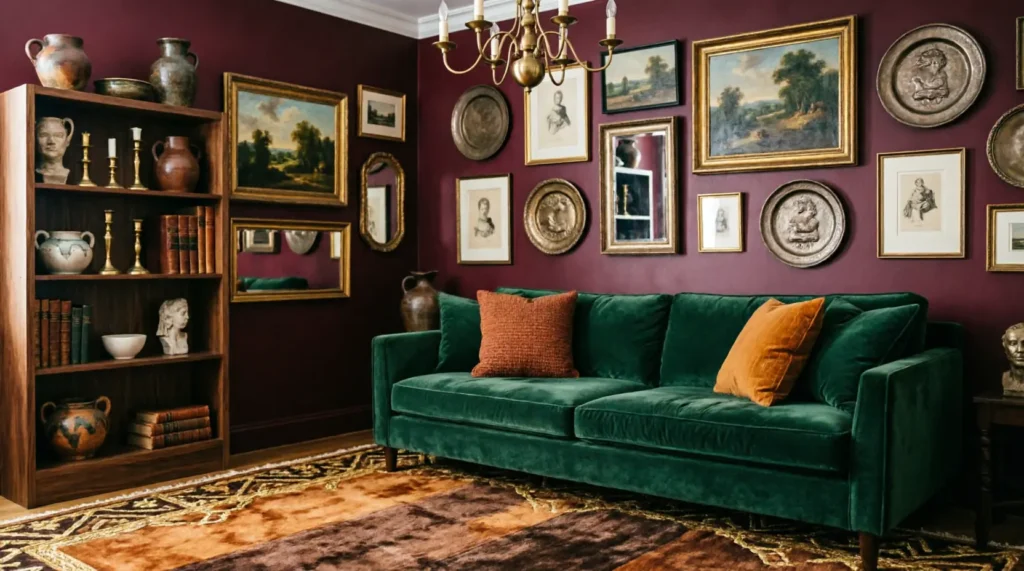
The 14 Styles at a Glance
Everything above, compressed into one table you can scan before you shop.
| Style | Feel | Palette | Key materials | Budget to start | Renter friendly | Best rooms |
|---|---|---|---|---|---|---|
| Scandinavian | Bright, calm | White, pale wood, soft gray | Light oak, wool, linen | Low | Yes | Living, bedroom |
| Modern Farmhouse | Warm, familiar | White, greige, black | Reclaimed wood, shiplap | Medium | Partly | Kitchen, living |
| Mid-Century Modern | Retro, crisp | Walnut, mustard, teal | Walnut, leather, plywood | Medium | Yes | Living, dining |
| Transitional | Balanced, easy | Soft neutrals | Mixed wood and metal | Medium | Yes | Whole home |
| Bohemian | Layered, relaxed | Warm or jewel tones | Rattan, macrame, textiles | Low | Yes | Living, bedroom |
| Industrial | Raw, urban | Gray, black, rust | Brick, concrete, steel | Medium | Partly | Loft, kitchen |
| Coastal | Airy, light | White, blue, sand | Weathered wood, linen | Low | Yes | Living, bedroom |
| Minimalist | Quiet, ordered | White, muted neutral | Matte, smooth surfaces | Medium | Yes | Bedroom, studio |
| Traditional | Formal, settled | Deep warm tones | Dark wood, velvet, brass | High | No | Living, dining |
| Contemporary | Current, sleek | Grayscale neutrals | Glass, mixed metals | Medium | Yes | Open plan |
| Eclectic | Personal, layered | Curated contrasts | Mixed everything | Low to medium | Yes | Living, bedroom |
| Japandi | Still, grounded | Earth tones, muted green | Natural wood, paper, clay | Medium to high | Yes | Bedroom, living |
| Art Deco | Bold, polished | Jewel tones, black, gold | Brass, lacquer, marble | High | Partly | Lounge, dining |
| Maximalist | Loud, expressive | Saturated, layered | Pattern, velvet, wood | Low to high | Yes | Living, dining |
Modern vs Contemporary vs Transitional: Stop Mixing Them Up
Modern is a closed historical movement. Contemporary is whatever is happening now. Transitional is the deliberate blend of old and new. Three different answers to three different questions.
Modern interior design came out of the early to mid twentieth century and has a fixed vocabulary of clean horizontal lines, neutral palettes and stripped away ornament. A modern room from 1996 and one from 2026 look broadly alike. Contemporary design has no fixed vocabulary at all, because it tracks the present. In ten years contemporary will mean something none of us can name yet.
A room can be modern in lineage and contemporary in execution, which is where most of the confusion starts.
| Modern | Contemporary | Transitional | |
|---|---|---|---|
| Definition | A closed historical movement | Whatever is current right now | A deliberate blend of old and new |
| Time period | Roughly 1920s to 1960s | Always shifting | Emerged late 20th century |
| Lines | Straight, horizontal | Curved and soft at present | Classic shapes, simplified |
| Palette | Neutral with primary accents | Grayscale with mixed metals | Soft warm neutrals |
| Will it date? | No, it is already historic | Yes, by definition | Slowly |
How Is Bohemian Different From Eclectic?
Bohemian and eclectic interior design both layer and both collect, but bohemian leans organic and relaxed while eclectic is styled and controlled.
Bohemian builds from plants, rattan and global textiles, and it tolerates a certain amount of happy mess. Eclectic pulls iconic pieces across different eras and holds them together with a repeated color. One looks gathered over years of travel. The other looks curated by someone with a plan.
Farmhouse, Rustic or Country?
Farmhouse is light and refined with white as the base. Rustic is darker and rougher, leaning on stone and heavy timber. Country is the traditional American version, with gingham, florals and spindle furniture.
All three use wood and all three feel warm. The palette is what separates them.
How to Choose an Interior Design Style That Fits Your Life
Start with the room you have, not the room you saved on Pinterest. Here is the sequence I follow.
Collect references before naming anything. Save fifteen to twenty rooms you like, then look for what repeats. Palette, materials, how full the rooms are. That repetition is your style even if it has no label attached yet.
Match the architecture. A loft wants industrial. A beach cottage wants coastal. A 1920s house with molding and good proportions already has opinions. Fighting the building is expensive and usually loses.
Respect the light. Bright rooms carry dark, saturated palettes. Dim rooms need the reflective styles. This one rule prevents more regret than any other on the page.
Pick one dominant style and one accent. Not five. One leads on the large pieces and the architecture, the other shows up in lighting, art and textiles.
Phase the purchases. Buy the anchor first, live with it for a few weeks, then fill in around it.
One shift worth building into your plan. Designers expecting home office renovations to be their most requested project fell from 32 percent for 2023 to 13 percent for 2025 in the 1stDibs data. Flexible rooms that do several jobs have replaced the dedicated office, which is why putting a desk in the living room has turned into a design decision rather than a compromise. If you are designing around a room that only works one way, you are solving a problem most people stopped having.
How to Mix Styles Without Making a Mess
Mixing works when the room has a linking device. Without one, a mixed room reads as unfinished rather than collected.
The reassuring part first. Blending is what professionals do. In the 1stDibs 2025 survey, 81 percent of designers sourced pieces spanning the 1920s through the 1990s. Seven decades, treated as one palette. Nobody is checking whether your sofa and your lamp come from the same era.
But mixing has controls, and skipping them is the whole problem.
- Cap the number of influences. Two styles, three at the absolute edge. Five is noise.
- Repeat a silhouette. If one chair has a tapered leg, let something else echo that line.
- Thread one color through everything. A single shared tone will hold wildly different pieces together.
- Check proportions. A delicate antique next to an oversized sectional looks like an accident, and the fix is usually scaling the smaller piece up rather than giving up the sofa you actually sit on.
- Leave breathing room. Empty space is part of the composition. Every object cannot be competing for attention.
The 70/20/10 Split That Keeps a Mix Readable
Seventy percent goes to the dominant style, covering large furniture and anything architectural. Twenty percent goes to a secondary style through accent chairs, lighting and rugs. The last ten percent is your wildcard. Art, textiles, and the strange object you brought back from somewhere.
Which Styles Actually Pair Well
Reliable pairs I come back to constantly:
- Scandinavian with minimalist
- Mid-Century Modern with industrial
- Traditional with transitional
- Coastal with modern farmhouse
- Japandi with minimalist
- Eclectic with almost anything, since absorbing other styles is its function
Two combinations that usually fight. Art Deco with rustic, because gloss and rough timber cancel each other out. Strict minimalism with maximalism, because one style is built on removing things and the other on adding them, so every single decision has to be made twice.
What Each Style Costs to Start: Three Budget Tiers
Styles carried by textiles and paint cost the least. Styles carried by materials and craftsmanship cost the most. Once you see budget that way, the price of a style stops being a mystery and becomes a materials question.
Styles You Can Start Cheap
Bohemian, Scandinavian, coastal and eclectic all live in soft goods. Cushions, throws, a jute rug, plants, and a tin of paint will move a room most of the way there.
First move on a small budget: repaint, then replace the textiles. Skip the furniture entirely for now. Paint is the only thing in decorating that changes everything and costs almost nothing.
Styles That Need Real Money
Art Deco, traditional and French influenced rooms depend on lacquer, marble, brass, carved wood and upholstery quality. Those are material costs, not styling costs, and accessories will not fake them.The budget sits in three or four large pieces rather than spread evenly around the room, which is the pattern behind nearly every high end living room you have saved to a board.
Japandi sits in the upper middle for the same reason, since the entire style rests on visible craftsmanship.
Mid-Century Modern splits the difference. Originals are investment pieces. Good reproductions put the silhouette within reach, and the silhouette is most of the look.
One warning on the cheap end. Buying low quality to save money is a false economy that shows up within a year, almost always in the seating. Better to own three good things and some empty space than a full room of pieces you will replace.
Where Each Style Is Easiest to Shop
Not every style lives in the same kind of shop, and knowing which is which saves a lot of wasted weekends.
- Flat pack and high street retailers: Scandinavian, minimalist, contemporary
- Secondhand marketplaces, estate sales and auctions: Mid-Century Modern, Art Deco, traditional
- Thrift and charity shops: bohemian, eclectic, maximalist
- Independent makers and craft sellers: Japandi, modern rustic
- Standard furniture chains: transitional, modern farmhouse, coastal
The expensive styles get noticeably cheaper the moment you start buying used. A solid walnut sideboard from 1962 often costs less than a new veneer one, and it will outlive it.
How Much Do Interior Designers Charge?
Designers usually price one of four ways. An hourly rate for consultation and advice. A flat fee per room, agreed before any work starts. A percentage of the total project cost, common on renovations. Or cost plus, where the designer buys furniture at trade price and adds a set markup.
Rates vary enormously by city and by experience, so ask which model a designer uses before you ask for a number. The same project quoted two different ways can look like two different projects.
One paid hour is usually worth it in exactly two situations. When you are about to spend serious money on something structural, like kitchen layout or built in storage. And when you have been stuck on the same room for months. Outside those two, the five questions near the top of this page will get you most of the way there on your own.
Renting? Here Is How Each Style Works Without Drilling a Hole
Most styles survive a rental intact, because palette and texture carry them rather than architecture. The ones that look impossible are usually the easiest to fake, and the swaps below work in almost any apartment living room regardless of what the lease says about nails.
| What you cannot do in a rental | What to do instead | Style it serves |
|---|---|---|
| Install shiplap | Peel and stick paneling or a textured curtain behind the bed | Modern Farmhouse |
| Expose brick | Large scale removable wallpaper on a single wall | Industrial |
| Build in shelving | Freestanding unit in the matching wood tone | Traditional, Japandi |
| Add molding | Layered gallery wall held up with removable strips | Traditional |
| Repaint dark | Dark textiles, heavy curtains and oversized art instead | Art Deco, Maximalist |
| Change flooring | Large area rug covering two thirds of the floor | Any style |
Three rules I follow in every rental.
Buy light. Furniture you can move alone is furniture you can reconfigure the week you decide the layout was wrong.
Plan storage before decor. A small room with no storage will look cluttered in every style on this list. Storage is not the opposite of good design. It is the thing that lets good design survive a Tuesday.
Do one room completely. Half finished across four rooms feels worse than finished in one.
Which Styles Shrink a Space and Which Open It
Scandinavian, coastal and minimalist push a small room outward, since pale surfaces bounce whatever light exists. Industrial, Art Deco and maximalist pull the walls in, which is lovely in a snug room and suffocating in a dim one.
Test before you commit. Paint a large sheet of paper, tape it to the wall, and look at it at breakfast and again at night. Two days of that has saved me from several expensive opinions.
Timeless Is Not a Color Palette
Timelessness comes from proportion and restraint, not from beige. Chasing timeless as a look produces generic rooms that still date, just more quietly.
Three more myths worth clearing.
Minimalism is not emptiness. Editing is not erasing. Antiques, color and inherited pieces all belong in a minimalist room, and they often become the focal point because so little competes with them.
Eclectic is not rule free. The eclectic rooms that work run one color through at least three separate objects. That thread is doing all the work.
Traditional is not stuffy. It ages better than almost anything else on this list for one reason. It was never trend driven to begin with.
What Is Fresh and What Is Fading in 2026
The all white room is losing ground. Color drenched spaces in aubergine, olive, burgundy and ochre have taken over the conversation, and the 1stDibs data supports it. Chocolate brown was named the top trending color by 33 percent of designers for 2026, nearly double its 17 percent share in 2022.
Vintage sourcing has moved from niche to default. Art Deco is climbing. The home office as a design driver is receding.
How often do interior design trends change? Surface trends like color and finish move every two to three years. Whole styles move far slower, usually on a twenty to thirty year cycle, which is why Mid-Century Modern and Art Deco keep returning. Buy the style for the long cycle and the trend for the short one.
That is why I test a trend cheaply before committing. A cushion, a lampshade, or a single length of fabric. Live with the color for a month before it reaches a wall.And when it does reach a wall, one accent wall is the honest middle ground. You get the full color at roughly a quarter of the risk and a quarter of the paint.
Five Style Mistakes That Lead to Regret
The expensive mistakes are not about taste. They are about process, and they fall into two groups. Identity errors come first, then execution errors.
1. Decorating around a trend instead of a person. Social feeds create urgency that has nothing to do with your house. Use trends in the ten percent wildcard slot, never in the seventy percent foundation.
2. Choosing beige because it feels safe. This is the one that surprises people. The safe choice is frequently the riskiest, because a room with no point of view has nothing to age gracefully into. Pick one anchor you genuinely love and let the rest arrange itself around that.
One piece of closed storage usually settles it, and in a living room that normally means a storage cabinet sized to the room rather than to the wall it happens to be standing against.
3. Buying the whole room in one weekend. Matching sets from a single collection give you a showroom, not a home. Layering over months is how rooms get character, and it spreads the cost.
4. Mixing with no linking device. Five styles, no repeated shape, no shared color. The fix takes an afternoon. Pull out everything belonging to the fourth and fifth style and see how much calmer the room reads.
5. Styling before solving storage. A beautiful room with nowhere to put things reverts to clutter within a fortnight. Every style on this list fails the same way under that pressure.
Notice the pattern. The first two are about who you are. The last three are about how you shop. Beginners nearly always get caught by the first group, then walk straight into the second.
Styles People Ask About That Most Guides Ski
The fourteen above are families, not the full vocabulary. These six come up constantly in reader questions, and most style guides leave all of them out.
Hamptons is coastal with better tailoring. Crisp navy and white, classic millwork, relaxed but formal.
Chinoiserie brings hand painted motifs, birds, florals and lacquer into traditional and eclectic rooms. Colorful and pattern heavy.
Craftsman values visible joinery, built in cabinetry, stained glass and muted earth tones. The architecture usually leads.
French Provincial is soft, pastoral and weathered. Linen, stone, distressed paint and curved silhouettes.
British Colonial mixes dark woods, rattan, campaign furniture and botanical prints against pale walls.
Modern Rustic keeps the stone and timber but drops the clutter, adding cleaner lines and industrial lighting.
Dark academia, grand millennial and coastal grandmother are not new styles either. They are fresh names for traditional, chintz revival and relaxed coastal, and knowing that saves you from chasing a label that will be renamed again in two years.
Ranch is less a decorating style than a house shape, but it pushes the inside in a clear direction. Long low rooms, open plans and wide horizontal windows, which is why ranch house interiors so often land on mid-century modern without anyone planning it.
Where to Start This Week
Pick one style from the list of 14 above, buy one anchor piece in it, and leave everything else alone for a month.
That sequence sounds too simple to matter. It is the one thing separating the rooms that come together from the rooms that get redone twice.
Week one: pick your style from the five questions and write the name down. One name.
Week two: find the single largest item in the room that contradicts it. Sofa, rug, curtains, whichever is biggest.
Week three: replace or recover that one item and stop. Everything smaller will either start working on its own or reveal itself as the next problem.
A list of interior design styles explained on paper will only take you so far. The room teaches you the rest.
Before you replace anything, try moving the furniture you already own into a different arrangement. Half the time the piece was not wrong. The position was.
Frequently Asked Questions
How many interior design styles are there?
There is no official number. Design schools typically teach five to seven core families, most home guides cover ten to twenty, and counting regional and revival labels pushes the total past fifty. This guide uses 14, which covers almost every home without inventing categories.
What are the 5 main styles of interior design?
The five most commonly taught core styles are modern, traditional, contemporary, transitional and minimalist. Nearly every other style on this page is a regional, historical or decorative variation that sits inside one of those five families.
What is the difference between modern and contemporary interior design?
Modern interior design is a fixed historical movement from the early to mid twentieth century, with clean horizontal lines and a neutral palette. Contemporary design means whatever is current, so it shifts over time. A room can be modern in lineage and contemporary in execution.
What is the most popular interior design style right now?
It depends who you ask. Among designers surveyed by 1stDibs for 2026, maximalism led at 39 percent with eclecticism at 38 percent. Among general homeowners polled separately, 56 percent described themselves as minimalist. Professionals get asked for bolder rooms than people say they want.
Can I mix interior design styles in one home?
Yes, and most homes do. Keep one style dominant across the large furniture, use a second for accents, and run one shared color through both. Designers mix eras constantly, with 81 percent sourcing across seven decades in a single year.
How do I find my interior design style if nothing feels like a perfect match?
Save fifteen to twenty rooms you like and look for what repeats across them. The pattern in your palette, materials and visual density is your style, even without a label attached. Most people land on a blend rather than a single name.
How much do interior designers charge?
Designers usually charge one of four ways. An hourly consultation rate, a flat fee per room, a percentage of total project cost, or cost plus, where furniture is bought at trade price with a set markup added. Rates differ heavily by city and experience, so confirm the pricing model before discussing any figure.
How often do interior design trends change?
Color and finish trends shift roughly every two to three years. Full interior design styles move much more slowly, on something closer to a twenty to thirty year cycle, which is why styles like Mid-Century Modern and Art Deco keep coming back.
Is traditional interior design outdated?
No. Traditional style ages better than most because it was never built on trends. Lighten the palette, edit the accessories and keep the good furniture, and the room reads as collected rather than formal.
What is the cheapest interior design style to start?
Bohemian, coastal and Scandinavian cost the least to begin, since textiles, paint and secondhand finds carry the look. Start with wall color and soft furnishings before buying a single piece of furniture.
What is the 3 5 7 rule in interior design?
It is a styling guideline for grouping objects in odd numbers, usually threes, fives or sevens, because odd groupings read as more natural than even ones. It applies mainly to shelf styling, coffee table arrangements and small accessory clusters rather than to furniture.


Pingback: Contemporary Interior Design: What It Is and How to Use It
Pingback: Home Interior Design for Small Homes: 10 Simple Smart Ideas
Pingback: Neutral Color Palette Interior Design: 7 Simple Room Combos
Pingback: Guest Room Decorating Ideas: 20 That Actually Work - sfdecorstyle.comGuest Room Decorating Ideas: 15 Simple Touches Guests Love
Pingback: What Is Traditional Interior Design? A Clear Guide
Pingback: Best Materials for Industrial House Interiors: 12 Picks
Pingback: Yellow Bedroom Ideas: 9 Easy Looks That Feel Calm and Warm