

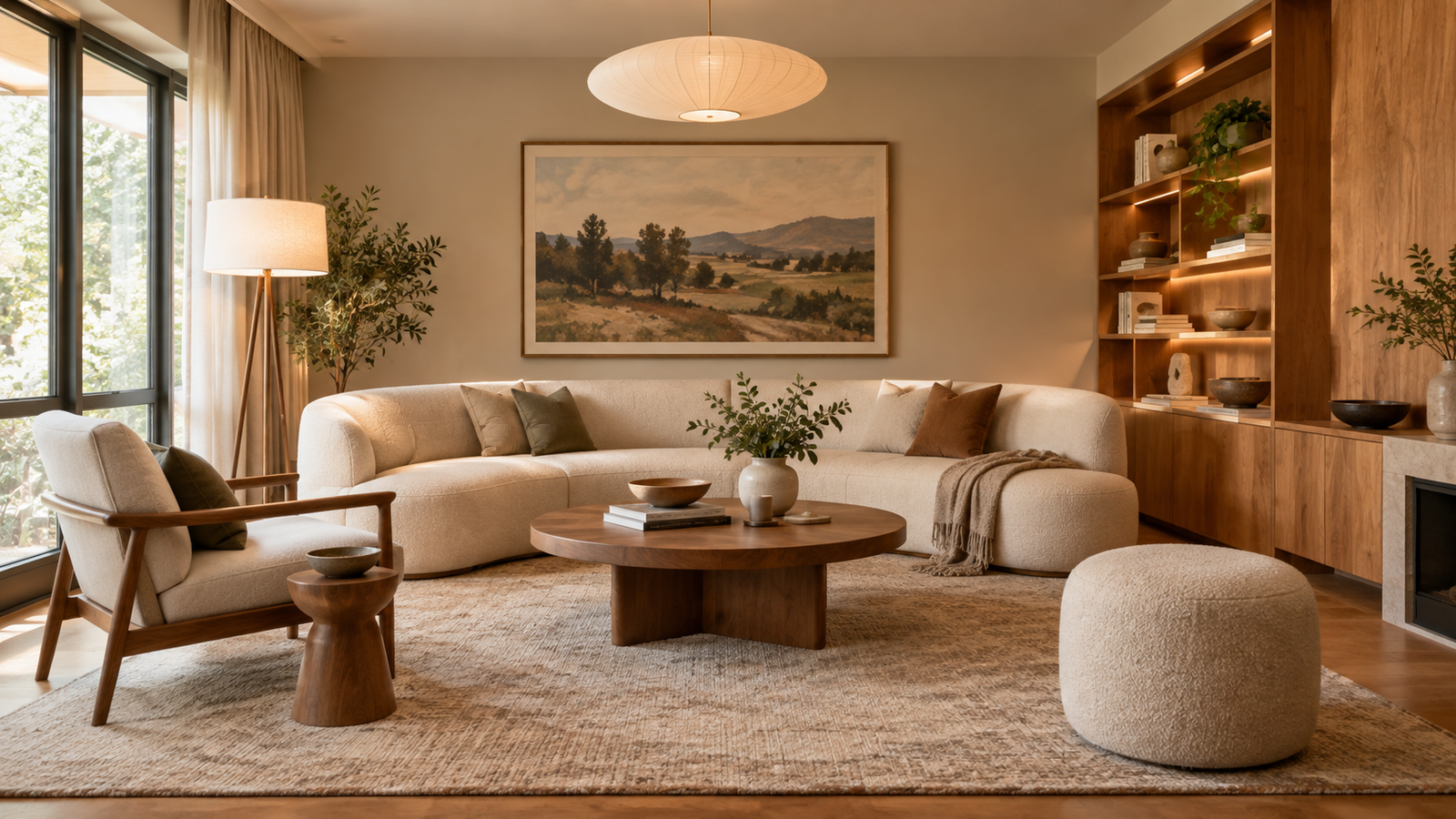
High end living room ideas do not have to mean expensive furniture or a complete renovation. A living room can feel more refined by improving the elements that affect how the space looks and functions: furniture scale, rug placement, layered lighting, window treatments, artwork, color, texture, and clutter.
In this guide, you’ll find 15 practical ways to upgrade a living room, plus budget-friendly ideas, TV wall solutions, small- and large-room layouts, common mistakes to avoid, and simple styling tips you can apply without replacing everything.
- What Makes a Living Room Look High End? The 30-Minute Check Before You Spend
- High End Living Room Ideas: 15 Simple Upgrades
- Furniture and Layout: The Rules Luxury Rooms Follow
- Color, Walls, and Texture: How Quiet Luxury Rooms Work
- The Simple Details That Read as Luxury
- The TV Wall: Luxury Living Room With TV Ideas
- High End Living Room Ideas on a Budget: 3 Tiers
- Small vs. Large Living Rooms: How to Scale These Ideas
- Mistakes That Keep Your Living Room From Looking Expensive
- High End Living Room FAQ
- lighting-the-fastest-way-to-look-high-end
What Makes a Living Room Look High End? The 30-Minute Check Before You Spend
When a living room feels unfinished, I check the layout and lighting before blaming the sofa. A high end living room does not need to be full of expensive things. The choices simply need to feel considered.
I use this quick checklist to spot what may be throwing the room off:
- Flat light: One ceiling bulb is doing every job.
- A floating rug: The rug sits in the middle, separate from the seating.
- Too many small accents: Nothing gives the eye a clear place to land.
- A matching furniture set: The sofa, loveseat, and chair look as if they came as one showroom package.
- Short curtains: The panels stop at the window instead of reaching the floor.
Spotting a problem is quick. Deciding what to change takes longer. Before I spend money, I set aside about 30 minutes to plan.
- Measure the room. Check the floor area, door swings, windows, and built ins so new pieces will fit.
- Decide how you use the room. Watching TV, reading, and hosting guests may call for different furniture arrangements.
- Choose one focal point. It could be a fireplace, a view, or the media wall. Plan the living room layout around that feature instead of letting the TV become the focus by default.
- Save reference images. Pick around ten rooms with a similar feeling to the one you want. Look at the colors, shapes, and mood before shopping for individual items.
I pay special attention to the focal point. When several items compete for attention, the room can feel busy. And before buying anything, I try moving the sofa a few inches away from the wall. It costs nothing, but the new position may open up the seating area and change how the room feels.
High End Living Room Ideas: 15 Simple Upgrades
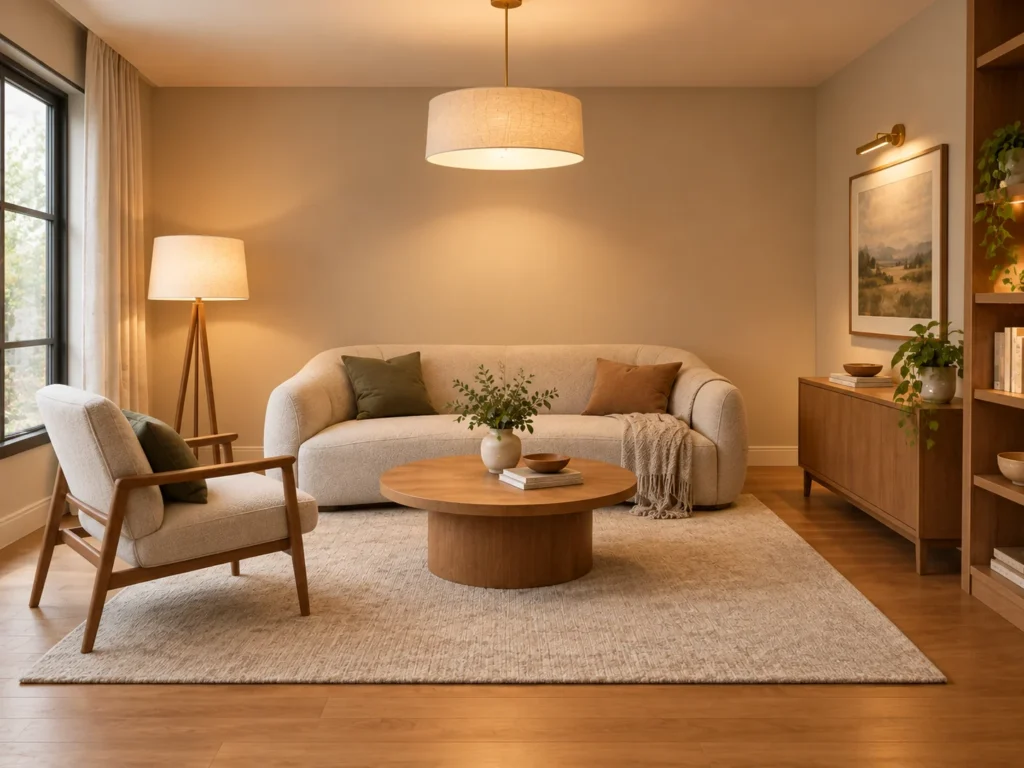
A living room can have beautiful furniture and still feel flat if one ceiling light does all the work. Start by deciding what the lighting needs to do: brighten the room, help with a task, or draw attention to a feature.
Ambient light fills the space. Task light helps with reading or another activity. Accent light highlights something you want the eye to notice, such as a shelf or artwork.
1. Layer three light sources in every zone.
Start with the main light, then add a lamp near the places where people read or sit. A small accent light can highlight art or a shelf. You do not need all three in every corner, but a mix often feels more comfortable than one bright ceiling fixture.
A dimmer makes the overhead light easier to adjust. I prefer a softer setting in the evening, then brighter light when I need to read or tidy up. The right level depends on the room and the people using it.
Warm white LED strip lighting can add a gentle glow beneath a floating shelf or inside a display niche. Hide the light source where you can so the effect feels calm rather than like a row of visible dots. That is the part people often miss.
For a more flexible setup, look for tunable lights that let you change the color temperature. You can choose cooler light for daytime tasks and a warmer setting later. Check the product details before buying, since controls and compatibility vary.
2. Add one statement pendant or chandelier.
A pendant or chandelier can give the seating area a clear visual anchor. I would choose one fixture that suits the room’s scale, then let the smaller lights play supporting roles. Brushed brass, matte black, and glass are options, not rules; the finish should make sense beside the other materials in the room.
Size matters. A small pendant can disappear beneath a high ceiling, while a very large fixture may crowd a modest space. Measure the area and check the fixture’s dimensions before ordering.
Placement and clearance matter too. Follow the manufacturer’s installation instructions and local requirements rather than relying on one height for every ceiling or walkway. If you are unsure, ask a qualified installer.
Renters can sometimes replace a basic fixture temporarily, but check the lease and arrange the work safely. Keep the original fixture and any parts together so you can reinstall them when you move out.
3. Place a large mirror opposite the window.
A mirror opposite a window can reflect daylight farther into the room. It does not add daylight, but the reflection may make the space feel brighter.
Try the mirror in a few positions before securing it. Across from a window, it reflects the view and light; beside a lamp, it can bounce some of that glow around. Behind a sofa, it may add depth, though the reflection matters. A mirror that mostly shows a blank wall may not help the room.
Furniture and Layout: The Rules Luxury Rooms Follow
A room feels more intentional when the furniture fits both the space and the way you use it. Scale and proportion are simply about how the sizes of the pieces relate to one another and to the room.
You may not need new furniture. Before buying new furniture, check the layout, rug placement, and focal point and the one piece you want people to notice.
4. Choose One Statement Piece
Spreading a budget across several pieces can leave you with a room full of items that do not work together. I prefer choosing one focal piece, then keeping the surrounding furniture quieter and comfortable.
Curved furniture is one way to create a focal point. A curved sectional sofa, rounded armchair, or sculptural coffee table can soften a room with lots of straight edges. But shape alone does not make a piece right for your space. Measure first, including the route the furniture needs to take through the doorway.
Furniture scale matters as much as style. Choose a sofa or statement piece that fits the room, leaves clear walking paths, and works with the proportions of nearby furniture. Measure both the room and the route through the doorway before buying.
5. Use the Front-Legs Rug Test.
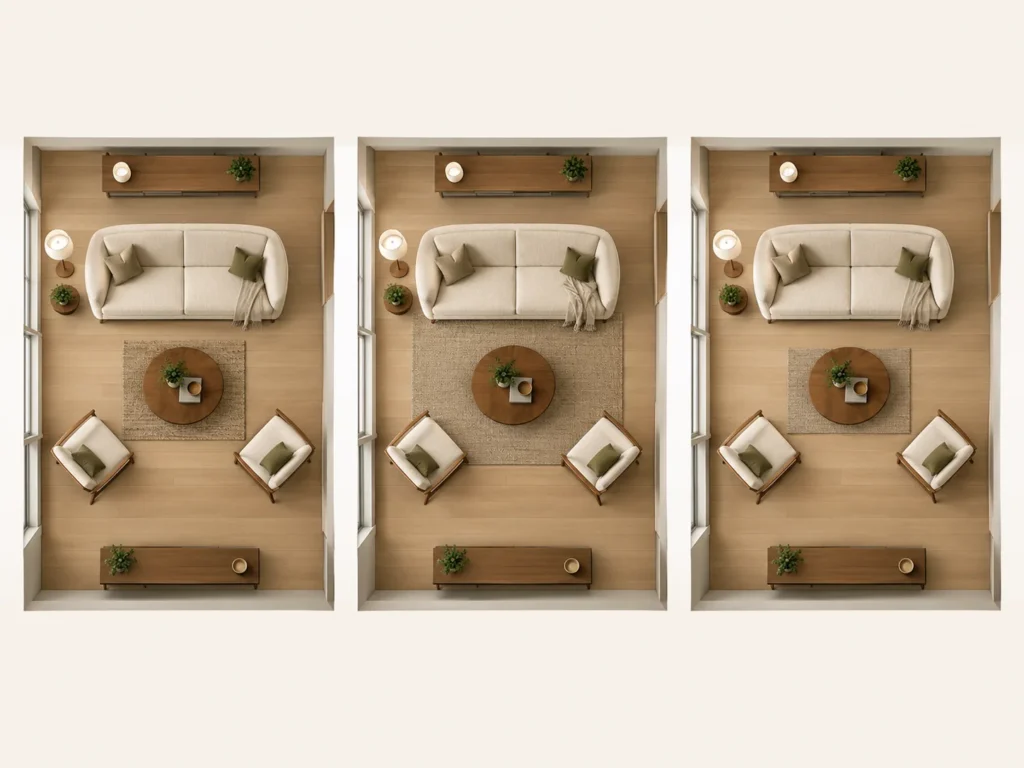
A rug often feels connected to the seating when the front legs of the main seats rest on it. The back legs can stay off. Treat this as a starting point, then check that the arrangement feels balanced and leaves clear paths through the room.
Measure before you buy. A 5 by 8 rug may suit a smaller seating area, while an 8 by 10 or 9 by 12 may work better in a larger room. The right size depends on the furniture and floor plan, so mark the rug’s edges on the floor with tape first.
Already have a small patterned rug you like? Layering it over a larger plain rug is one option. The pattern stays visible, while the larger base can help connect the seating.
6. Float the furniture off the walls
Pushing every piece against the walls can leave the middle of the room feeling empty. Try pulling the sofa forward a little and turning the chairs toward one another. Even a small shift can make the seating feel more connected.
Leave enough room to walk around the furniture. The aim is not to float every piece at any cost; it is to make the layout work for people instead of simply following the edges of the room.
7. Choose quality, neutral upholstery.
A statement chair or sofa can carry the color or shape. For the other large pieces, neutral upholstery gives you more room to change pillows, throws, and smaller accents later.
Cream, oatmeal, taupe, and soft gray are all possible starting points. I would look at fabric samples in the actual room, both in daylight and with the lamps on. A color that looks calm in a shop can shift beside warm wood or cool flooring.
Bouclé, linen, cotton velvet, and leather each have a different texture and care needs. Check cleaning instructions and how the fabric feels before choosing it. The best option is the one that suits your household, not just the one that looks good in a photo.
Color, Walls, and Texture: How Quiet Luxury Rooms Work
A quiet room does not have to be white or gray. Warm neutrals are one option, but the right palette depends on the flooring, furniture, and light already in the space.
Quiet luxury is often used to describe restrained colors, tactile materials, and pieces that do not rely on loud patterns to get attention. I would focus less on the label and more on how the surfaces work together.
8. Start with a warm neutral base.
Cream, oatmeal, warm taupe, and soft brown gray can make a calm base. White and cool gray can work too; neither is automatically a rental color or a luxury color.
Look at the floor first. If you have warm oak, a wall color with a similar warmth may sit comfortably beside it. Bring home paint samples and check them at different times of day. Natural light can change how a color looks.
Painting the baseboards the same color as the walls can soften the contrast between them. It may make the wall feel less interrupted, but the effect varies with the room’s trim and ceiling height. Test a small area before painting all the trim.
If you want stronger color, try it on one wall or in a large piece of art, then see how it looks beside the rest of the room. Transitional style, modern classic style, and Japandi each have different details, even if a calm palette appears in all three.
9. Mix three textures, hard, soft, and organic
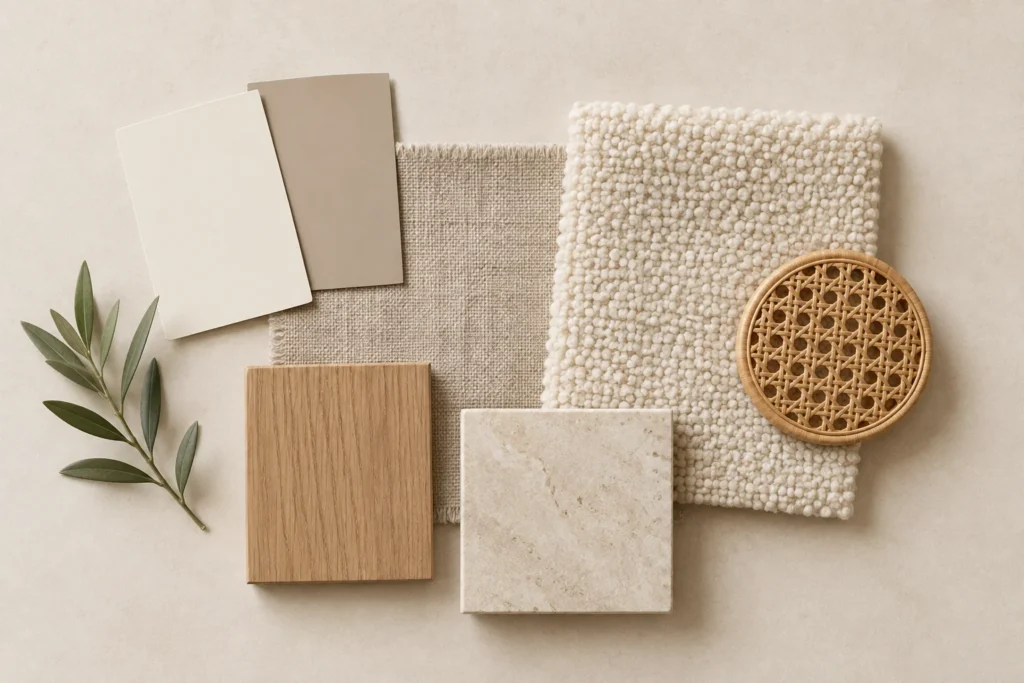
A neutral room can feel flat if every surface has the same finish. Try combining a hard material such as wood or stone, a soft fabric such as linen or bouclé, and an organic detail such as rattan or a plant.
Travertine, marble, solid wood, leather, and linen all have distinct textures. You do not need to use them all. Two or three materials that suit the room may be enough.
If everything looks beige and smooth, change the texture before adding another color. A woven throw or wood tray may do more for the room than another small decoration.
10. Add paneling, molding, or a painted ceiling.
Architectural details can give a plain wall more character, but one feature is often enough. Fluted or slatted wall paneling adds vertical lines and texture. Before installing it, check the wall dimensions and whether the material suits the room.
For a lower commitment change, paint one wall or the ceiling. Crown molding and wider baseboards are other options, but they involve more work and may not suit every home. Choose based on the existing architecture rather than adding trim just to make the space look more expensive.
If the room feels flat, look at the surfaces and textures first. If it feels busy, check how many colors and focal points compete for attention before buying more furniture.
The Simple Details That Read as Luxury
A room does not need a small accessory on every surface. I would rather see one large piece of art and some open space than a collection of items with no clear arrangement.
Simple high end living room ideas often come down to editing what is already there. A swap or a rearrangement can be more useful than another purchase.
11. Hang one large piece of art at eye level.
Several small frames can work, but they need a clear arrangement. One larger piece is another option, especially above a sofa or console. Before hanging anything, check its size against the furniture and the wall.
There is no single height that works in every room. Consider where people will view the art from, and avoid placing it so high that it feels separate from the furniture below. For a gallery wall, lay out the frames on the floor first and adjust the spacing before making holes.
A strong frame can help a simple print feel finished. If you like dark walls, test the paint beside the artwork before committing. A dark background can create contrast, but the result depends on the art and the light in the room.
12. Bring in one tall plant.
Use one tall plant to fill an empty vertical corner. Place it beside a sofa, console, or unused corner where it adds height without blocking a walkway. Match the pot to an existing material or finish in the room so it feels integrated rather than randomly added. Choose a plant that suits the light and the care you can give it, then place it in a pot that fits the room.
If a live plant is not practical, a well made artificial one is an option. Look at it from the places people usually sit and enter the room. If the leaves look shiny or the pot is flimsy, the display may feel less convincing.
13. Upgrade the small hardware.
Small details can make a room feel more finished, but you do not need to replace every switch plate or handle. Check whether the current hardware looks worn, mismatched, or out of place beside the other finishes.
Solid metal pulls, a simple drapery rod, or elegant shutters may suit some rooms. Compare finishes and measurements before buying. Marble accents, such as a lamp base or small tray, can echo stone elsewhere without adding a large feature wall.
14. Give clutter a place to go.
Clutter tends to return when the room has no easy place to put everyday items. Start with what gathers on the coffee table: remotes, books, mail, or a mug. Then choose storage that fits those items, such as a lidded box or a credenza with doors.
A short reset can help keep surfaces clear. Put things back where they belong before leaving the room, rather than waiting until everything piles up. The system has to be easy enough to use on an ordinary day.
15. Style pillows and throws in odd numbers.
The 3-5-7 rule is a styling guideline, not a law. An odd number of objects in varied sizes can make a grouping feel less matched, but pairs can work well in a formal room.
For pillows, try different sizes rather than lining up identical ones. Two square pillows and a smaller lumbar pillow are one possible mix. Choose inserts that hold their shape and covers that suit how the sofa is used.
A linen throw can add another texture. Fold it over an arm or back, or leave it loose if that suits the room. Add a vase, small sculpture, or another object only if the surface needs it.
| Area | Common Problem | High-End Upgrade | Budget-Friendly Alternative |
|---|---|---|---|
| Lighting | One ceiling fixture | Layer ambient, task & accent lighting | Add a floor or table lamp |
| Rug | Rug only under coffee table | Connect the seating with a correctly sized rug | Mark the ideal size with tape first |
| Furniture | Everything pushed against walls | Float seating to create a conversation zone | Rearrange existing furniture |
| Windows | Short or disconnected curtains | Use properly scaled floor-length drapes | Reposition existing panels |
| Artwork | Several tiny pieces | Use one larger piece with the furniture | Reframe existing artwork |
| TV Wall | Visible cables | Hide cables and coordinate screen + console | Declutter and organize cables |
| Storage | Everyday clutter visible | Use closed storage | Add baskets or a lidded box |
The TV Wall: Luxury Living Room With TV Ideas
The TV can stay in the living room. If you use the room for watching shows, design the wall around the screen instead of treating it as an afterthought. A separate TV free sitting room is another valid choice, but it is not a requirement for an elegant space.
Conceal first.
Hide visible cables where practical and choose a console with storage that suits the equipment. Push to open fronts can keep the surface simple, but check how the doors work and whether the unit has enough space for the devices you use.
Plan for access too. A setup that hides every cable but makes the equipment difficult to reach may be frustrating later.
Scale next.
A low profile console can keep the wall from feeling top heavy. Many designers choose a console wider than the screen, but treat that as a proportion guide, not a strict rule. Check the width of the wall, screen, and nearby furniture together.
Backlighting is optional. A subtle LED strip behind a panel can add a soft glow, but it will not suit every room or screen setup. Use lighting that can be dimmed or switched off if you prefer a darker room for viewing.
Choose the background.
Fluted paneling in wood tones can add texture behind a screen. Paint, wallpaper, or a simple wall can work too. Marble is another option, though it can cost more and may draw attention away from the rest of the room.
Some homes pair a TV with a linear fireplace or display niches. Check the manufacturer’s instructions and installation requirements before placing a screen near heat or building a feature wall around it.
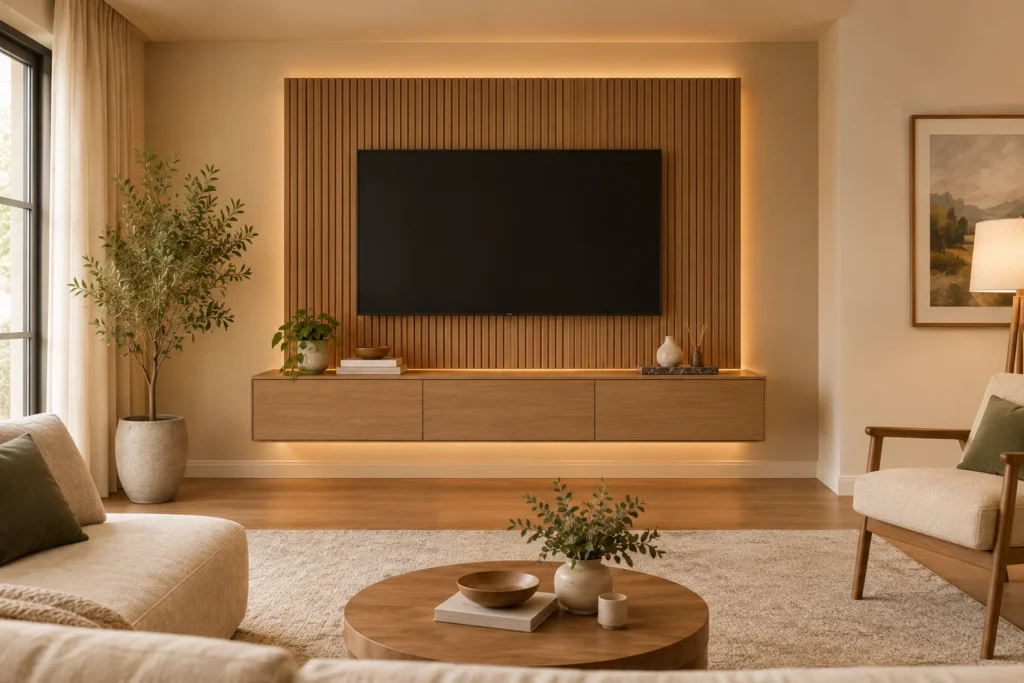
Common TV Wall Mistakes to Avoid
I avoid hiding cables in a way that makes them unsafe or difficult to access. I also check the screen’s height from the usual viewing seat before mounting it. A console that is much narrower than the screen can look out of balance, so compare both widths before choosing one.
The TV wall does not have to become the room’s main feature. It just needs to work with the rest of the furniture and feel planned.
High End Living Room Ideas on a Budget: 3 Tiers
The order of changes matters more than buying everything at once. I would start with layout and lighting, then decide whether the room needs a rug, drapes, or larger furniture.
The amounts below are budget tiers, not guarantees about what a project will cost. Prices vary by location, room size, product, delivery, and labor. Check local costs before treating a tier as a shopping list.
Under $500: the fast wins
Choose a few changes that fit your actual budget. Start by moving the furniture away from the walls if the layout allows. That costs nothing. Then consider paint, pillow covers, a plant, or storage for the items that collect on open surfaces.
A warm white LED strip beneath a shelf can add accent light. Compare the product length and controls before buying, and check whether you need extra parts or installation help.
You do not have to do every item on this list. Pick the changes that address the clearest problem in your room.
$500 to $2,000: mid tier impact
A larger rug can help connect the seating area, but measure the floor plan before choosing a size. Drapes, a pendant, or one wall treatment may also suit the room. Get quotes if installation is involved.
For a TV wall, compare floating consoles with enough width and storage for your equipment. Push to open fronts are one style of cabinet door; check the quality and layout rather than assuming the feature alone makes a unit high end.
$2,000 and above: investment level
This tier may cover a larger piece of furniture, built ins, or several connected upgrades. Prices vary widely, so price each part separately. A custom sofa, media unit, or stone console may require different budgets and lead times.
I would choose one major piece that solves a real need, then plan around it. If the seating works and the storage is adequate, there may be no reason to replace either one. Fluted paneling or a simpler paint change may be enough for the TV wall.
If you are only making three changes this month, start with the layout, a warm wall color, and lighting you can adjust. Price each one before adding another project.
Small vs. Large Living Rooms: How to Scale These Ideas
Room size changes where I would start. In a small living room, look at vertical space and walkways. In a large one, think about how to group furniture so the room does not feel empty.
Can a small living room look high end? Yes. Choose a clear focal point and make sure the furniture fits the way you move through the room.
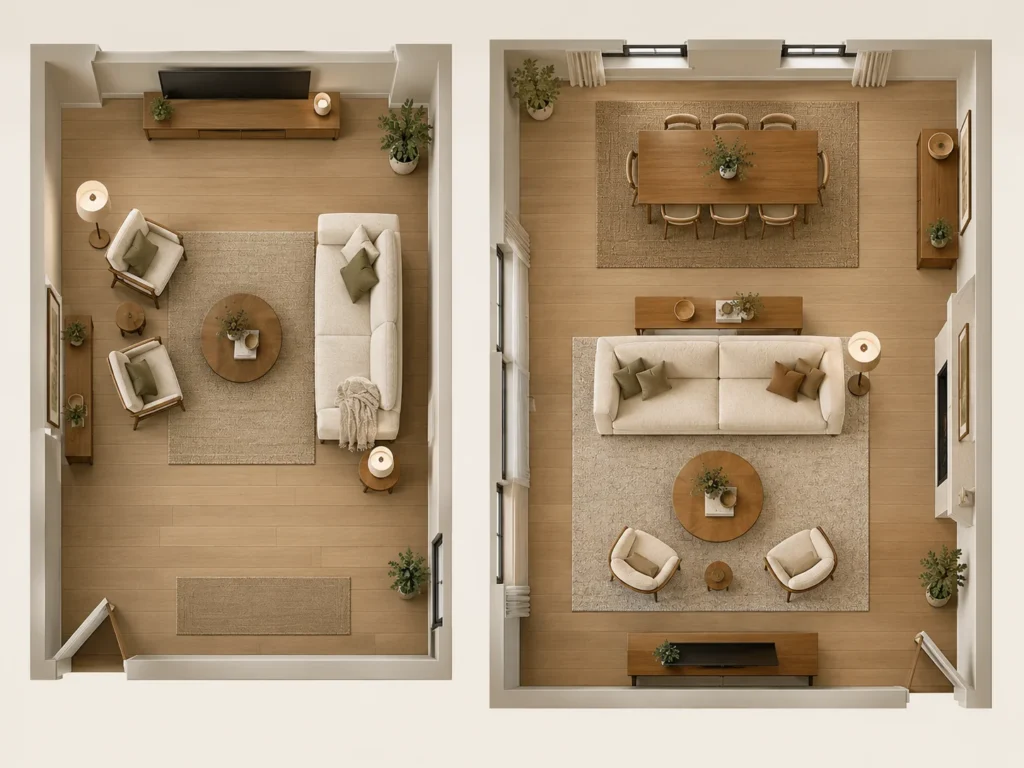
Small living rooms: go vertical and break one rule
Hang drapes closer to the ceiling if the window and wall allow it. A taller line can draw the eye upward. Slim leg furniture may also leave more of the floor visible, though comfort and fit still matter.
Choose one focal point rather than giving every wall equal attention. An L shaped sofa or corner arrangement can work in some layouts, but measure the walkways before deciding. A mirror opposite a window may reflect light into the room.
Storage can be built into an ottoman or bench if you need a place for everyday items. Multifunctional furniture is useful when it solves a specific storage or space problem.
And one large piece can work in a small room. A sofa or artwork with more scale may feel more settled than several tiny accents, as long as people can still move around it.
Large living rooms: zone them
A large room can feel disconnected if every seat sits far from the others. Try creating two conversation areas, each with a clear purpose. A rug can help define one group, while an armchair and side table can form a smaller reading spot nearby.
In an open plan space, a sofa with its back to the dining area can mark the change in use without adding a wall. A console behind it may provide a place for lamps or serving items.
Leave some open floor between the zones. Negative space helps the groupings feel separate rather than crowded. Keep the furniture close enough for conversation, then check the paths through the room.
Mistakes That Keep Your Living Room From Looking Expensive
When a room feels off, I first check for two things: details that came with the home and furniture that feels out of scale. Those are useful places to look, though they are not the only possible causes.
The default trap: things you never chose
Short drapes can make a window feel disconnected from the rest of the wall. If you want a taller look, consider longer panels and check where they will hang before buying them.
A small flush mount beneath a high ceiling may not provide the amount or kind of light the room needs. Review the lighting section and compare fixture size, light output, and placement.
Builder grade fixtures are not automatically wrong, but they may feel out of step with the rest of the room. Replace them only if the style, finish, or light no longer suits the space.
Mounting a TV above a mantel can place the screen high relative to the usual seating position. Check the view from the sofa before deciding where it belongs.
Narrow baseboards may look out of scale beside tall walls, but replacing trim is not always necessary. Compare the trim with the room’s other details before deciding whether to change it.
The scale problem: things you sized wrong
A small rug beneath only the coffee table can make the seating group feel disconnected. Try the front legs test from the rug section and leave some visible floor around the arrangement.
Artwork can feel too small above a sofa or oddly placed on a tall wall. Check its size and position in relation to the furniture, then adjust before buying more pieces.
A narrow console beneath a wide TV may look unbalanced. Compare the screen, console, and wall widths before choosing a replacement.
Matching furniture can work, but a room may feel more personal when every piece is not identical. Try changing one item, such as the chair or side table, rather than replacing the whole set.
In a large room, undersized furniture can look lost. A larger sofa, rug, or artwork may help anchor the space, provided it leaves clear paths for people to move.
High End Living Room FAQ
Here are direct answers to common questions about high end living room ideas. The sections above have the longer steps.
How do I make my living room look luxurious?
Layer your lighting, choose a rug that connects the main seating, and clear crowded surfaces. I would start with those changes before buying more decor. Drapes and concealed storage may help too, depending on the room.
What are the living room trends for 2026?
Quiet luxury is one design direction associated with 2026: warm neutrals, curved furniture, tactile materials, and technology kept out of sight. Chocolate brown, dark wood, travertine, bouclé, fluted paneling, and hidden LED lighting are options to consider, not a checklist. Cool gray can still work; test colors with your flooring and daylight. You can update an existing room with a new textile or one small detail instead of renovating it.
What is the 3-5-7 rule?
The 3-5-7 rule is a styling guideline for arranging objects in odd numbers, often with different heights or sizes. Try it on a coffee table, shelf, or mantel, but do not treat it as a fixed rule. Symmetry can still suit a formal seating arrangement.
What are some ideas for a fancy living room?
Try one larger piece of art, drapes that suit the window, a rug that fits the seating, and a few accessories with different shapes or textures. Clear storage can help keep the surfaces from feeling crowded. Choose only the changes that suit your room.
Can a small living room look high end?
Yes. Use the room’s height, keep the main path open, and choose one focal point. Tall drapes, slim leg furniture, and an appropriately sized mirror can help, but measure before buying.
Do I have to remove the TV to make it look high end?
No. Keep the TV if you use it in that room. Hide visible cables where practical, choose a console that suits the screen, and keep nearby decor simple. A TV free sitting room is another option, not a requirement.
lighting-the-fastest-way-to-look-high-end
Start with three low-cost changes. Adjust the lighting, move the furniture if the layout allows, and give everyday clutter a place to go. Try one change at a time and look at the room again before buying anything.
For high end living room ideas on a budget, start with the under $500 tier and price the changes that fit your space. Measure the rug area and window before ordering drapes or furniture.

Good suggestion!!!!!
Pingback: Images of Living Rooms with Sectionals: 15 Real Ideas
Pingback: Things in the Living Room: 15 Essentials You Actually Need
Pingback: Living Room Without Carpet: 7 Smart Ways to Make It Cozy
Pingback: Ideas for Computer Desk in Living Room: 10 Smart Setups
Pingback: Family Room vs Living Room: 7 Clear, Practical Differences
Pingback: Ideas for Accent Walls in Living Room: 18 Easy Upgrades
Pingback: Living Room Fireplace Ideas: 15 Simple & Cozy Designs
Pingback: Interior Design Styles Explained: 12 Smart Choices
Pingback: Neutral Color Palette Interior Design: 7 Simple Room Combos
Pingback: Guest Room Decorating Ideas: Make Any Spare Room Feel Welcoming - sfdecorstyle.comGuest Room Decorating Ideas: 15 Simple Touches Guests Love