


Most beige bedrooms do not fail because of the paint. They fail because every beige in the room is the same beige.
The failure mode is easy to picture. Walls, duvet, rug, and curtains are all in one shade, and the room reads like a hotel corridor rather than a bedroom. Matching is not the same as designing.
A beige-colored bedroom looks warm and finished when four things line up: the undertone of the beige, the light in the room, the range of textures, and one accent that gives the eye somewhere to land.
Beige is not a single color. Beige is a family of shades that lean warm or cool, and that lean changes how the whole room behaves.
If you are still choosing a base, I go wider into the whole family in my neutral color palette guide.
The Short Version
| Question | Short answer |
|---|---|
| Best beige type for a bedroom | Depends on light. Greige for cool north-facing rooms, warm beige for south-facing rooms |
| Safest accent color | Muted sage or olive green |
| Best paint finish | Eggshell for walls, satin for trim |
| Ideal bulb | 2700K with CRI 90 or above |
| Color split to follow | 60 percent beige, 30 percent cream and wood, 10 percent accent |
| Biggest mistake | Using one identical beige on every surface |
| Cheapest fix | Change the bedding, not the paint. |
| Best rug material | Jute base with a wool layer at the bedside |
Table of Contents
- Beige Isn’t Boring, But It Can Go Wrong Fast
- 12 Beige Color Bedroom Ideas You Can Actually Copy
- 1. White and Beige for a Crisp, Airy Room
- 2. Beige and Gray for a Modern Balance
- 3. Beige and Brown Bedroom Design With Wood and Leather
- 4. Beige and Sage Green for a Restful Room
- 5. Beige and Navy for Quiet Contrast
- 6. Beige and Terracotta for Earthy Warmth
- 7. Beige and Blush for a Soft, Gentle Mood
- 8. Beige and Charcoal for Clean, Modern Lines
- 9. Monochromatic Beige With Real Texture
- 10. Beige With Oak and Rattan for Natural Warmth
- 11. Beige and Cream for a Soft, Hotel Like Look
- 12. Deep Beige and Aged Brass for a Cozy, Elevated Look
- Beige vs Cream: Which One Should Your Bedroom Be?
- How I Choose Beige Bedroom Paint Colors Before Buying Anything Else
- Warm vs Cool Beige: The Undertone Test That Saves the Room
- What Colors Go With Beige Bedroom Furniture?
- How to Buy a Beige Bedroom Set Without Ending Up With a Matching Showroom
- How I Add Color to a Beige Bedroom Without Repainting
- The Texture Formula That Makes Beige Look Expensive
- Color Drenching a Beige Bedroom: When One Shade on Everything Works
- The Lighting Mistake That Turns Beige Muddy
- Small or Dark Bedroom? Beige Color Bedroom Ideas That Still Work
- 6 Beige Bedroom Mistakes That Make a Room Look Cheap
- Beige Bedroom Questions Answered
12 Beige Color Bedroom Ideas You Can Actually Copy
None of these need a renovation. Each one fixes a specific problem that shows up in beige bedrooms, whether that is flatness, a yellow cast, or a room that turns cold after sunset.
If you are not sure which direction suits you, I break down the main looks in interior design styles explained.
1. White and Beige for a Crisp, Airy Room
Start here if your bedroom feels heavy. Put a soft warm white on the bedding and keep the beige on the walls. The white lifts the room without fighting the beige.
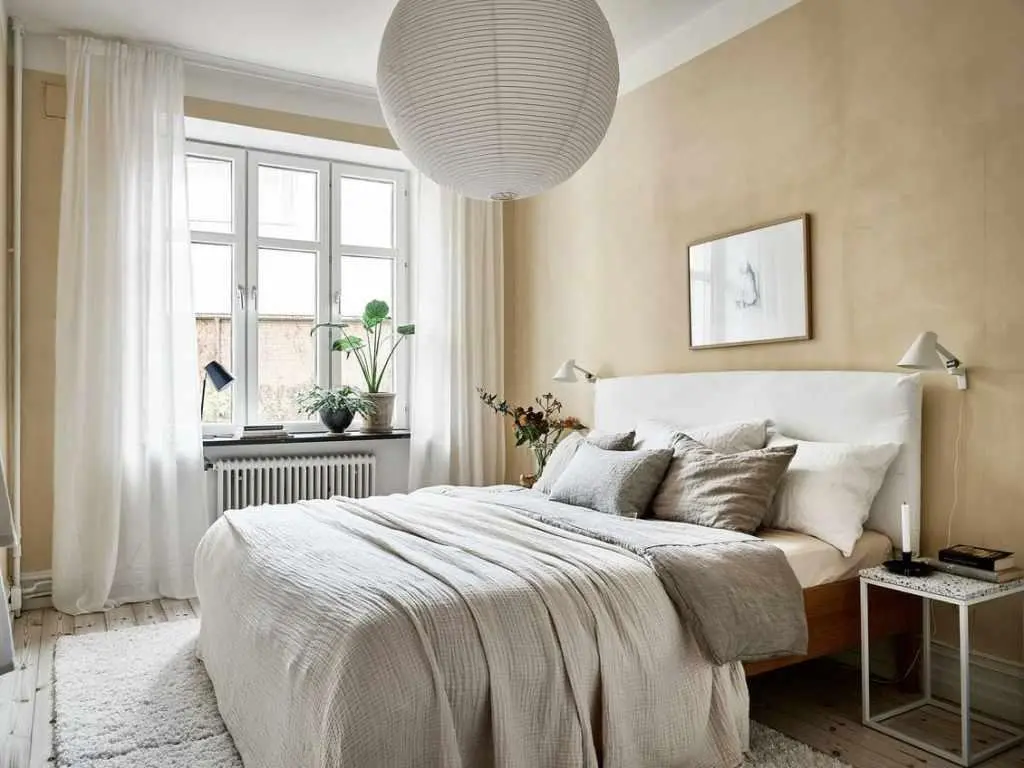
But skip optic white. A stark bright white beside warm beige makes the beige look dirty by comparison. Look for whites with a cream or chalk base instead.
One move: white sheets, beige duvet, cream throw.
2. Beige and Gray for a Modern Balance
Gray only works with beige when the gray carries some warmth. A cold steel gray makes the yellow in a warm beige more obvious, and the walls end up looking tired rather than neutral.
I use greige as the bridge. Greige sits between the two, so a greige wall with charcoal bedding reads modern without going cold.
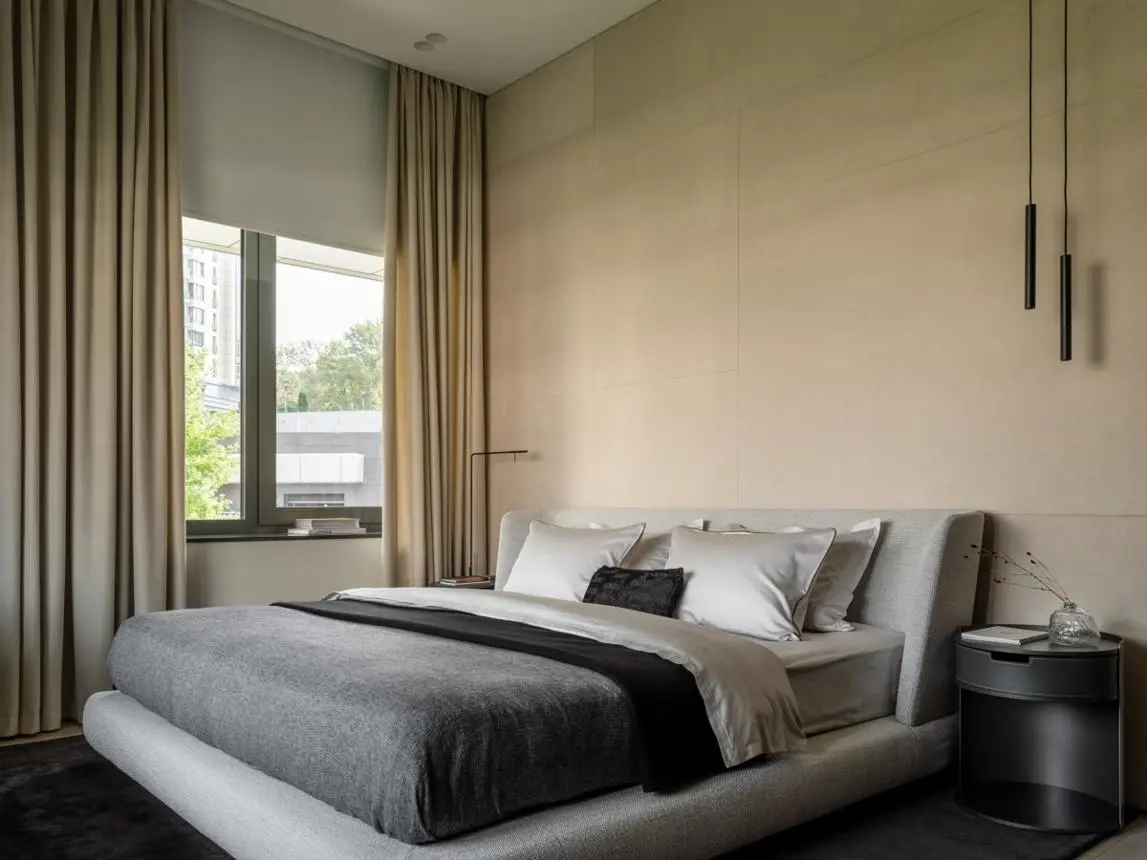
If that is the direction you want, I explain the look properly in my piece on contemporary interior design.
3. Beige and Brown Bedroom Design With Wood and Leather
This is the easiest warm combination to get right, and the easiest to overdo. Walnut, oak, and a tobacco leather bench all sit naturally beside beige.
The catch is the undertone. A yellow leaning oak against a yellow leaning wall turns the whole room sallow. Check the wood in daylight before committing to anything.
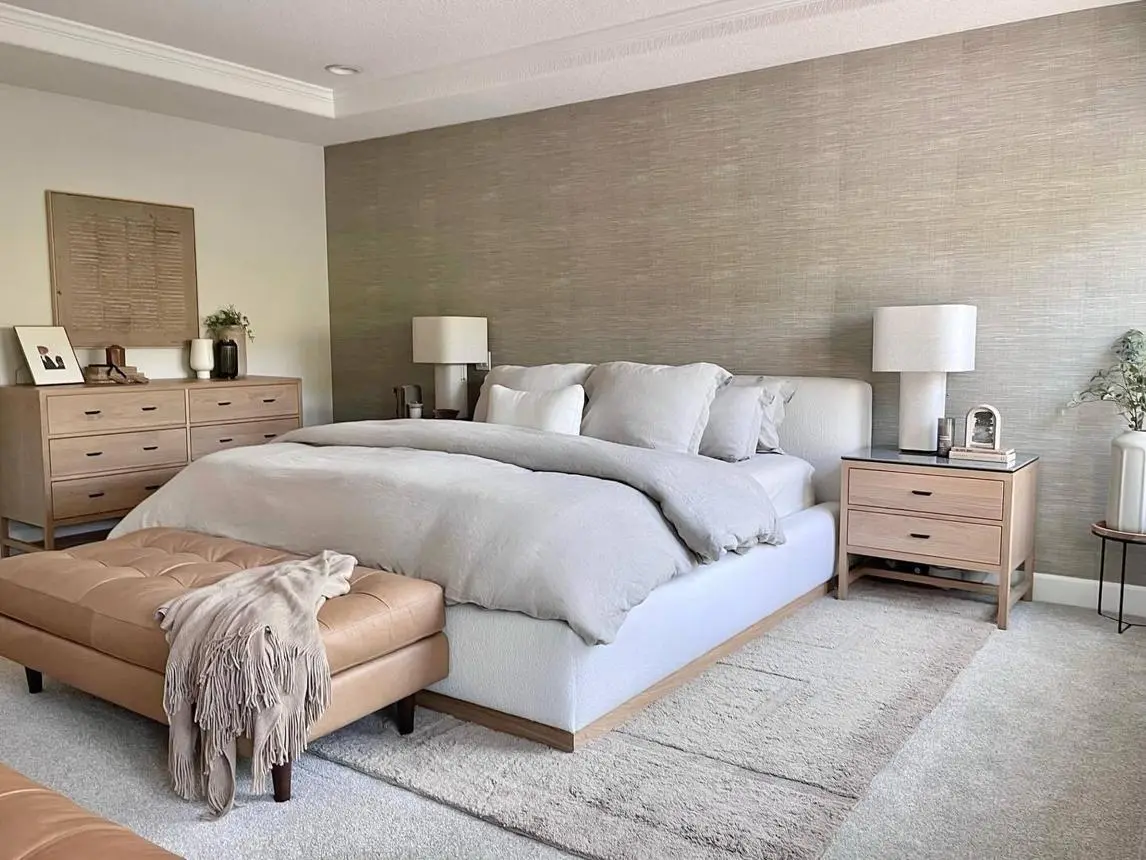
Keep the brown to two pieces. A bed frame and a bench, or a wardrobe and a nightstand. Three or more dark wood items and the beige stop being the base color.
4. Beige and Sage Green for a Restful Room
Sage is the accent I suggest most often. The reason is saturation, not opposition. Sage carries a grey base, so sage cools a warm beige without competing with it the way a bright green would.
You do not need much. A sage throw, one framed print, or a single upholstered chair is enough to shift the mood of a beige bedroom.
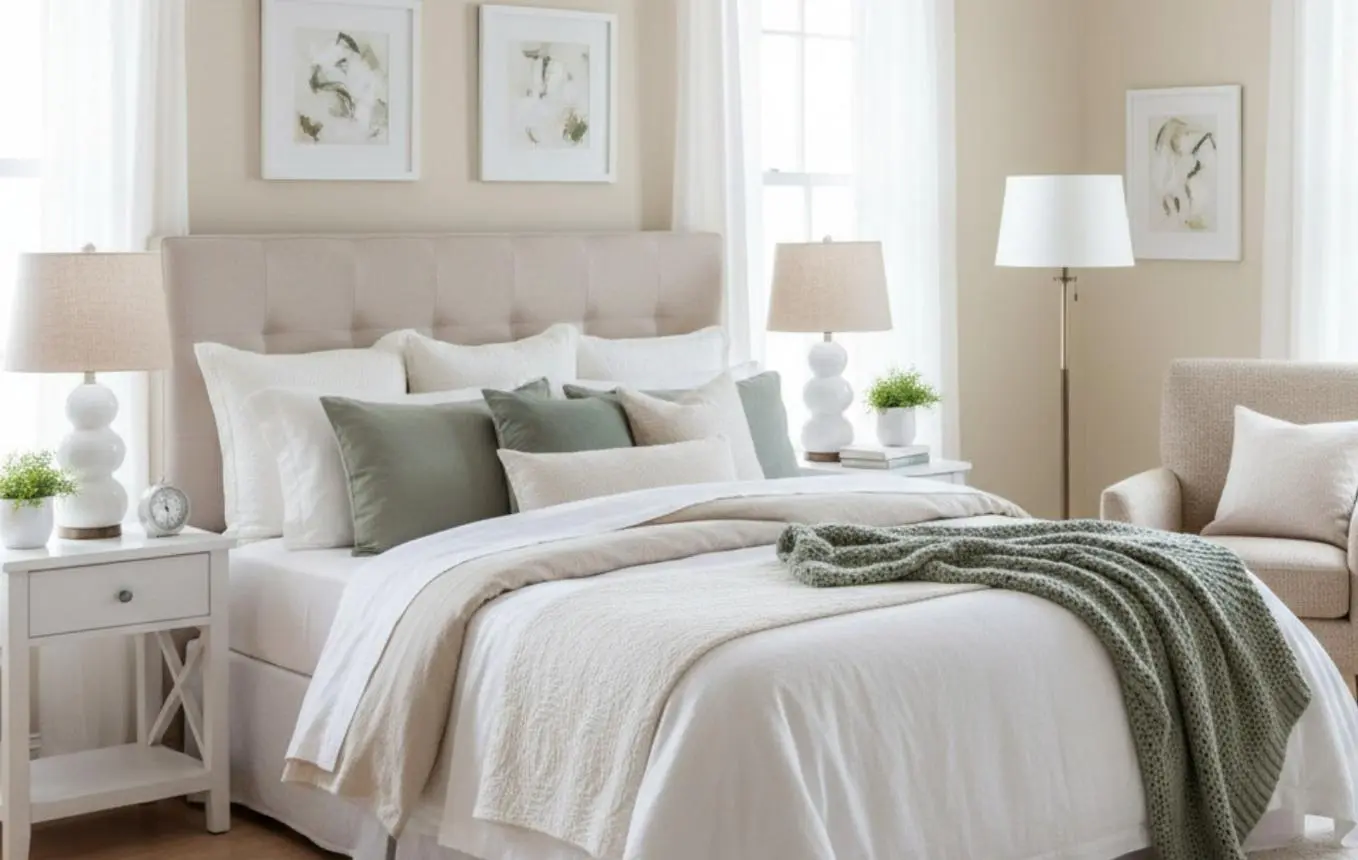
Keep the green muted. I list softer options in my guide to light green paint colors for a bedroom.
5. Beige and Navy for Quiet Contrast
Navy gives beige a backbone. Use navy once, in a lamp base or a cushion, and the room reads as deliberate rather than undecided.

The mistake is going too bright. A royal blue reads sporty next to beige. A deep dusty navy reads tailored.
Keep the navy at or below eye level when you are lying in bed. A navy lamp base and one navy cushion cover it. Navy on the wall behind the bed changes the whole room and stops the scheme being beige at all.
If your beige leans pink, test navy against a wall sample first. Pink based beige and blue based navy can pull against each other in daylight.
6. Beige and Terracotta for Earthy Warmth
Terracotta warms a beige room without shouting. Think lamp bases, a ceramic vase, or one cushion in a clay shade.
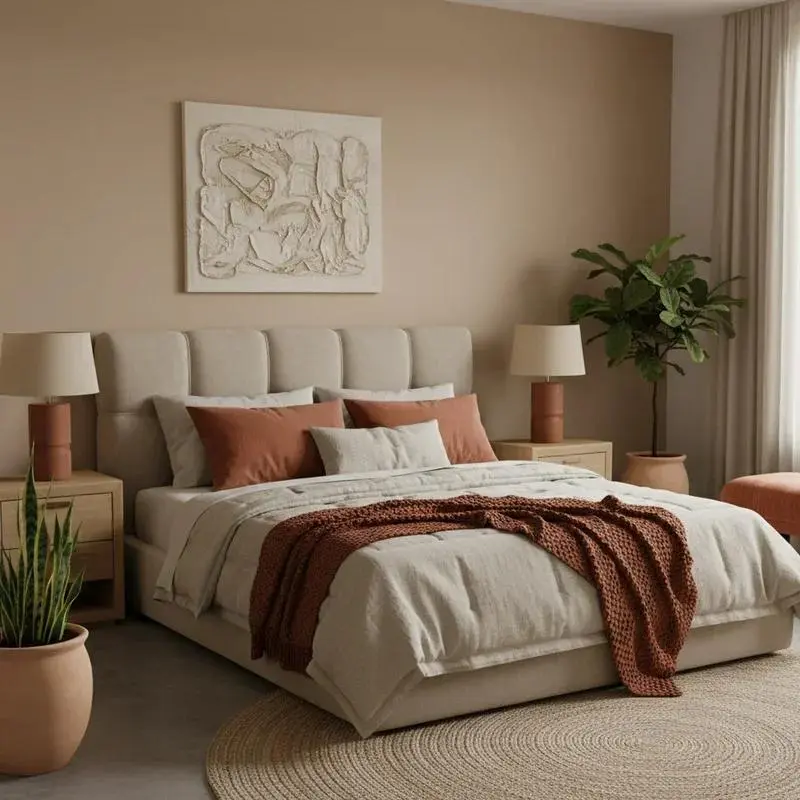
This works best when your beige leans cool. The clay puts back the warmth that a greige took out.
Two or three terracotta objects is the ceiling for a standard bedroom. Past that the clay takes over and the beige becomes the accent instead of the base.
Matte terracotta reads earthy. Glazed terracotta reads decorative. In a beige bedroom I stay matte, because the point of the accent is warmth rather than shine.
7. Beige and Blush for a Soft, Gentle Mood
Blush is the softest accent on this list, and the one people get wrong most often. Dusty blush works. Bubblegum pink does not.
The reason is saturation. Beige is a low saturation color, so a loud pink sits on top of the room instead of blending into it.
I use blush in textiles only. A pillow or a quilt. On all four walls, blush stops being an accent and becomes a pink room with beige furniture in it.

8. Beige and Charcoal for Clean, Modern Lines
Charcoal is my favorite fix for a beige room that feels shapeless. One dark element gives the eye an anchor.
The trick is repetition. A single black lamp looks accidental. A black lamp, a black frame and a slim black bench look intentional.
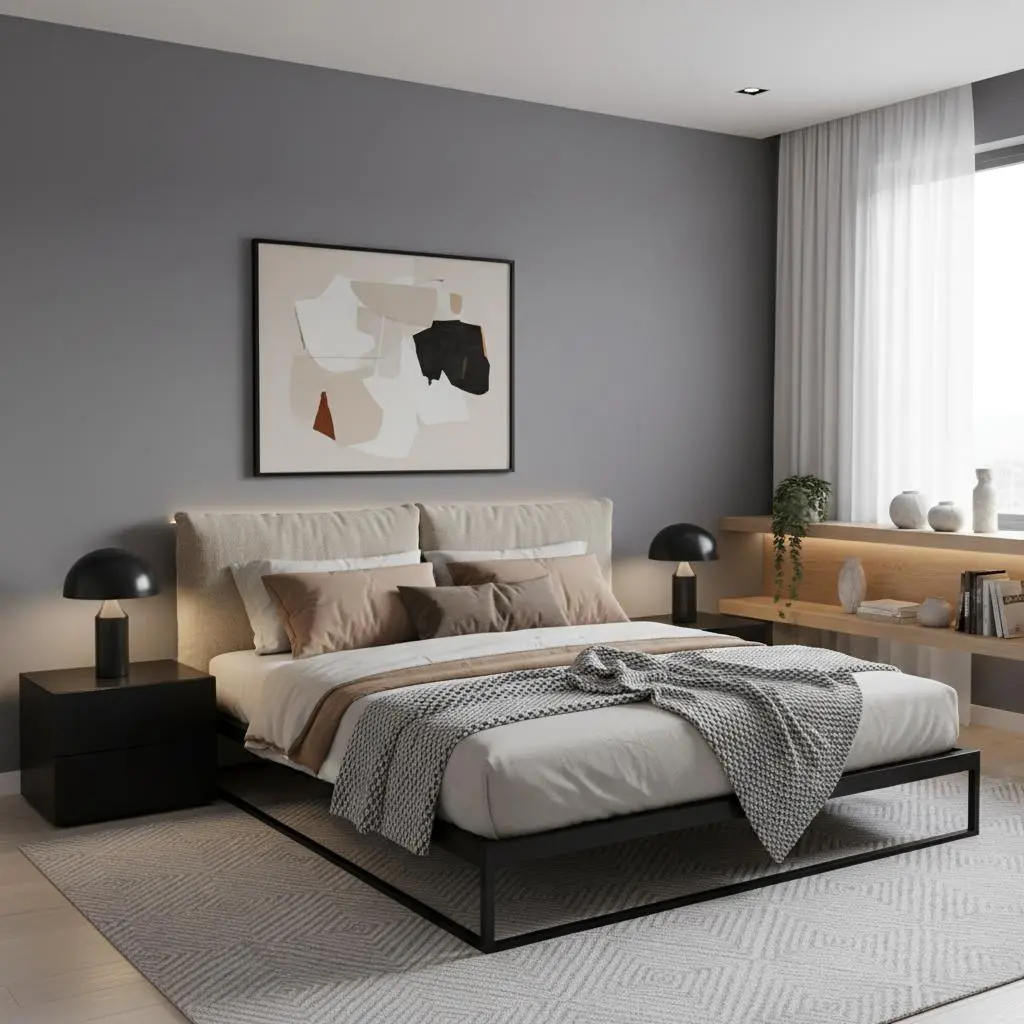
I like black metal here, and I go deeper into that material in my post on industrial house interiors.
9. Monochromatic Beige With Real Texture
An all beige room can look expensive. An all beige room can also look like a rental. The difference is texture, not color.
I use at least three shades of beige in one room. Light on the walls, medium in the rug, deeper on the headboard. Then I change the surfaces so each one catches light differently.
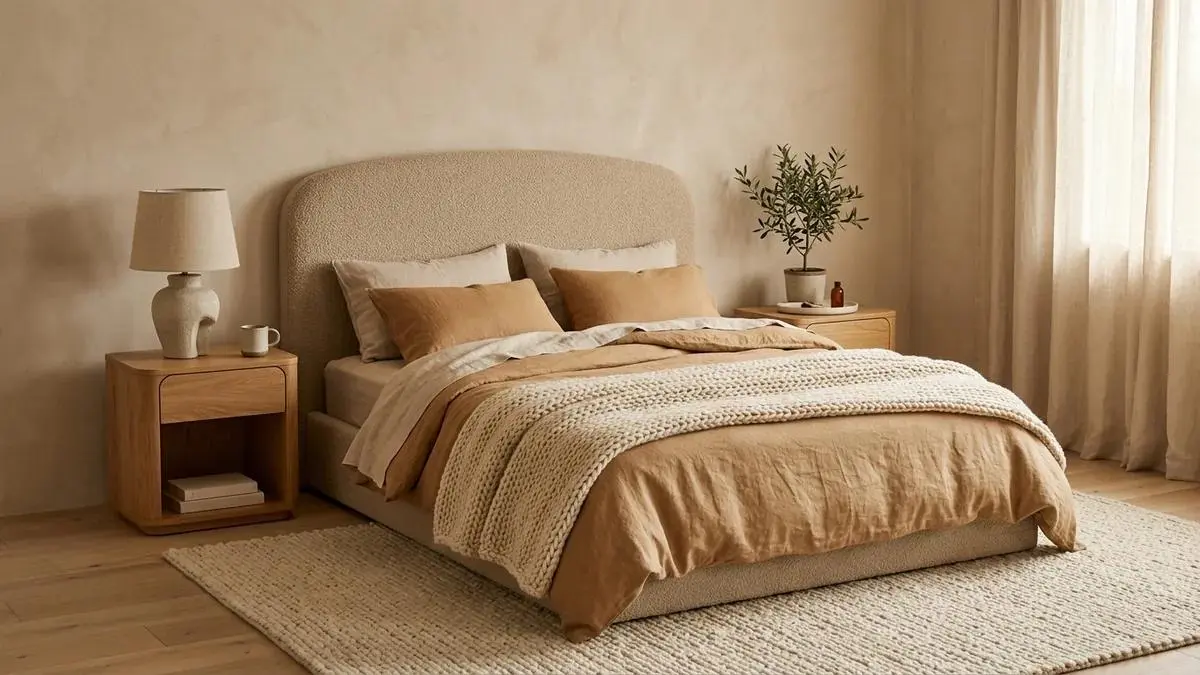
Same color family, different materials. Count the materials before you count the colours.
10. Beige With Oak and Rattan for Natural Warmth
Rattan and light oak stop beige from feeling formal. One cane headboard or a single rattan pendant is usually enough.
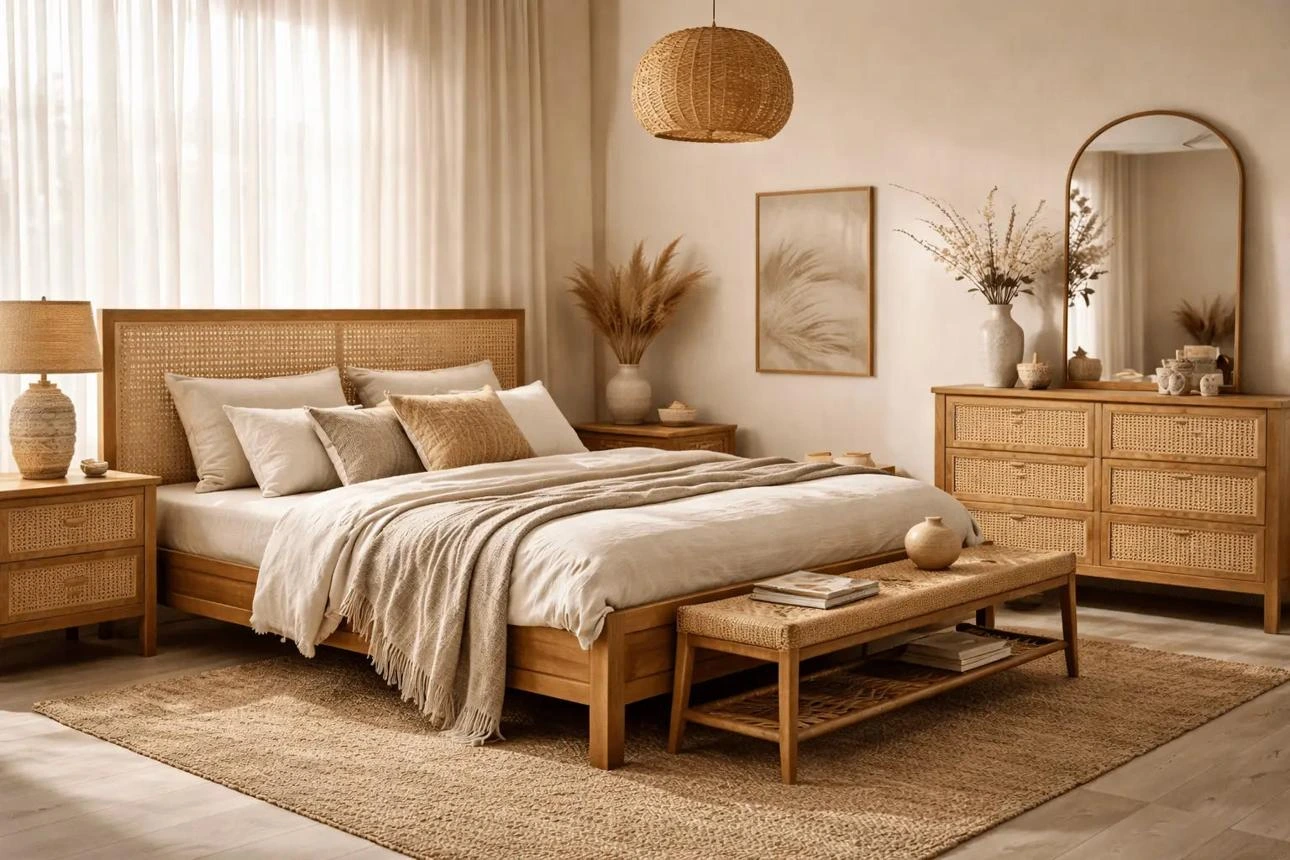
Two pieces, maybe. More than that and the room starts reading coastal, which may not be what you wanted.
Check the wood undertone against your wall sample first. Oak varies a lot between finishes, and the difference shows up fast on a large piece.
11. Beige and Cream for a Soft, Hotel Like Look
Cream on beige gives you that quiet, low contrast look most people mean when they say calm.
Low contrast only works with high texture. Without texture, cream and beige merge into one blank surface and the room loses its edges.
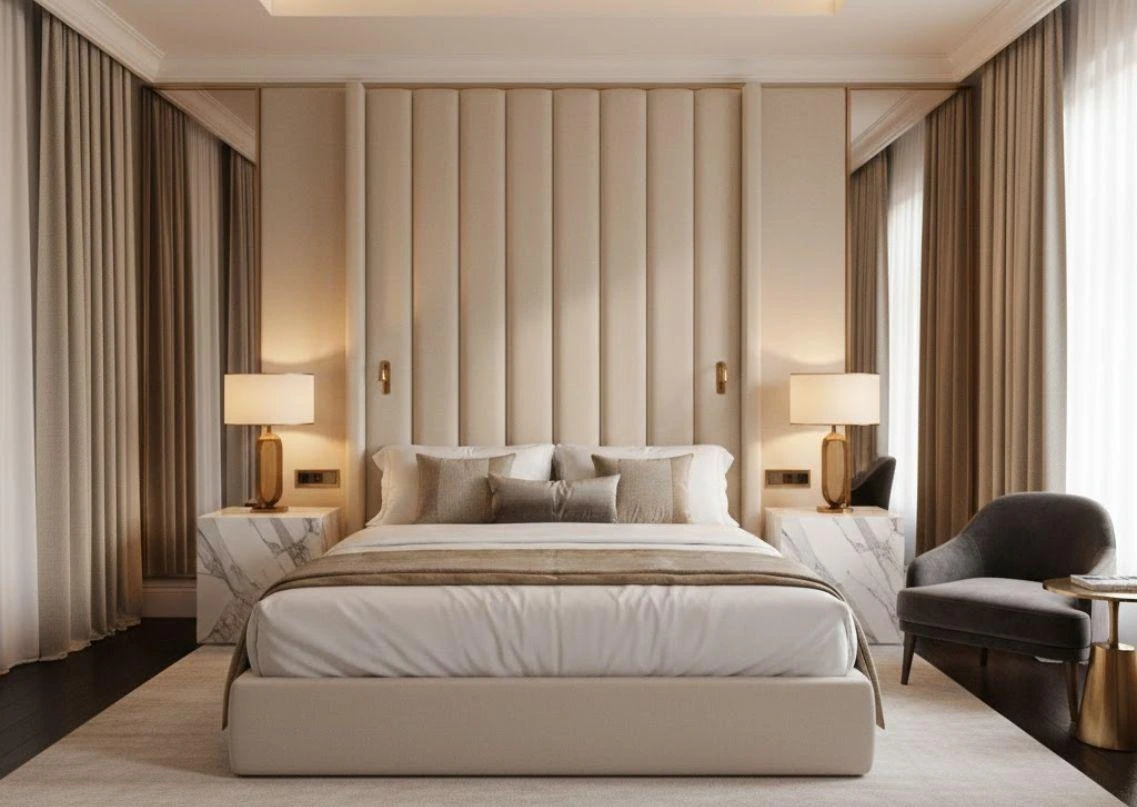
This is the palette I would pick for a guest room, because the palette suits almost everyone. I have more on that in my guest room decorating ideas post.
12. Deep Beige and Aged Brass for a Cozy, Elevated Look
Deeper beige with warm metal feels finished in a way pale beige rarely does. The metal adds a little shine without breaking the calm.
Choose aged or satin brass. Mirror polished brass is too sharp against a soft neutral, and the reflection reads harsh under bedroom lighting.
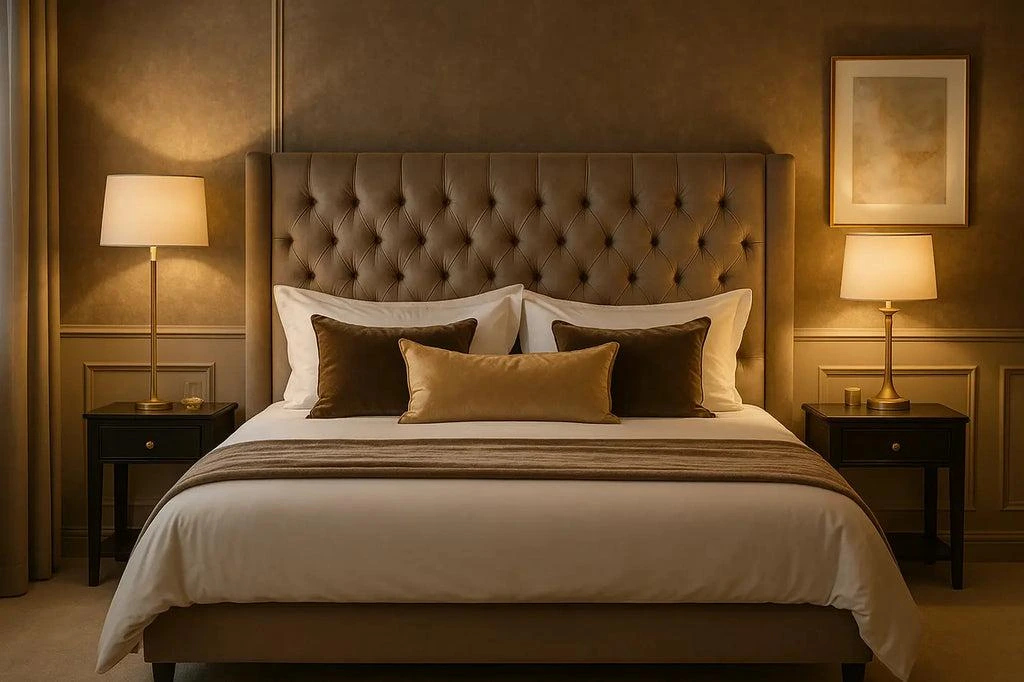
Brass and deeper neutrals are a classic pairing, and I cover more of that in my traditional interior design guide.
Beige vs Cream: Which One Should Your Bedroom Be?
Beige starts from brown. Cream starts from white. That single difference decides which one your bedroom needs.
Beige is the deeper, more grounding of the two, and beige carries a hidden undertone that can lean grey, pink, yellow or green. Cream is white with a yellow base, so cream stays light and stays warm no matter which tin you buy.
Here is how I would choose between them.
| Factor | Beige | Cream |
|---|---|---|
| Base colour | Brown | White with yellow |
| Undertone range | Grey, pink, yellow, green | Yellow only |
| Light reflection | Lower, absorbs more | Higher, brightens the room |
| Best room | Large or well lit bedrooms | Small or dim bedrooms |
| Hides marks | Better | Worse |
| Pairs with | Wood, brass, sage, terracotta | Warm white, oak, soft blush |
| Main risk | Can look muddy under cool light | Can look yellow under warm bulbs |
For cream color bedroom walls in a north facing room, pick a cream with the least yellow you can find. Under cool daylight plus a warm bulb, a strongly yellow cream turns butter coloured fast.
For a beige bedroom that feels too heavy, cream bedding fixes the problem faster than repainting. You keep the depth on the walls and lift the largest soft surface in the room.
How I Choose Beige Bedroom Paint Colors Before Buying Anything Else
Test the paint in the actual bedroom before you buy a single cushion. A colour chart tells you what a shade looks like under the printer’s lighting, not under yours.
Beige shifts noticeably across the day because the undertone is doing most of the work. A shade that looks creamy at noon can turn grey or muddy by nine at night, and no shop lighting will tell you that.
The sampling routine I recommend takes three days and costs the price of one tester pot:
- Paint a piece of card or board, roughly A4 size, in two coats. A small patch on the wall is too surrounded by the old colour to judge.
- Move the board around the room. Behind the bed, opposite the window, and in the darkest corner.
- Check the board three times in one day: morning, midday, and after dark with the lamps on.
- Hold the board against your flooring and your bedding before you decide.
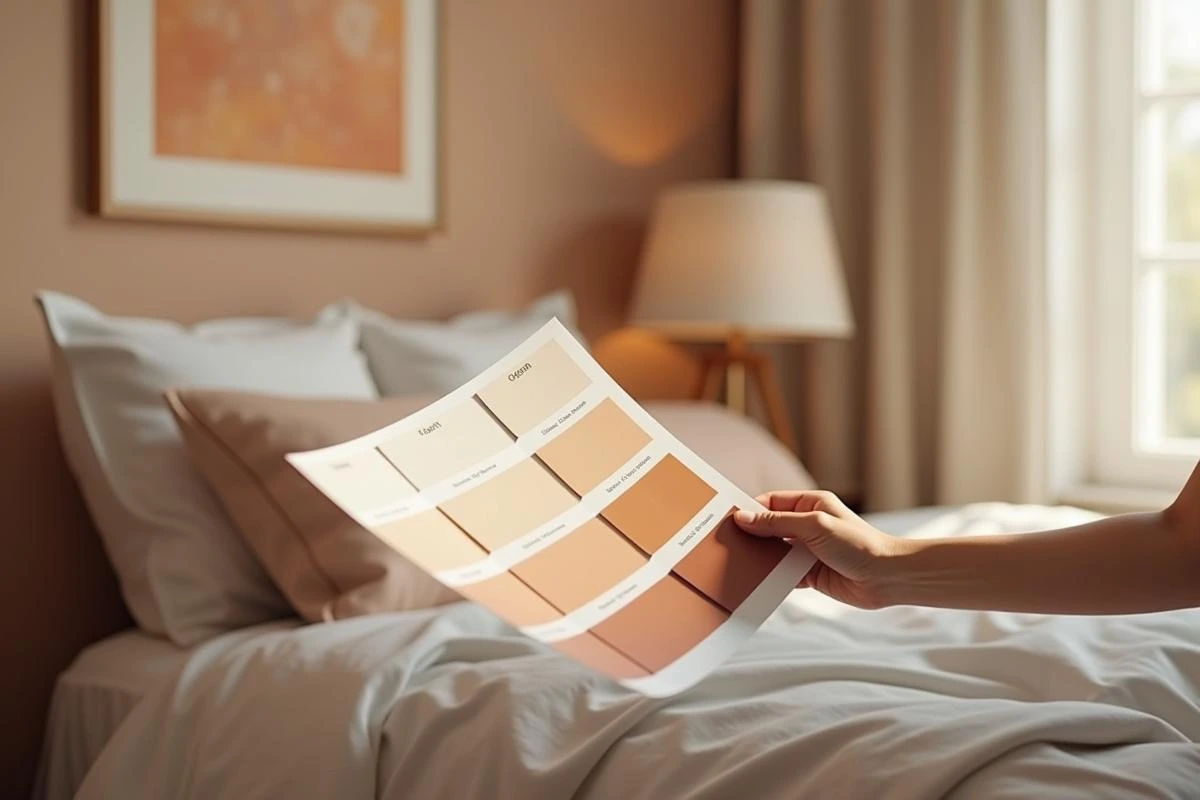
Then compare by undertone, not by name.
Group Beige Bedroom Paint Colors by Undertone, Not by Name
Names tell you almost nothing, and the brand matters as much as the name. Sherwin-Williams Accessible Beige sits in greige territory with a grey base. Benjamin Moore Manchester Tan reads warmer and more yellow. Farrow & Ball Jitney is a deeper, browner neutral. Benjamin Moore Pale Oak is the palest of the four and can wash out in a bright south facing room.
Same category on the tin. Four different rooms in practice.
I would sort candidates into warm, cool and pink leaning piles first. Then test only the pile that matches your wood and your light.
Check the LRV Before You Commit
Light reflectance value tells you how much light a paint bounces back into the room. LRV runs from 0, which absorbs all light, to 100, which reflects all of it. In practice no wall paint hits either end.
A beige in the middle of that scale keeps enough depth to show its undertone, while a very high LRV beige can flatten into off white once the sun hits the wall.
I check the number on the manufacturer’s own product page. Blog roundups copy LRV figures from each other and the errors travel.
If your beige keeps turning yellow, the undertone section below is the part to read. I cover the same problem from the other direction in yellow bedroom ideas.
Best Paint Finish for Beige Bedroom Walls
Eggshell is the safest finish for beige bedroom walls. Eggshell gives enough sheen to wipe clean without bouncing enough light to expose every dip in the plaster.
Finish changes how a beige reads as much as the shade does. The same tin in matte and in satin looks like two different colours once the lamps come on, because sheen controls how much light the wall throws back at you.
| Finish | Sheen level | Wipeable | Shows wall flaws | Effect on beige | Best use in a bedroom |
|---|---|---|---|---|---|
| Flat | None | No | Hides them | Softest, most chalky | Ceiling only |
| Matte | Very low | Lightly | Hides them | Deep and velvety | Feature wall, low traffic bedroom |
| Eggshell | Low | Yes | Slightly | Balanced, true to the chip | Main walls, best all round choice |
| Satin | Medium | Yes | Shows them | Brighter, can look slick | Trim, doors, wardrobes |
| Semi gloss | High | Yes | Shows them clearly | Reflective, hard looking | Skirting and door frames only |
Two combinations worth considering. Matte walls with satin trim gives a beige bedroom depth without shine, and the small sheen difference reads as intentional. Eggshell everywhere is the lower risk option if your walls are not perfectly smooth, since eggshell forgives more than satin does.
Avoid gloss on a large beige wall. Gloss reflects the light source rather than the colour, so a glossy beige wall spends the evening showing you a bright patch where the lamp is.
Warm vs Cool Beige: The Undertone Test That Saves the Room
Hold a sheet of plain white paper against your beige furniture in daylight. The undertone shows up immediately.
Against white, a warm beige suddenly looks yellow or peach. A cool beige looks grey or slightly green. Without the paper, your eye adjusts and you see neither.
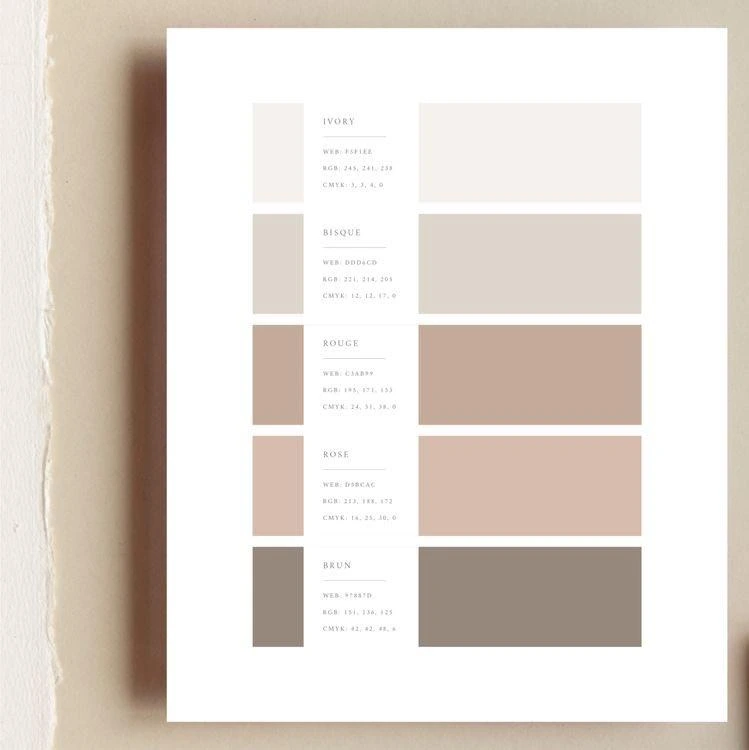
This is the first test worth running, and the test explains most beige rooms that feel slightly off. A pink leaning wall beside a yellow leaning wardrobe makes both look worse, even though each one looked fine on its own.
So match the temperature, or contrast on purpose.
Warm beige sits well with oak, brass, terracotta and olive. Cool beige and greige sit well with white oak, black metal, stone and soft sage. Mixing the two families by accident is what produces that dingy look people cannot name.
Before buying anything else, run the paper test on the three finishes you cannot easily change:
- The floor.
- Any fitted wardrobe or built in storage.
- The largest furniture piece, usually the bed frame or the dresser.
Flooring is usually the largest fixed surface in a beige color bedroom, and the undertone of the floor outranks the paint chip every time.
This applies to beige color tiles for bedroom floors as much as to wood. A grey based beige tile and a yellow based beige wall will fight each other across a whole room, and neither one is wrong on its own.
What Colors Go With Beige Bedroom Furniture?
Match the accent to the undertone of your beige furniture, not to the word beige. That single change fixes most pairing problems.
Beige bedroom furniture is not all one temperature. A cream upholstered bed and a honey oak wardrobe need different partners, even though both get described as beige.
Here is the beige color combination for bedroom pairing I work from.
| Beige undertone | Furniture and wood | Bedding | Accent that works | Avoid |
|---|---|---|---|---|
| Warm, yellow or peach | Oak, walnut, rattan | Ivory, oatmeal | Sage, terracotta, brass | Cold blue grey, optic white |
| Cool, grey or green (greige) | White oak, black metal | Crisp white, charcoal | Navy, soft slate, stone | Warm orange wood, bright yellow |
| Pink or blush | Pale wood, painted white | Cream, dusty rose | Olive, warm grey | Royal blue, cherry wood |
| Deep, taupe or tan | Dark wood, leather | Linen, cream | Olive, rust, aged bronze | Pale pastel accents, chrome |
One pairing I avoid: cold blue grey. A chilly grey blue beside warm beige pulls the yellow forward and makes the beige look tired.
Warm white is fine. Optic white is the one to watch.
If you are mixing inherited or secondhand pieces into the room, that is a good thing, not a problem. I cover how to make older pieces sit well in a modern room in decorating with antiques.
How to Buy a Beige Bedroom Set Without Ending Up With a Matching Showroom
Buy the beige pieces separately rather than as a matched set. A beige color bedroom set sold as one package is usually one shade sprayed across every surface, and that is the exact flatness problem this whole article is about.
The undertone is the thing online photos hide. Product photography is colour corrected under studio lighting, so a greige dresser and a pink based beige bed can look identical on a screen and clash badly in your room.
Here is what I check before ordering any beige bedroom furniture.
| What to check | Why it matters | What to ask the seller |
|---|---|---|
| Undertone in daylight photos | Studio lighting hides pink and grey bases | Request a photo in natural light, no filter |
| Physical sample or swatch | Screens cannot show undertone reliably | Ask whether a finish sample is available |
| Frame material | Solid wood ages differently to foil wrapped board | Ask what the core material is, not just the finish name |
| Headboard fabric | Upholstered beige shows wear at the pillow line | Ask for the fabric name and rub count if quoted |
| Finish sheen | A satin dresser beside a matte bed reads mismatched | Ask whether the finish is matte, satin or gloss |
| Return terms | Beige is the hardest colour to judge remotely | Confirm returns before ordering, not after |
For a beige upholstered headboard specifically, the fabric matters more than the shape. Linen and bouclé both hide the marks that collect where pillows sit. A flat woven beige shows those marks within months, and a velvet beige shows every direction the pile has been brushed.
If you want a modern beige bedroom, keep the set to two matching pieces at most. A bed and one nightstand in the same finish, then a dresser in a related wood tone, gives you coordination without the showroom effect. A cream color bedroom dresser beside a beige bed is one of the easier ways to do this, because cream and beige read as intentional variation rather than a failed match.
One more thing on budget. Spend on the headboard and the bedding first. Those two sit at eye level and occupy most of what you see from the doorway. A cheaper dresser in a compatible tone disappears far more easily than a cheap headboard does.
How I Add Color to a Beige Bedroom Without Repainting
Change the textiles first. Bedding, curtains and one rug will shift the color of a beige bedroom more than a painted wall will, and you can undo all of it in an afternoon.
I use a rough 60/30/10 split. Beige stays dominant, cream and wood support the beige, and the accent stays small. Once the accent grows past that, the room stops being beige and becomes a color room with beige in it.
Building a Beige Bedroom Color Palette in Five Moves
Five places I put the accent, in the order I would spend money:
- Bedding and pillows. Cheapest, biggest visual area, easiest to swap.
- A rug. Grounds the room and carries pattern well.
- Art. One piece with contrast beats three quiet ones.
- Ceramics and lamp bases. Small hits of terracotta or sage work well here.
- Plants. Real greenery reads as color without committing to a paint tin.
Plants are the cheapest accent on that list and the only one that changes over time. I go into placement and species in my bedroom decor with plants guide.
If you do want a painted feature, keep the feature to one wall and keep the color muted. The logic I use in my accent wall ideas post applies here, just with a softer palette.
And skip the bright pop. A neon cushion in a beige room does not look bold. The cushion looks like it came from a different room.
The Texture Formula That Makes Beige Look Expensive
Texture does the job that color does in a bolder room. Take the texture out of a beige bedroom and no amount of correct paint will save the space.
I would build the room in five layers, and none of them is optional:
- A wall with some movement. Limewash, plaster, or a simple panelled section.
- Soft bedding with a visible weave. Linen beats flat cotton every time here.
- A rug with a real surface. Jute or sisal underfoot, wool on the side you step onto beside the bed.
- One woven or wooden piece. Cane, rattan, oak.
- One metal. Aged brass or black iron, not both in equal amounts.
A bouclé or velvet headboard catches light differently than a flat fabric, which stops the wall behind the bed from looking dead. Matte finishes read calmer than gloss in a beige color bedroom.
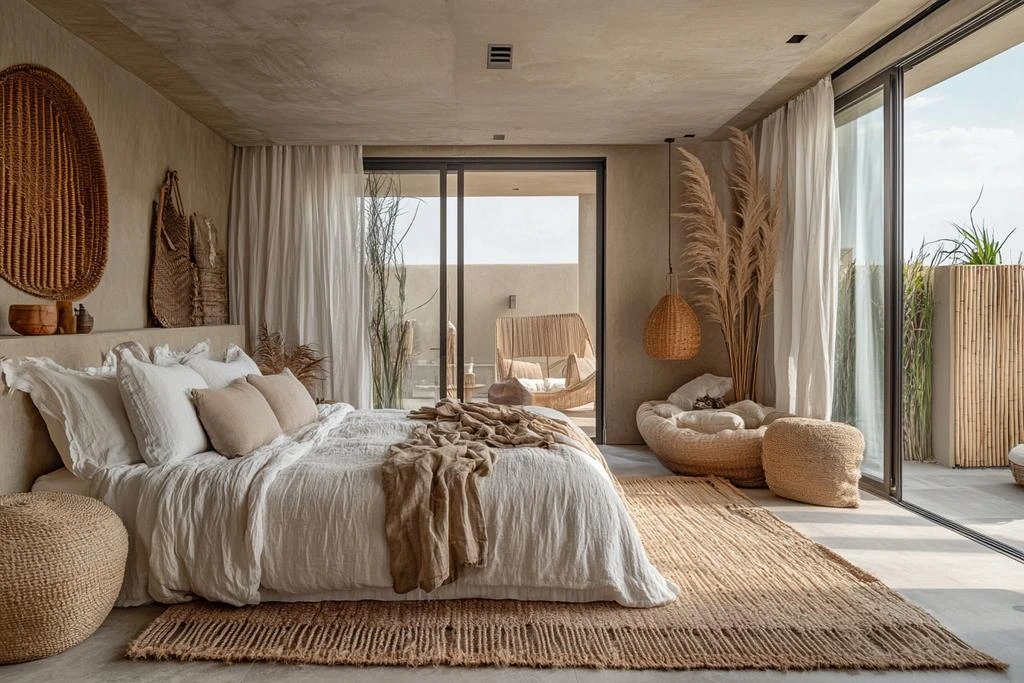
The expensive look is mostly surface variation, not expensive objects. Five materials at three price points beats one material at a high price.
Beige Bedroom Rug Size and Placement
A beige bedroom rug should extend past the sides of the bed by roughly 45 to 60 centimetres, so your feet land on the rug rather than on the floor when you get out.
Undersized rugs are the most common beige bedroom problem after undertone. A rug that stops short of the bed makes the whole room look like the furniture was bought separately, which in a neutral scheme reads as unfinished rather than eclectic.
| Bed size | Rug size to aim for | Placement |
|---|---|---|
| Twin | 150 x 240 cm | Under the lower two thirds, or a runner on one side |
| Double | 180 x 270 cm | Under the lower two thirds, extending both sides |
| Queen | 240 x 300 cm | Under the lower two thirds, extending both sides |
| King | 270 x 360 cm | Under the lower two thirds, extending both sides |
| Any, small room | Two runners, 60 x 180 cm | One on each side of the bed |
On material, jute and sisal give a beige bedroom the texture the walls cannot, but both feel rough at the bedside. Wool is softer underfoot and flatter in appearance. Layering a small wool rug over a larger jute one solves both problems at once, and the tonal difference between the two adds a second beige to the room without buying another colour. The same material trade-off applies to a hard floor, which I compare in living room without carpet.
A geometric beige and white pattern is the safest way to add pattern to a neutral bedroom. The pattern reads from a distance and disappears up close, so the room stays calm.
Color Drenching a Beige Bedroom: When One Shade on Everything Works
Color drenching means painting the walls, trim, doors and ceiling in a single shade instead of breaking them up with white. In a beige bedroom, drenching removes the white lines that chop the room into panels.
The reason drenching suits beige more than most colours is that beige has no hard edge. A drenched white room looks clinical. A drenched beige room looks enveloping, because the eye stops finding corners.
Drenching only works when the texture varies. Same colour on every surface plus the same flat finish on every surface equals a beige box. Same colour with a matte wall, a satin trim and a linen curtain reads as one continuous, layered space.
Three rules I would apply before drenching a bedroom:
- Test the shade on the ceiling separately. Beige reads darker overhead than at eye level, usually by a noticeable margin.
- Keep the floor and the bedding outside the drench. Those two surfaces need to break the colour or the room loses depth entirely.
- Use a more durable finish on the trim than on the walls. Doors and skirting take knocks that walls do not.
Drenching suits small bedrooms well, because removing the contrast between wall and trim removes the visual lines that make a small room feel measured. A large, high ceilinged bedroom benefits less, since those rooms need the definition that trim provides.
The Lighting Mistake That Turns Beige Muddy
Cool white bulbs undo good paint choices. If the beige looks grey or dirty at night but fine in the morning, the bulb is the problem, not the shade you picked.
Two numbers on the bulb box decide how your beige behaves after dark. Colour temperature, measured in Kelvin, controls how warm the light is. CRI, the colour rendering index, controls how accurately that light shows colour at all. A bulb can be the right temperature and still have a low CRI, and a low CRI bulb flattens beige into putty regardless of how warm the bulb claims to be.
| Bulb spec | What it does to beige | Where to use it |
|---|---|---|
| 2700K | Keeps beige warm and soft | Bedside lamps, main bedroom lighting |
| 3000K | Slightly cleaner, still warm | Dressing area, wardrobe lighting |
| 3500K to 4000K | Greys the beige, removes warmth | Avoid in a beige bedroom |
| 5000K and above | Flattens beige, looks clinical | Avoid entirely |
| CRI 90 or above | Shows the undertone accurately | Anywhere in the room |
| CRI below 80 | Muddies the undertone | Replace these first |
Then layer the light. One overhead fitting alone makes any neutral look flat, because light from a single direction removes the shadows that texture depends on. A bedside lamp plus a wall sconce gives the room two more angles, and the limewash or linen you paid for finally becomes visible after dark.
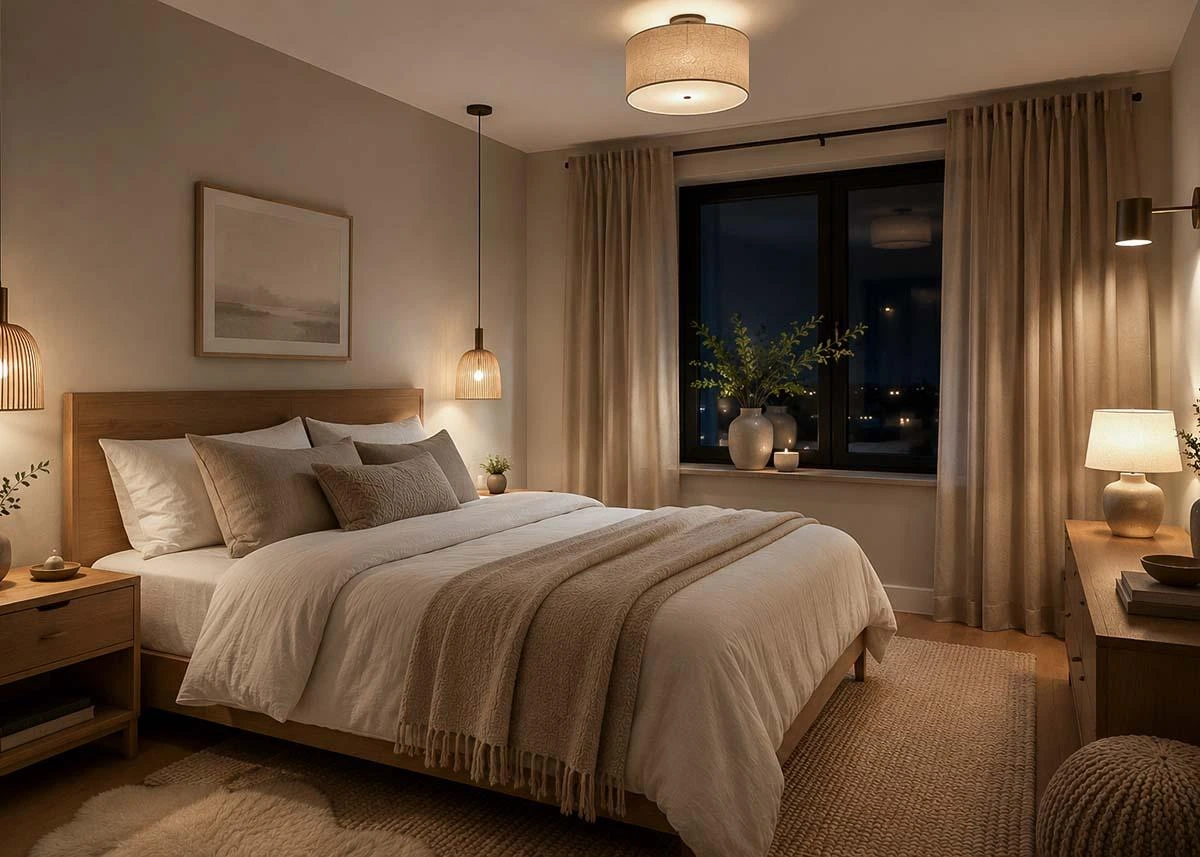
Room orientation changes the light before any bulb does. In the northern hemisphere, a north facing bedroom gets cool indirect light all day, so a warm beige can look chalky there. A south facing room gets warmer, stronger light and pushes beige towards gold. In the southern hemisphere, reverse those two.
Test the paint with the lamps on. That is the step almost everyone skips.
Small or Dark Bedroom? Beige Color Bedroom Ideas That Still Work
Light beige helps a small bedroom, but only if you add depth. A pale flat beige box can feel smaller than a room with some contrast in it.
In a compact or dim beige bedroom, I work through five moves in this order.
- Keep the walls light and sandy. Save the deeper tone for one object, like the headboard or a bench.
- Stack the tones on the bed. Oatmeal sheets, a slightly darker linen throw, a grey rug. Three close tones read as depth without breaking the calm.
- Hang curtains to the floor. Curtains that stop short of the floor cut the wall visually, and the ceiling feels lower than it really is.
- Add a mirror opposite or beside the window. In a dark room, a mirror moves daylight into the corner that a lamp cannot reach.
- Repeat one darker note twice so the contrast looks deliberate.
Most of the tricks that work in a small bedroom are not about color at all. I cover the rest in DIY room decor for small apartments and in my broader small home interior design guide.
6 Beige Bedroom Mistakes That Make a Room Look Cheap
Six problems account for most beige bedrooms that feel wrong. The problems also stack, so fixing only one rarely resolves the room.
Matching every beige. Walls, rug, duvet and curtains in one shade. The room goes flat. Use three tones instead.
Ignoring undertone. A pink wall beside yellow oak. Both look worse together than apart. Do the paper test.
No texture. Correct color, wrong surfaces. The room reads temporary. Add at least three material families.
Cool white bulbs. The beige looks fine at noon and muddy at nine. Swap to warm white with a high CRI.
A bright accent. Beige is low saturation, so a loud cushion looks bolted on. Muted sage, clay or rust blends instead.
Choosing beige to avoid choosing. This is the quiet one. A beige color bedroom picked purely because it felt safe usually ends up with no point of view at all.
That last mistake needs a different fix from the other five. Paint will not solve the problem. One confident piece will: a patterned rug, a painting you actually like, or an old chair with some history.
I would rather see one slightly risky choice in a beige room than a perfectly matched set with nothing to look at.
Beige Bedroom Questions Answered
Is beige a good color for a bedroom?
Yes, as long as you treat beige as a color with a temperature rather than a blank. A beige bedroom stays calm and works with most furniture. The rooms that fail usually have matching shades, no texture, or the wrong bulb.
What colors go with beige bedroom furniture?
Warm white, sage, terracotta, cream, warm wood and soft charcoal. Match the accent to the undertone of the furniture. Cold blue grey is the pairing to avoid, because a chilly grey makes warm beige look yellow.
What is the best paint finish for beige bedroom walls?
Eggshell for the walls and satin for the trim. Eggshell wipes clean without highlighting every imperfection in the plaster. Matte works on a feature wall in a low traffic bedroom, and gloss should stay off large wall areas entirely.
Is beige or cream better for a bedroom?
Cream suits a small or dim bedroom because cream reflects more light. Beige suits a larger or well lit room because beige holds depth without going stark. Beige carries a grey, pink, yellow or green undertone, while cream only ever leans yellow.
How do I add color to a beige bedroom without painting?
Start with bedding, then a rug, then art. Add small ceramics and a plant. Keep the accent to roughly a tenth of what you can see, so the beige bedroom still reads as beige.
How do I stop beige from looking too yellow?
Check the undertone against white paper in daylight. Yellow oak and warm bulbs both push beige further towards yellow. Balance the room with sage, charcoal or a cooler linen, then check the paint again with the lamps on.
Does beige make a small bedroom look bigger?
Light beige can help, but flat beige can also make a small room feel dimensionless. Depth comes from stacked tones, a mirror, floor length curtains and layered light, not from the wall color alone.
Should I buy a beige bedroom set or separate pieces?
Separate pieces, in almost every case. A matched beige bedroom set uses one shade across every surface, which flattens the room. Two matching pieces plus a third in a related wood tone gives coordination without the showroom look.
Does black work in a beige bedroom?
Yes, in small repeated doses. A black lamp on its own looks accidental. Repeat the black in a frame or a slim bench and the contrast reads as structure rather than an afterthought.


Pingback: 12 Easy Decorating Ideas With Black Bedroom Furniture
Pingback: Bedroom Decorating Ideas for a Single Woman: 12 Picks