
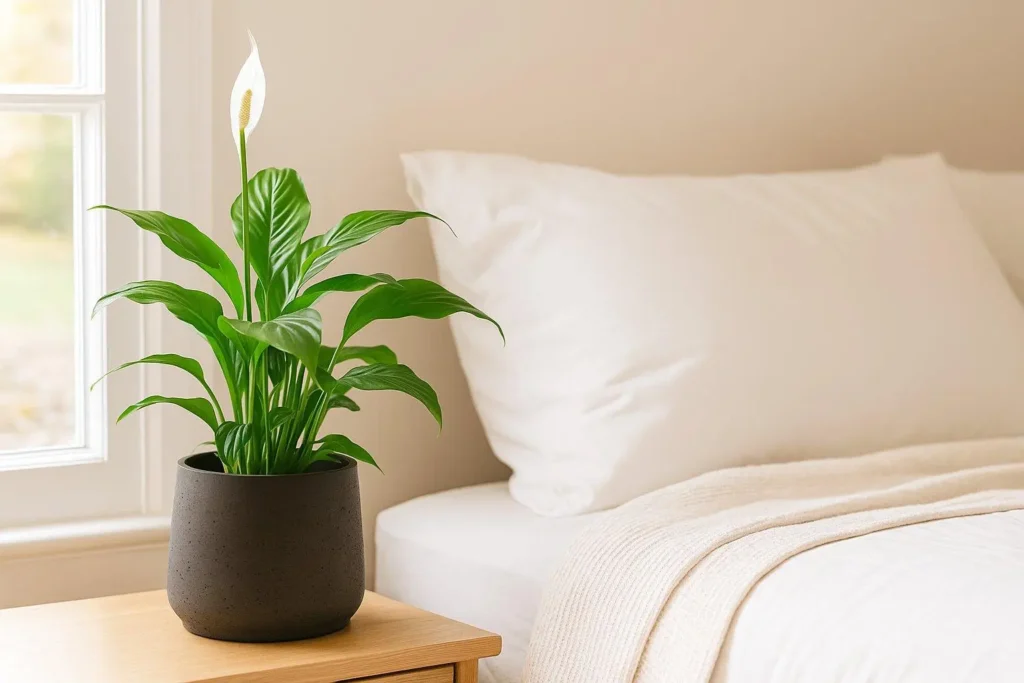

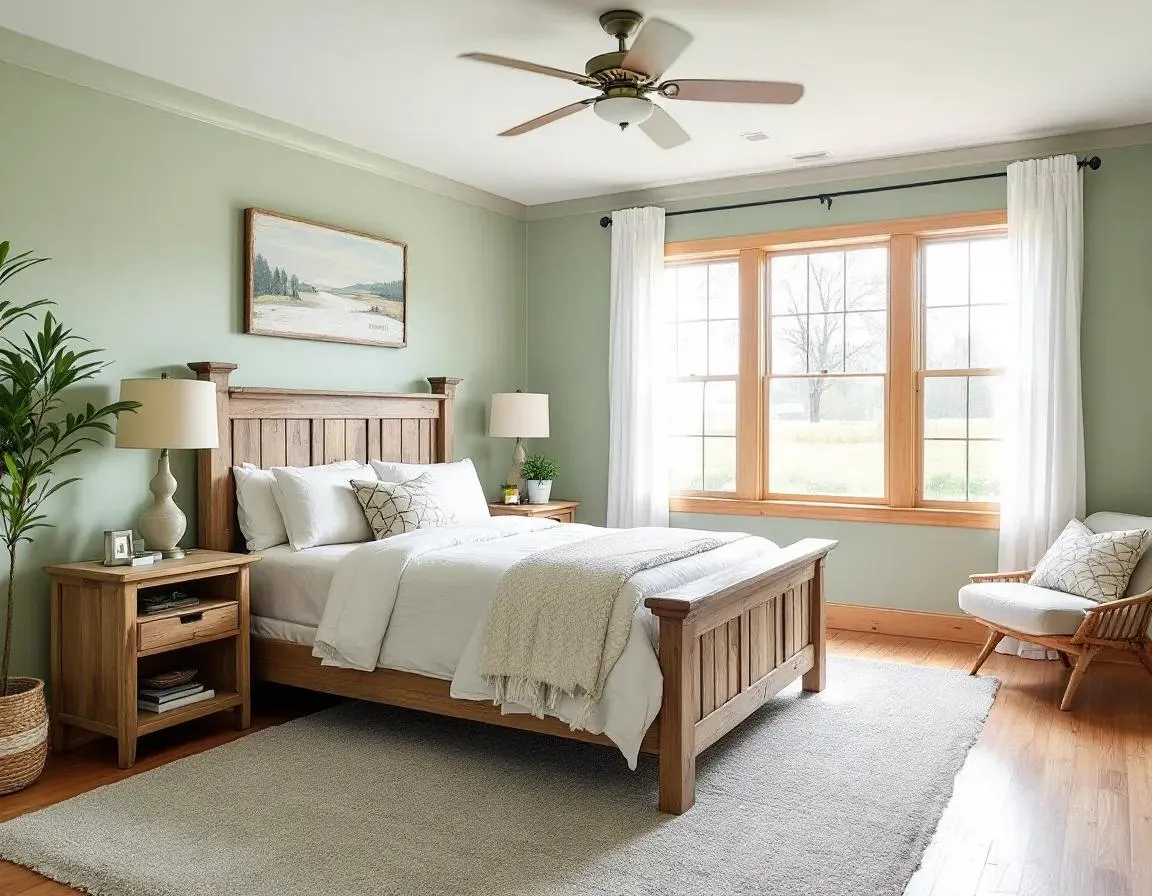
I have painted more bedrooms than I can count, and green is the color I keep coming back to. Not because it is trendy, although right now it very much is. But because when you get the shade right, a light green bedroom just feels easier to sleep in. If you searched for light green paint colors for bedroom or light green paint colors for bedrooms, you are on the right track. The hard part is never picking green. It is picking the right green.
Table of Contents
Why Light Green Works in a Bedroom (And Is Green a Good Color for a Bedroom?)
Yes, green is a good color for a bedroom, and light green is one of the safest choices you can make. Both Behr and Valspar named a green as their 2026 color of the year, and that is not a coincidence. Designers keep recommending soft, muted greens like sage and eucalyptus for bedrooms.
Muted greens like sage and eucalyptus are the shades designers keep coming back to for bedrooms. The reason is simple. Green sits in the middle of the color wheel, so it does not shout. It recedes. A bedroom painted in a calm green feels grounded, the way a room under trees feels, and that is exactly the mood you want at 10 p.m.
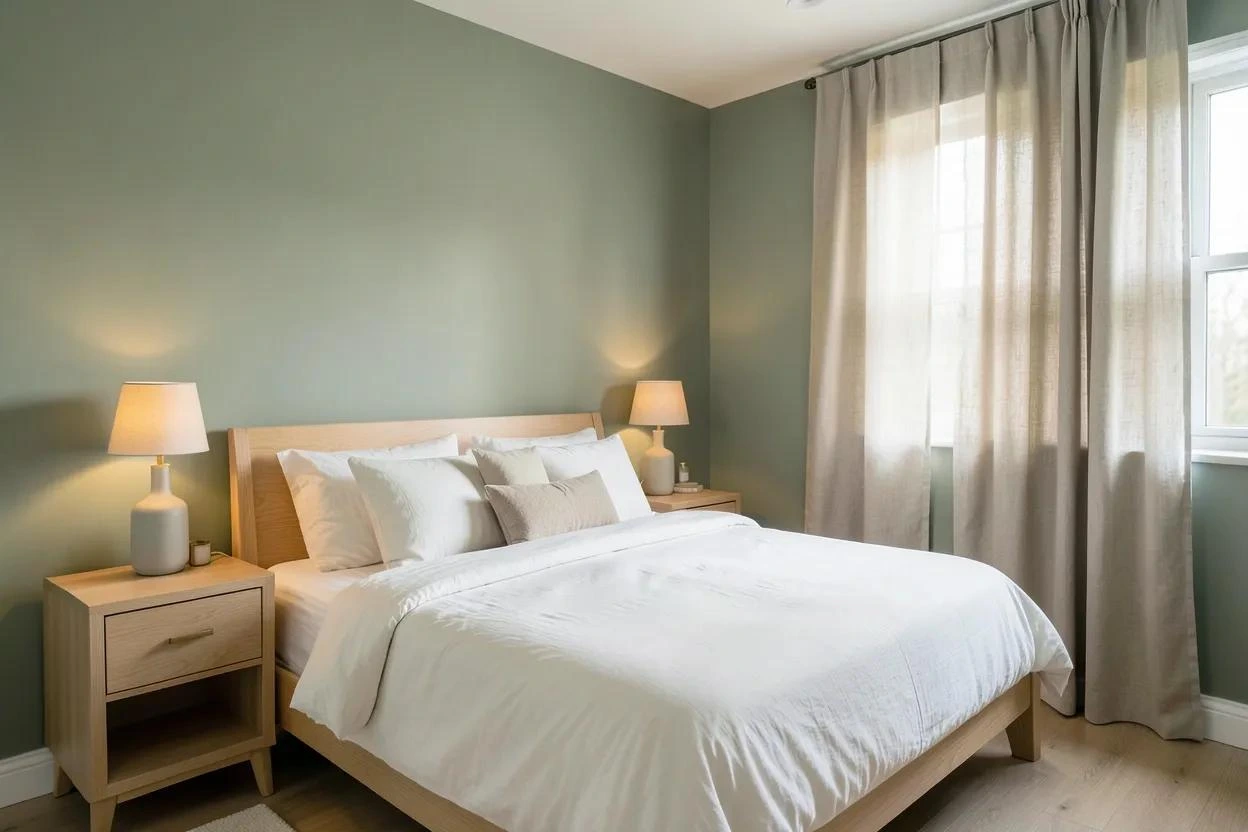
I notice it every time. Walk into a bedroom painted bright white and your eyes stay busy. Walk into one painted soft green, and the room already feels quieter. That is not me being poetic. It is what the color does to light bouncing around the room.
The catch is that “light green” covers a huge range. Sage, celadon, sea glass, pistachio, mint. They all look gentle on a paint chip, and they all behave differently on your walls. Undertone matters more than how light the color is. That one idea changes everything about how you choose, and it is the first thing I check before anything else.
The 10 Best Light Green Paint Colors for Bedroom
Here are the ten shades I would actually buy today. The table below compares them side by side so you can match one to your room in seconds.
| Shade | Brand and code | LRV | Undertone | Best for |
|---|---|---|---|---|
| Sea Salt | Sherwin Williams SW 6204 | ~63 | Cool gray-green, hint of blue | Calm, airy bedrooms; most searched light green in the US |
| October Mist | Benjamin Moore 1495 | ~47 | Warm gray base with green | Versatile with white trim and wood tones |
| Evergreen Fog | Sherwin Williams SW 9130 | mid-50s | Soft gray-green | Slightly moodier, sophisticated bedrooms |
| Liveable Green | Sherwin Williams SW 6176 | ~61 | Soft, slightly warm | Bright trim pairings, small rooms |
| Fernwood Green | Benjamin Moore 2145-40 | ~58 | Warm, true green | North-facing rooms that need warmth |
| Spanish Olive | Benjamin Moore 1509 | ~53 | Warm gray base, muted | South-facing rooms, cozy feel |
| Guilford Green | Benjamin Moore HC-116 | ~58 | Yellow-green, cheerful | Classic bedrooms, very forgiving |
| Antique Jade | Benjamin Moore 465 | ~54 | Chameleon: gray/green/blue | Master bedrooms, changing light |
| Soft Fern | Benjamin Moore 2144-40 | ~60 | Gentle, tranquil | Designer approved for restful sleep |
| Pigeon | Farrow & Ball No. 25 | mid-40s | Subtle, timeless green | Rooms that should never look dated |
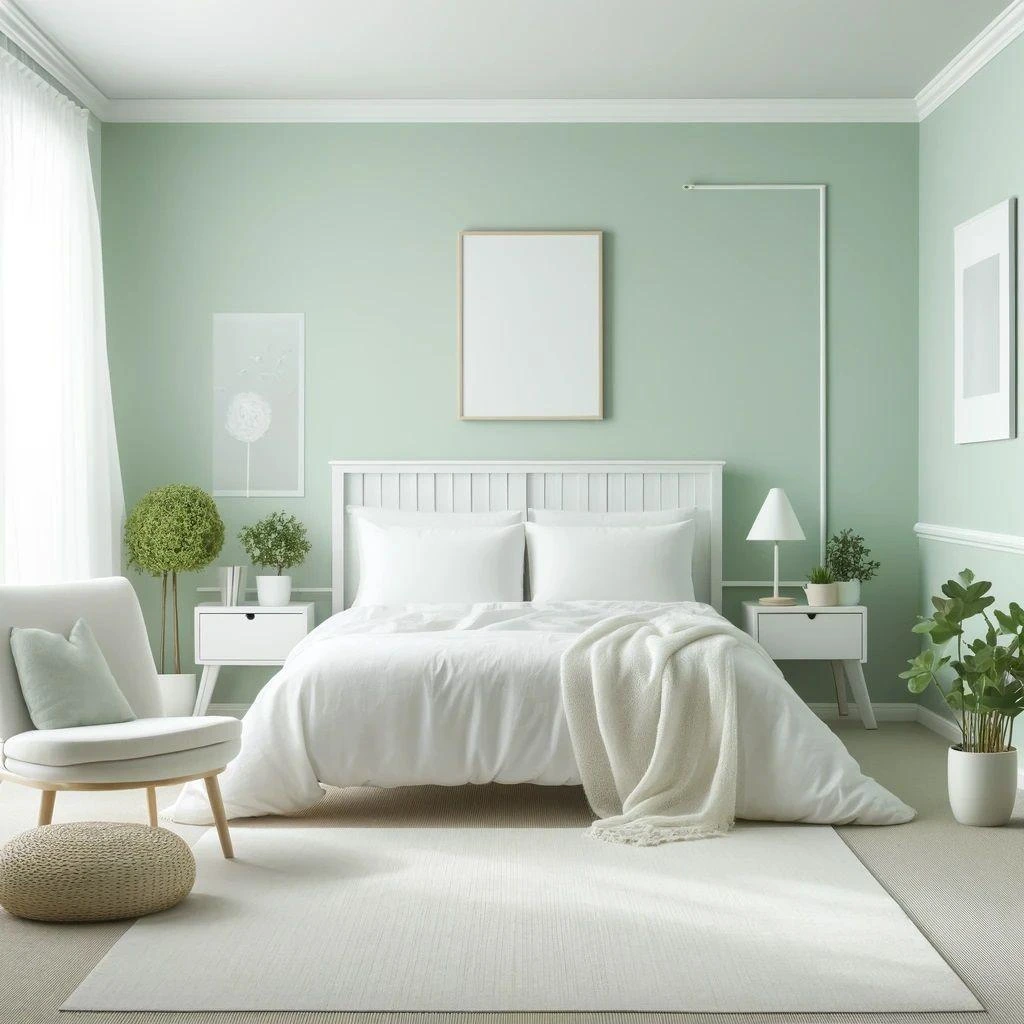
For readers in Pakistan and India: Asian Paints Dry Sage (7624) and Dew Drop (0299) are light greens that show up constantly in green bedroom combination videos, and they photograph beautifully with white trim and warm wood.
A note on Sea Salt specifically: it can shift toward blue-gray in some lighting, so always swatch it first. That is true of most gray greens, not just this one.
Know Your Undertone: Sage, Celadon, Mint, Pistachio
The undertone of a light green decides how it behaves in your room, not how light it looks on the chip.
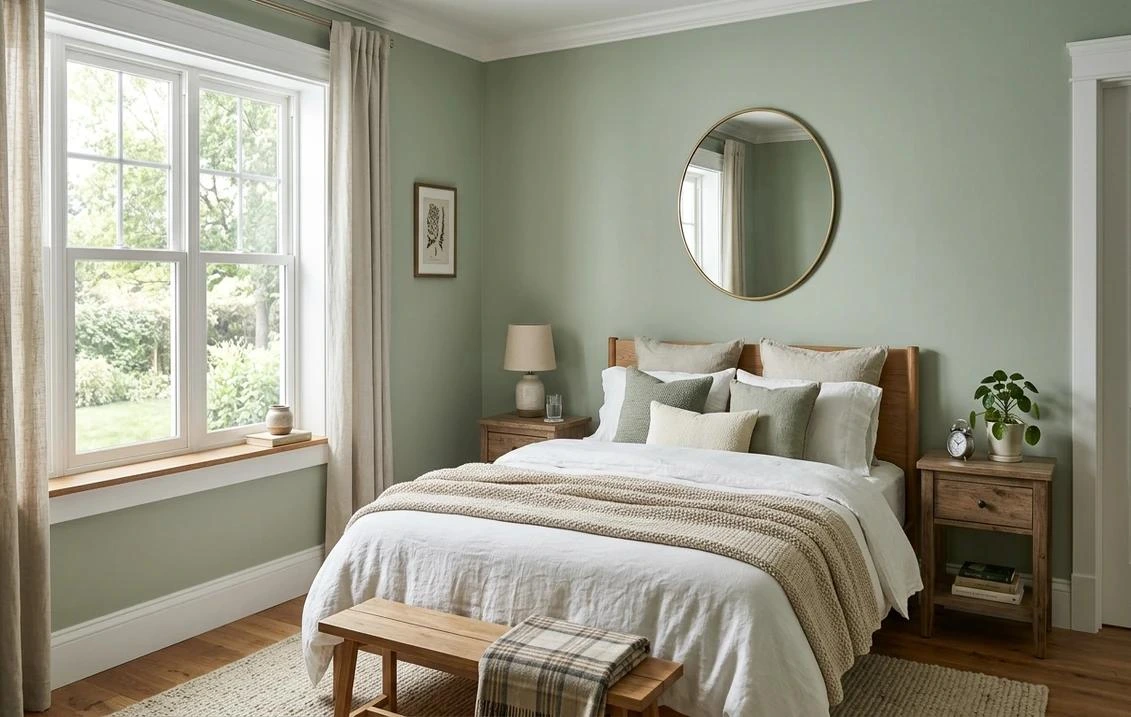
Sage is gray-green. Muted, easy to live with, pairs with warm white and beige. Celadon is blue-green, cooler, and quieter. Sea glass or eucalyptus is a whisper of blue-gray-green, very calming. Pistachio and apple greens lean yellow, warm, and fresh. Mint is the tricky one. High chroma mint can read like a 1950s bathroom under warm evening bulbs, so I use mint on bedding and curtains instead of all four walls.
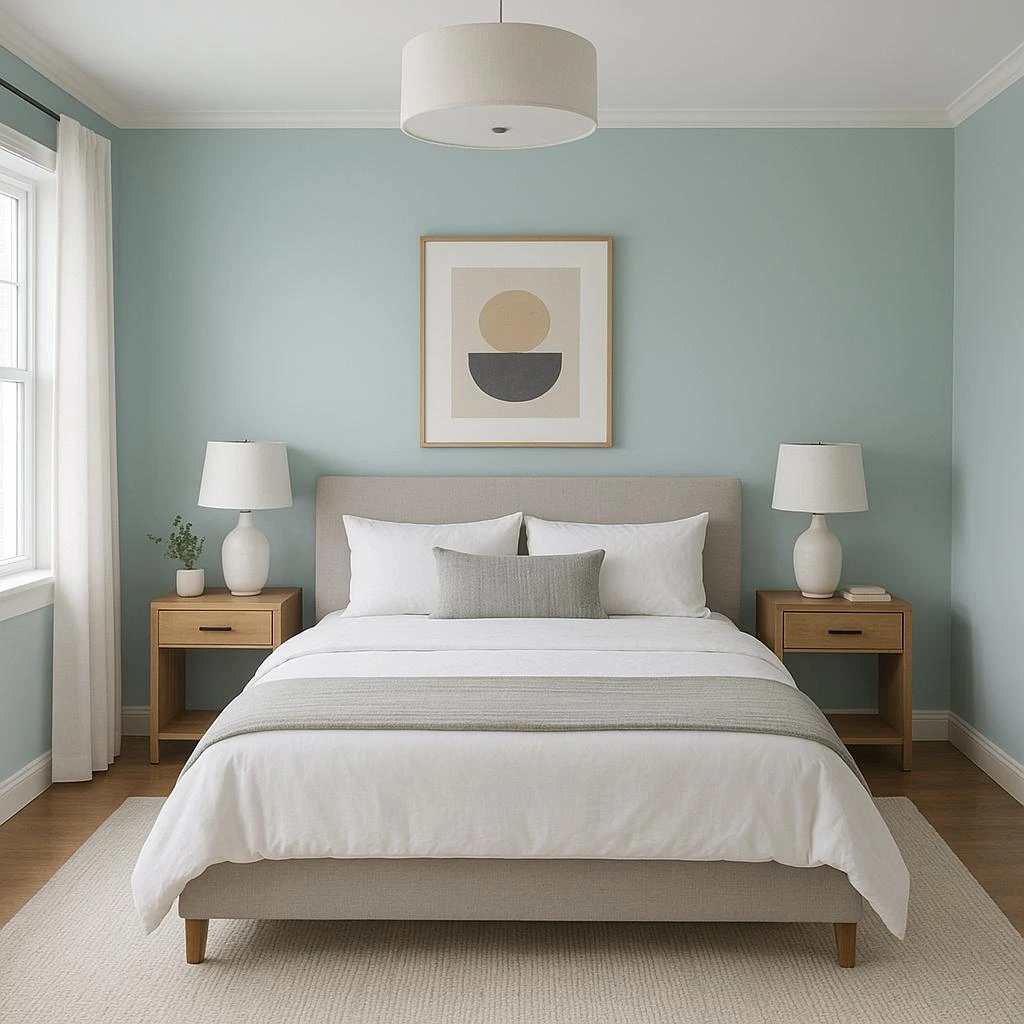
Which one should you pick? Match it to your room’s light first. That is the next section.
Match the Shade to Your Room’s Light Direction
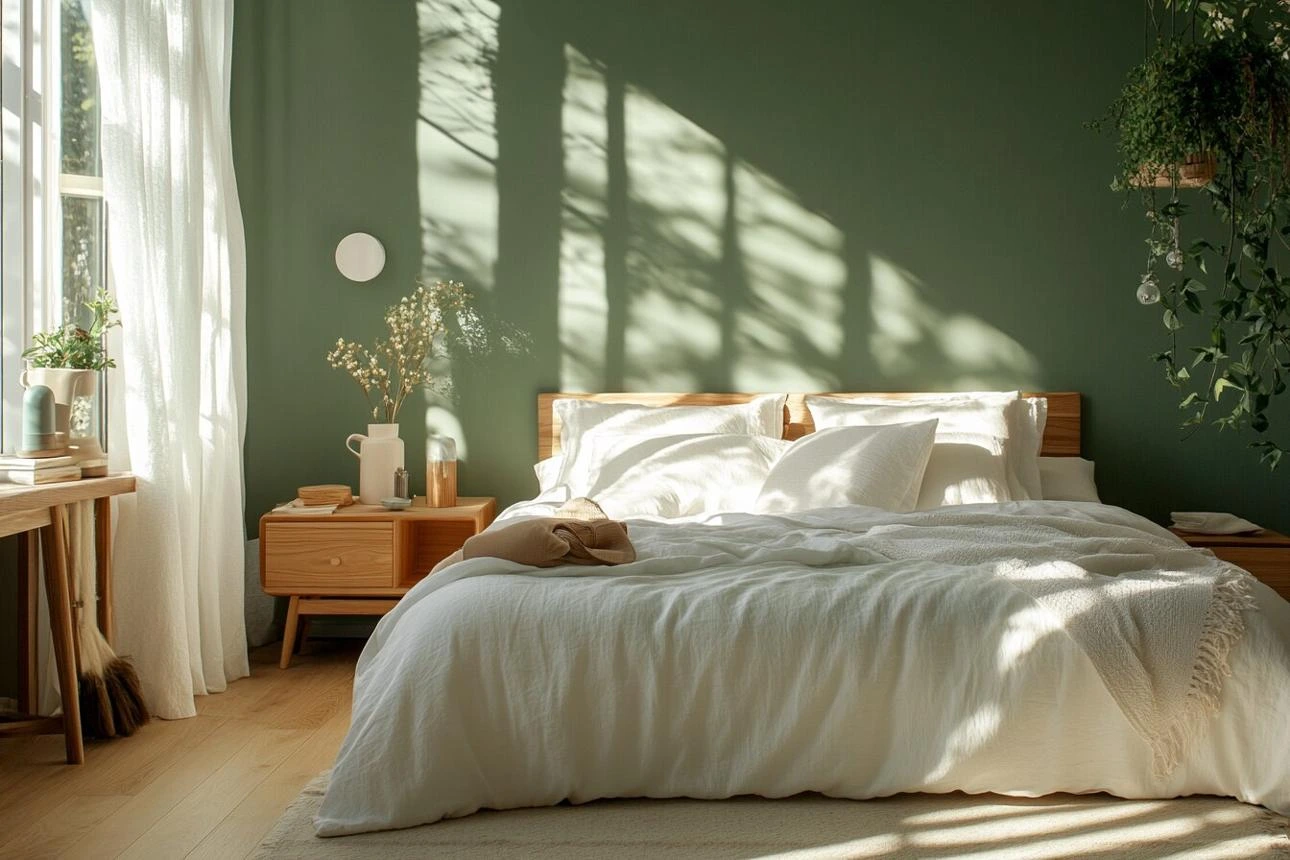
A cool blue-green in a north-facing bedroom can turn gray and gloomy. That is the most common way people end up unhappy with green paint. North-facing rooms get cool, flat light, so they need a green with a touch of yellow warmth to feel soft instead of cold.
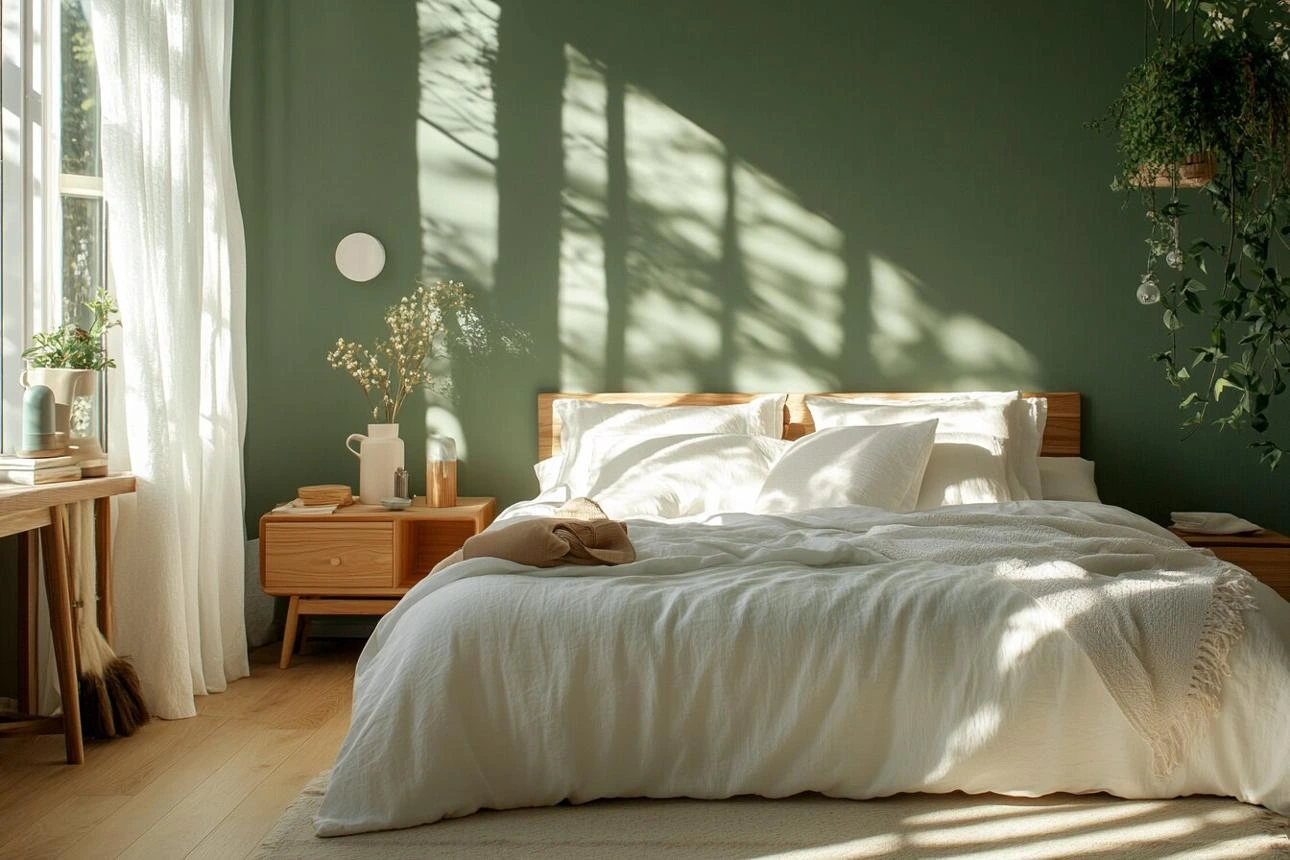
South-facing and west-facing bedrooms get warm strong sun. Cooler, bluer greens balance that heat and keep the room from feeling washed out. A warm yellow green in a sunny room can look overwhelmingly bright by 4 p.m.
So the rule is: for a north-facing bedroom, choose a warmer light green. A sunny south-facing room, a cooler green, works better. Test swatches in the actual room before you decide. Light direction changes the color more than most people expect.
How to Choose Light Green Paint for a Small Bedroom
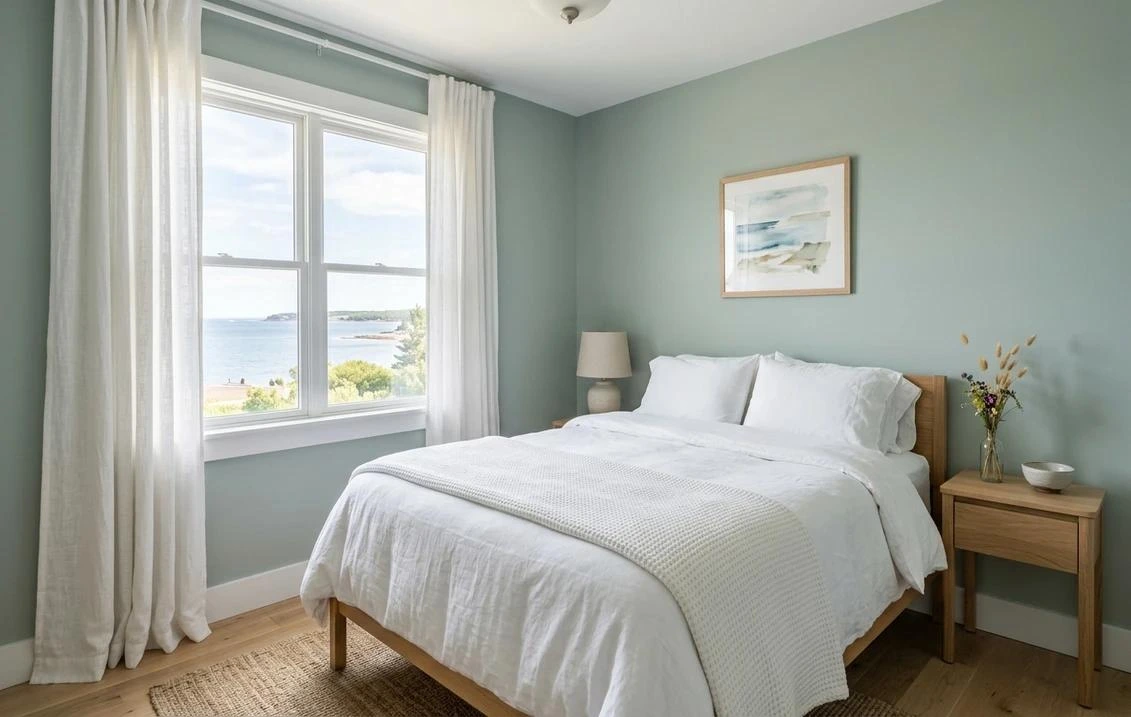
For a small bedroom, light reflectance value, or LRV, is your best friend. LRV runs from 0 (black) to 100 (white) and tells you how much light a paint color reflects. Most light green paint colors sit in a mid- to high-LRV band, roughly the mid-50s up to the low-70s. Below that range the shade goes heavy on four walls. Above it, a green can wash out to near white in a bright room.
In a small or dim bedroom, especially a north-facing one, stay at the higher end of that band. A light green with an LRV around 60 or above keeps the room feeling open and calm instead of heavy. This also works well for master bedrooms, where you usually want the calmest possible shade.
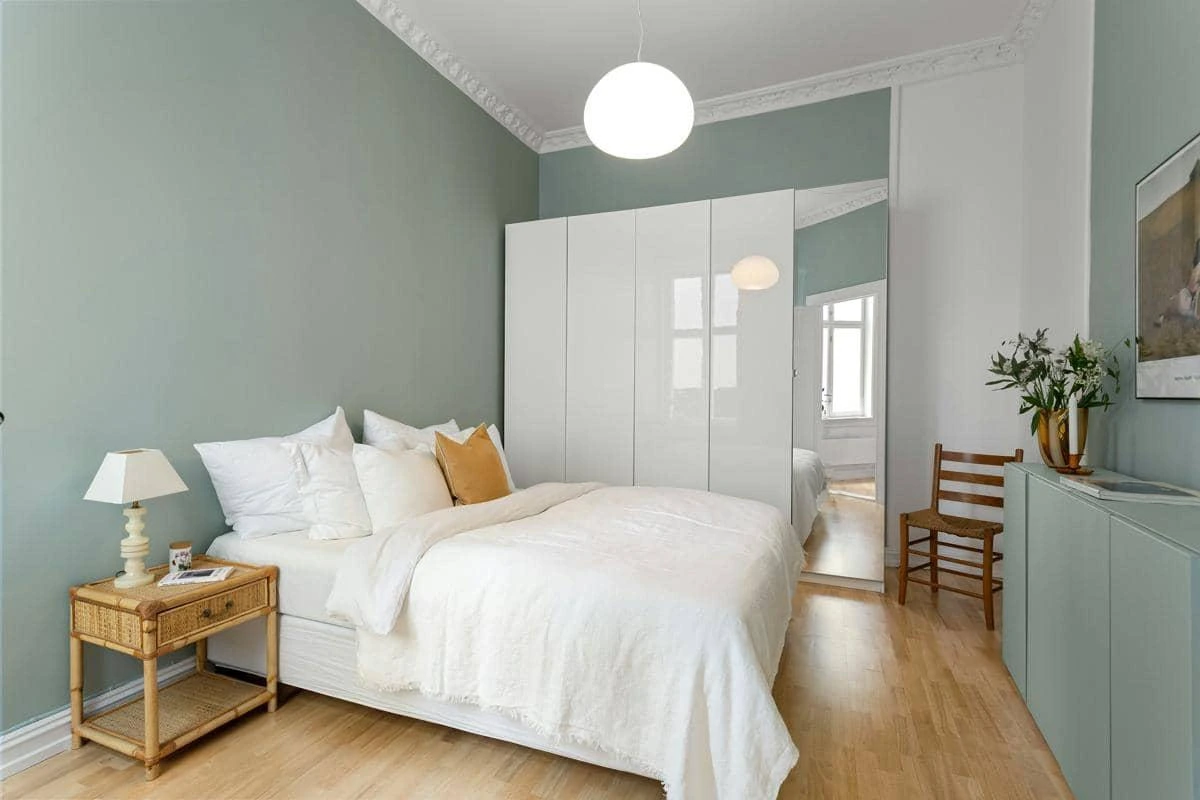
There is also a technique worth knowing: color drenching. Instead of one accent wall, paint the walls, ceiling, and trim in the same soft green. It blurs the edges of the room and makes a small bedroom feel bigger and more seamless. Some people prefer the airy look of light walls with a white ceiling. Others like the cocooning feel of drenching. Both work. Pick the mood you want.
If you want ideas for making a small space feel larger beyond paint, my post on DIY room decor for small apartments covers furniture and layout tricks that pair well with light green walls.
Test Before You Commit (And Where to Get Samples)
Picking a light green from the little chip at the store is how most paint regrets happen. Store lighting lies, and a color that looks soft on a chip can look completely different on your walls.
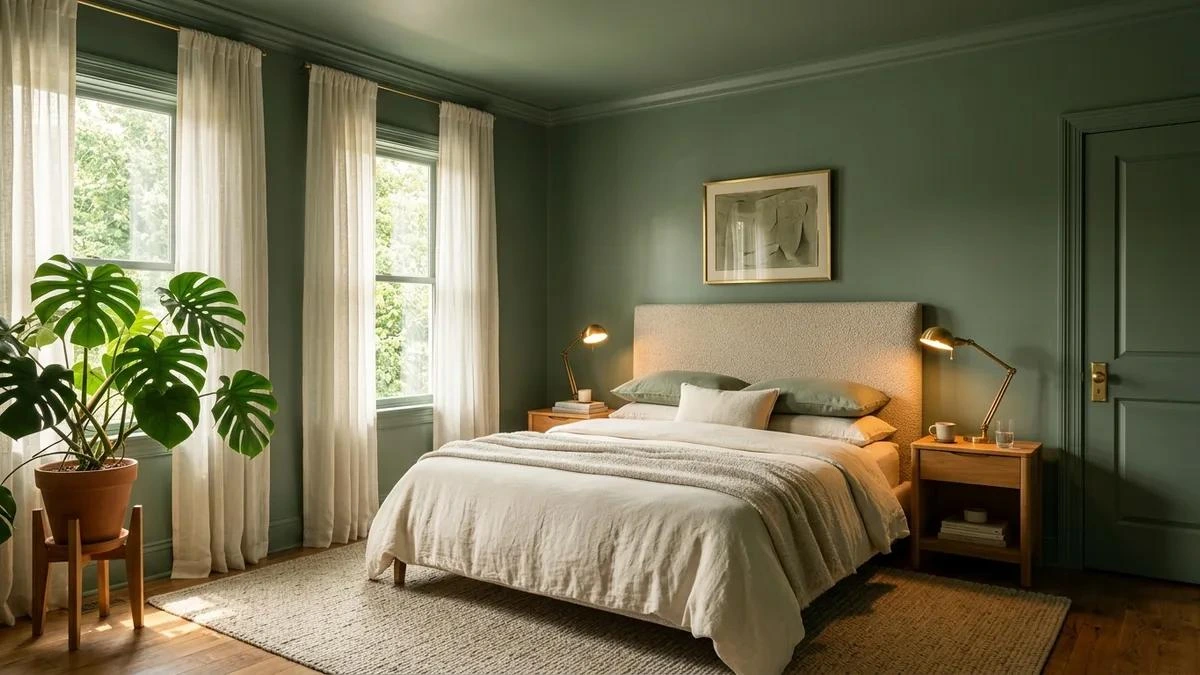
Here is what I do every time. Paint two coats of the color on a white poster board, at least 12 by 18 inches, with a white margin around the edge. Tape boards to the brightest wall and the darkest wall of the bedroom. Then look at them at 9 a.m., at 4 p.m., and at night with the lamps on. The color will change at every one of those moments. The version you see at night is the version you will live with.
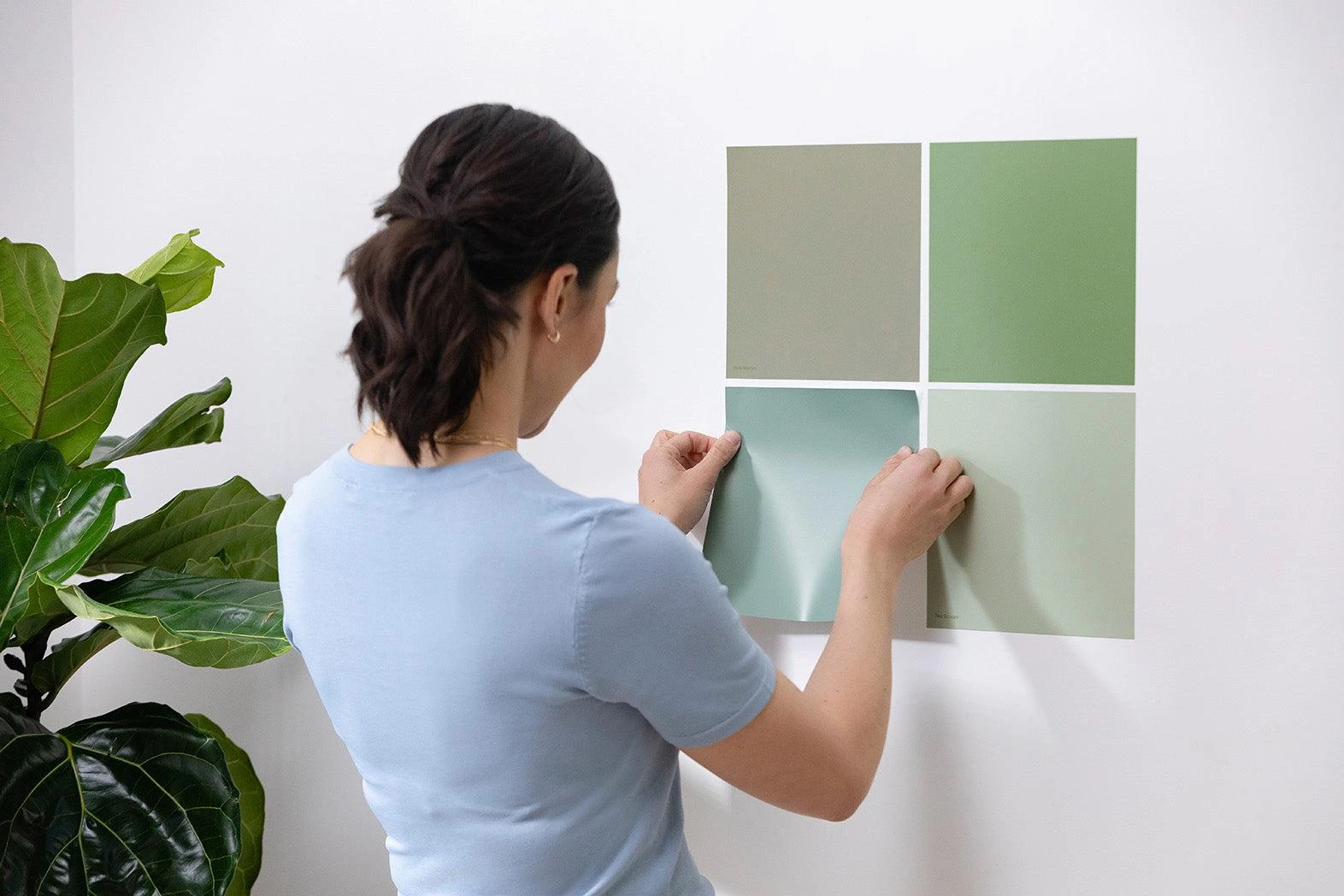
Peel and stick paint samples are an easier alternative, and they are worth the few dollars. You can order them online or grab them at Home Depot, Lowe’s, or a local paint store. Stick them on multiple walls and move them around through the day. Either way, never buy a gallon before the swatch has survived a full day in the room. That one step prevents most of the “why does my bedroom look wrong” moments.
What Colors Go With Light Green (Bedroom Combinations)
This is the question people ask most after choosing the paint: what color goes with light green walls? Short answer: warm off white, beige, soft gray, natural wood, and crisp white bedding. Here is what works in real bedrooms.
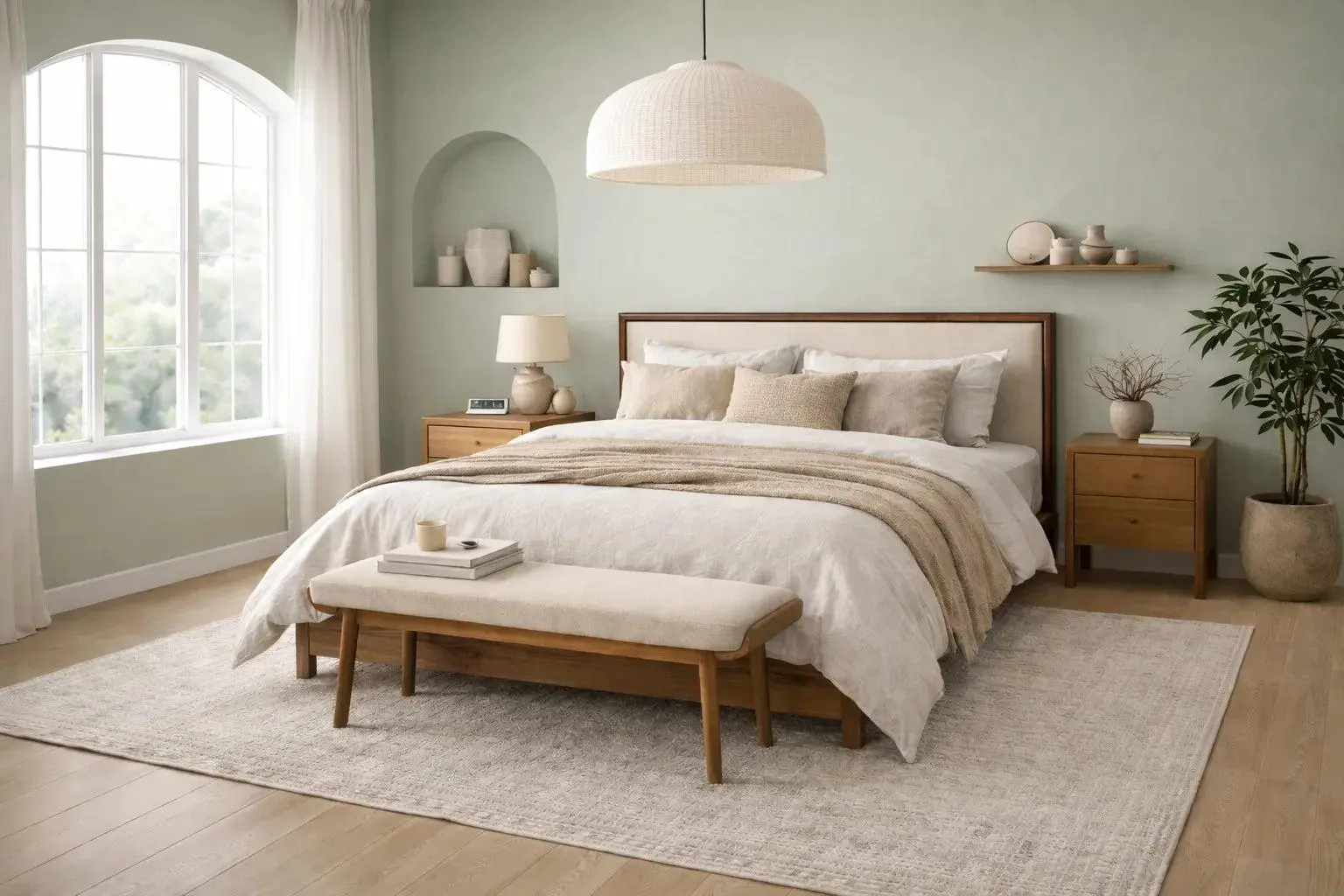
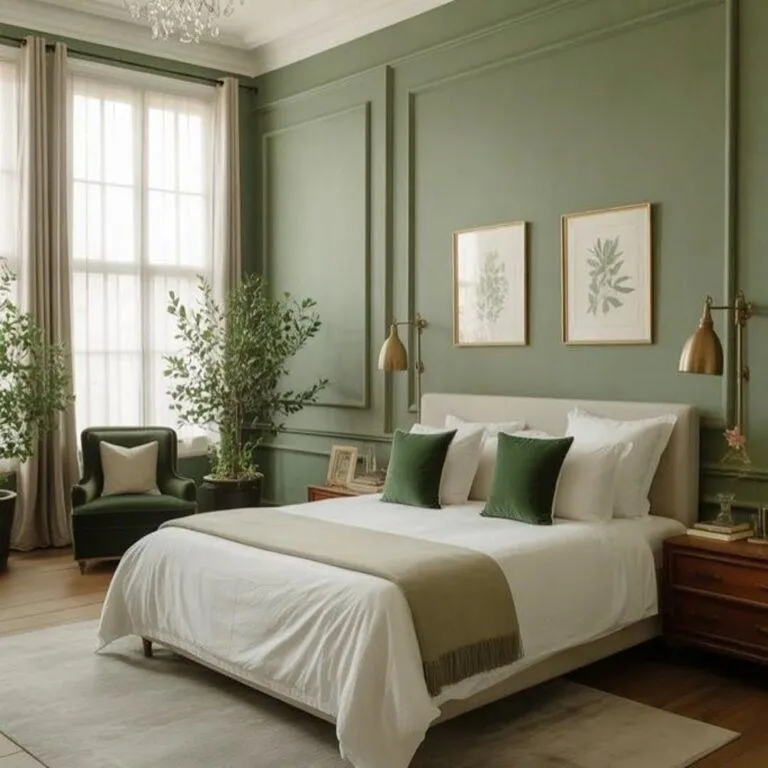
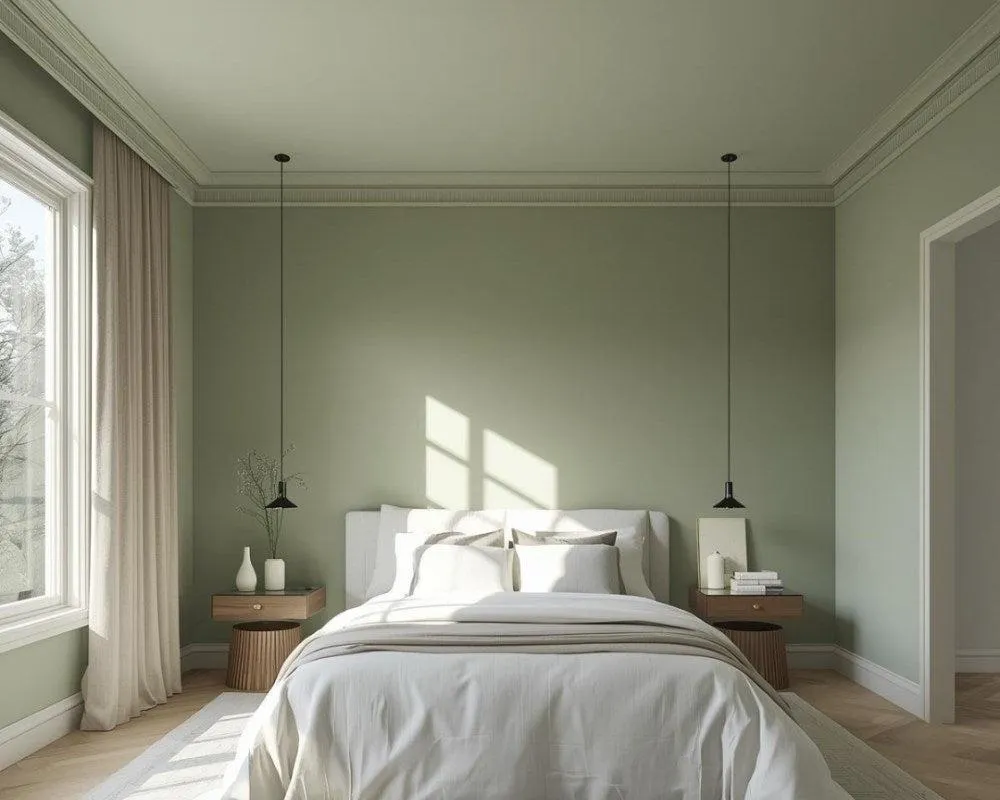
White trim, but not the stark kind. Stark white builder trim makes light green walls look cold and clinical. A warm off-white trim, something like Benjamin Moore White Dove or Sherwin-Williams Alabaster, keeps the whole palette soft. This is the detail most people skip and then wonder why the room feels off.
Beige, grey, and wood tones. Green and beige is a warm, natural pairing that suits bedrooms perfectly. Sage goes with sandy beige, olive works with warm cream. Gray is another safe partner, especially soft, warm grays. Light green also flatters wood floors and wooden furniture, which is why so many bedrooms with oak or walnut beds end up green. If you want the full neutral look, my neutral color palette interior design post shows how these pieces fit together.
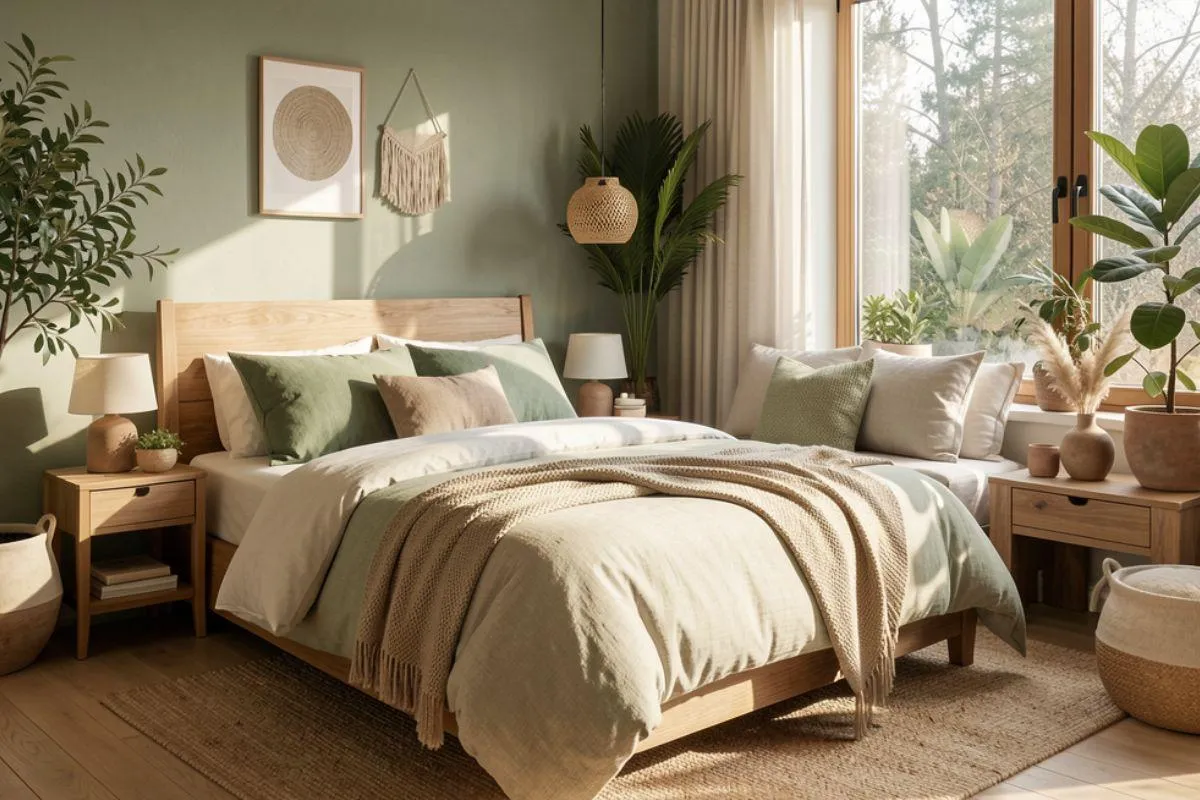
Bedding, plants, and gold accents. Crisp white bedding makes a light green wall pop. So do blush or cream textiles. Plants are the obvious match, and if you want to go further, my bedroom decor with plants guide has the varieties that thrive in lower-light rooms. For metal accents, keep it restrained. Five to seven small gold touches scattered around the room is plenty. More than that, and the room tips into hotel lobby territory.
Matte or Eggshell? Finish, Eco-Friendly Options, and Budget
The finish changes how the color reads, not just how durable the wall is. On light green bedroom walls, matte or eggshell is almost always the right call. Both hide drywall flaws and keep the green looking soft. Satin bounces more light and shows roller marks, and high gloss can make even a muted green look synthetic. Save satin for trim if you want contrast. Eggshell is my default for bedroom walls.
If you want an eco-friendly light green paint, look for low VOC or zero VOC formulas from the major brands. Sherwin Williams, Benjamin Moore, Behr, and Clare all offer low VOC lines in their green ranges, and they are safe for bedrooms, nurseries, and allergy-sensitive sleepers. They cost a little more per gallon, but the difference in air quality indoors is real.
On a budget: house brand paints from Home Depot (Behr) and Lowe’s (Valspar) give you the best affordable light green options, and sales happen constantly. Buying during a sale can cut the price of a bedroom repaint by a third. Sample pots are cheap, so test before you commit to a full gallon.
5 Light Green Paint Mistakes That Ruin a Bedroom
These are the five I see most often when a green bedroom goes wrong.
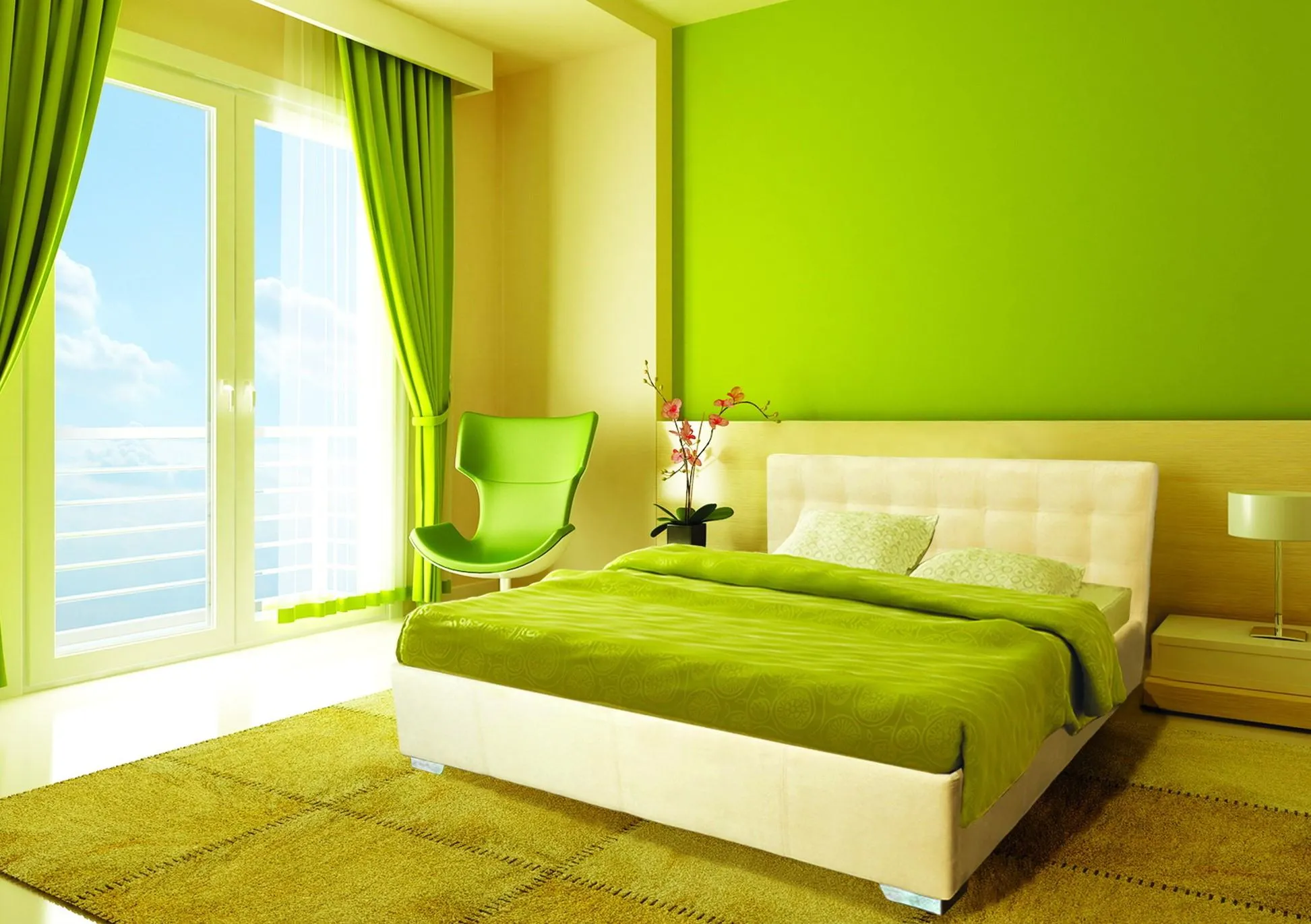
- Going too bright. If you searched lime green paint colors for bedroom, be careful. Lime or bright green feels energetic in a showroom and aggressively awake in a bedroom at night. It reflects light in a way that keeps the room buzzing long after sunset. Stick to muted shades.
- Mint on all four walls. Mint looks fresh on a chip. Under warm evening lamps it can read institutional. Use it on one accent or on textiles instead.
- Skipping the swatch test. Buying straight from the chip is the root cause of most paint regrets. Always test in the room for a full day.
- Ignoring the window direction. A cool green in a north facing room turns gray and gloomy. A warm green in a blazing south room turns loud. Match undertone to light.
- Stark white trim. Builder grade white makes light green look cold. Warm off white trim keeps it cohesive.
And if green turns out not to be your thing after all, that is fine too. My yellow bedroom ideas post covers a warmer alternative that works surprisingly well in small rooms. Green also works beyond the bedroom: if you are repainting a living room next, “light green paint colors for living room” is a whole separate search, and lighter sage tones tend to win there.
Your 5 Minute Decision Checklist
Before you buy paint, run through this:
- Check which way your bedroom windows face.
- Pick an undertone: warm for north facing, cool for sunny rooms.
- Choose your shade from the table above, favoring higher LRV in small or dark rooms.
- Swatch it on poster board or a peel and stick sample and watch it through a full day.
- Pair it with warm off white trim and an eggshell finish.
Do those five things and you will not regret the color. That last one, the swatch, is usually the step people skip. And it is usually the step that makes the biggest difference.
FAQ
Is light green a good paint color for a bedroom?
Yes. Muted light greens like sage and eucalyptus are consistently recommended by interior designers for bedrooms because they create a calm, restful atmosphere.
Is green a good color for a bedroom?
Green is one of the best bedroom colors. Soft greens lower stress and feel restful, and both Behr and Valspar chose a green as their 2026 color of the year. Just avoid bright lime tones at night.
What color goes with light green walls?
Warm off white trim, beige, soft gray, natural wood, and crisp white bedding all pair well with light green walls. Avoid stark pure white trim, which makes the green look cold.
What LRV should I pick for a small or dark bedroom?
Go higher. In a small or low light bedroom, a light green with an LRV around 60 or above keeps the room feeling open instead of heavy.
Will mint green look good on all four bedroom walls?
Often not. Mint can read dated or clinical under warm evening light. It works better as an accent color or on bedding and textiles.
How do I test light green paint before painting the whole room?
Paint two coats on a large white poster board or use a peel and stick sample, tape it to the brightest and darkest walls, and observe it in the morning, afternoon, and at night with lamps on.
Where can I buy light green bedroom paint?
Home Depot, Lowe’s, local paint stores, and online retailers all stock major brands. Peel and stick samples are available online and in stores, and ordering them first is the smart move.
Are there eco friendly light green paint options for bedrooms?
Yes. Look for low VOC or zero VOC formulas from Sherwin Williams, Benjamin Moore, Behr, and Clare in their green ranges. They are safe for bedrooms and better for indoor air quality.
What are the most popular light green bedroom shades right now?
Gray greens and sage tones dominate. Sherwin Williams Sea Salt, Benjamin Moore October Mist, and Benjamin Moore Antique Jade are three of the most searched and most used in bedrooms.