
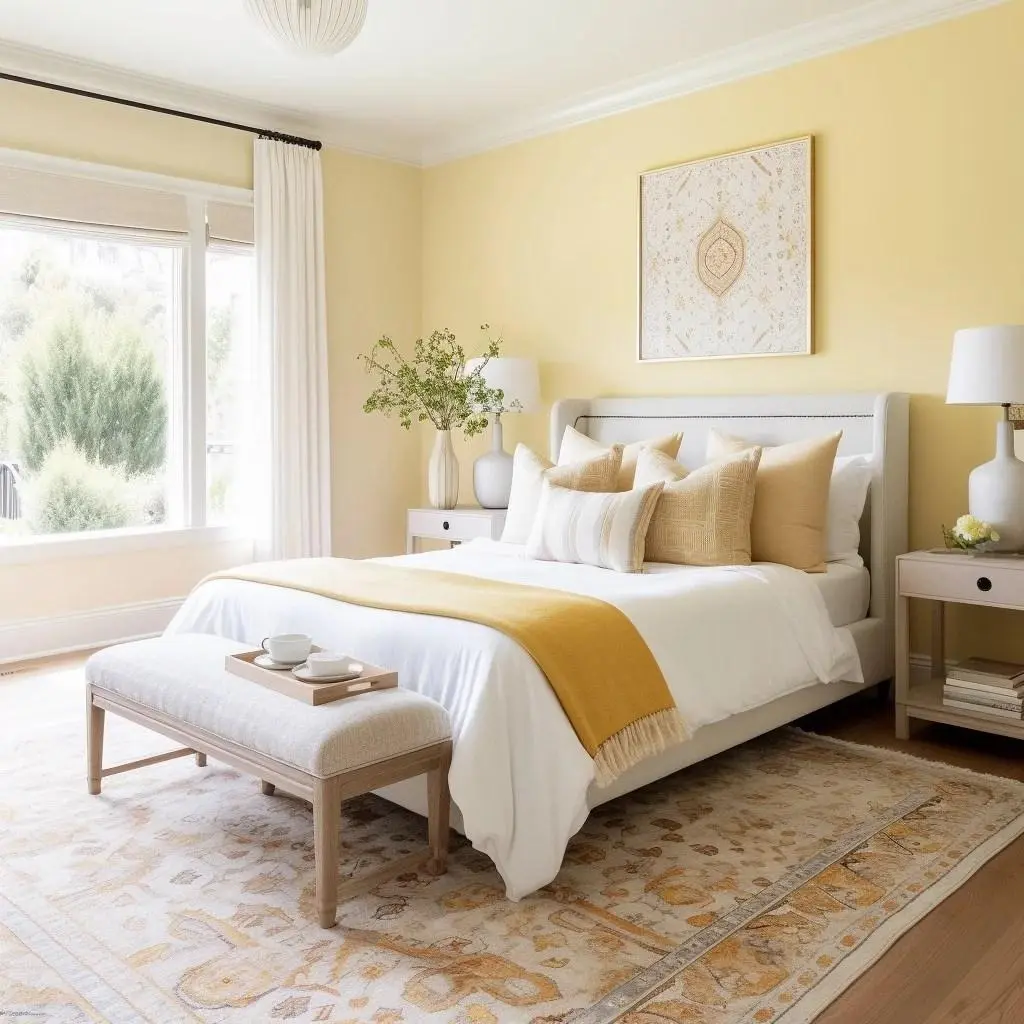

Most yellow bedroom pages are photo galleries with a caption underneath. This one is a decision order. I have painted a bedroom the wrong yellow myself, and everything below came out of that mistake rather than a mood board. Work through the first four sections before you look at the ideas, and you will skip most of the regret.
Table of Contents
Why Yellow Bedroom Ideas Fail Before the First Brushstroke
The mistake usually happens in the shop, not in the room. I have watched people fall for a bright yellow swatch, paint one wall, and then spend two years living in a space that feels loud. The paint was never the problem. The shade was.
So why does a color that makes people happy ruin a bedroom? Yellow lifts a room and wakes you up at the same time. A bright yellow bedroom works against sleep because the color pushes your eye and your mind toward alertness. That tension sits underneath every yellow bedroom idea search, and it is why shade choice matters more here than in any other room in the house.
And no, this does not mean you should give up on yellow. It means you should stop treating a paint chip as the decision. This is written for adults decorating a room they actually sleep in. If the yellow room is for a child, the same rules hold; you can just go a shade brighter.
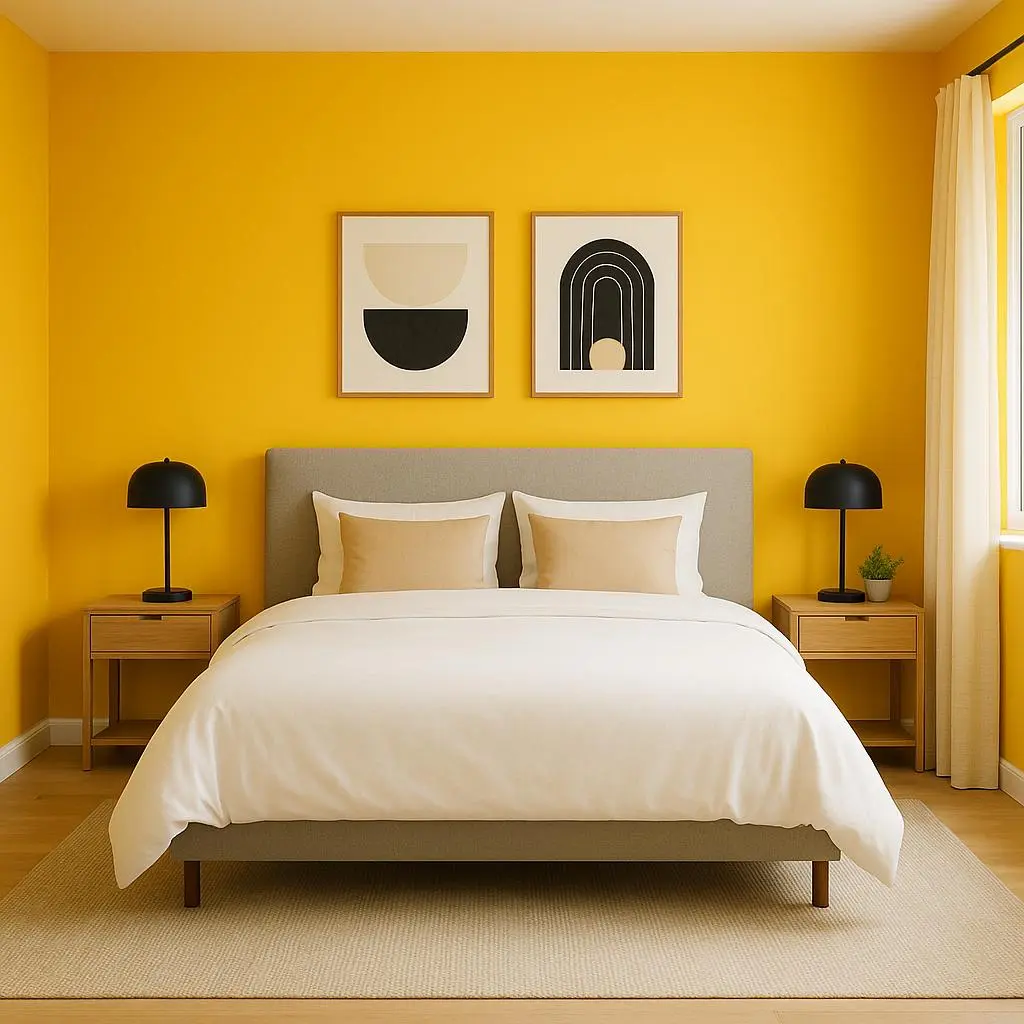
Almost every guide tells you to add white bedding and hope for the best. That is not the fix. You do not fix loud yellow by using less of it. You fix it by picking a duller version of the same color. A muted yellow with gray or brown mixed into it still reads warm, still feels sunny on a gray morning, and stops shouting at you by nine at night.
I learned that the expensive way. My first attempt was a cheerful canary that looked fine in the shop and aggressive on the wall. No amount of white bedding rescued it.
The order of decisions is what this article is really about. Light first. Depth of shade second. How much surface third? Color pairings fourth. The ideas come last, because a great idea in the wrong shade is still a wrong room.
Read the next section before you buy a single sample pot. That habit saves more repaints than any list of pretty rooms ever will.
Which Way Does Your Window Face? Answer That Before You Buy Paint
The best predictor of whether a yellow will work in your bedroom is not the paint name on the tin. It is the direction your window faces. I have seen the same butter yellow look soft and warm in one house and dingy in another, and the only difference was which side of the building the bedroom sat on.
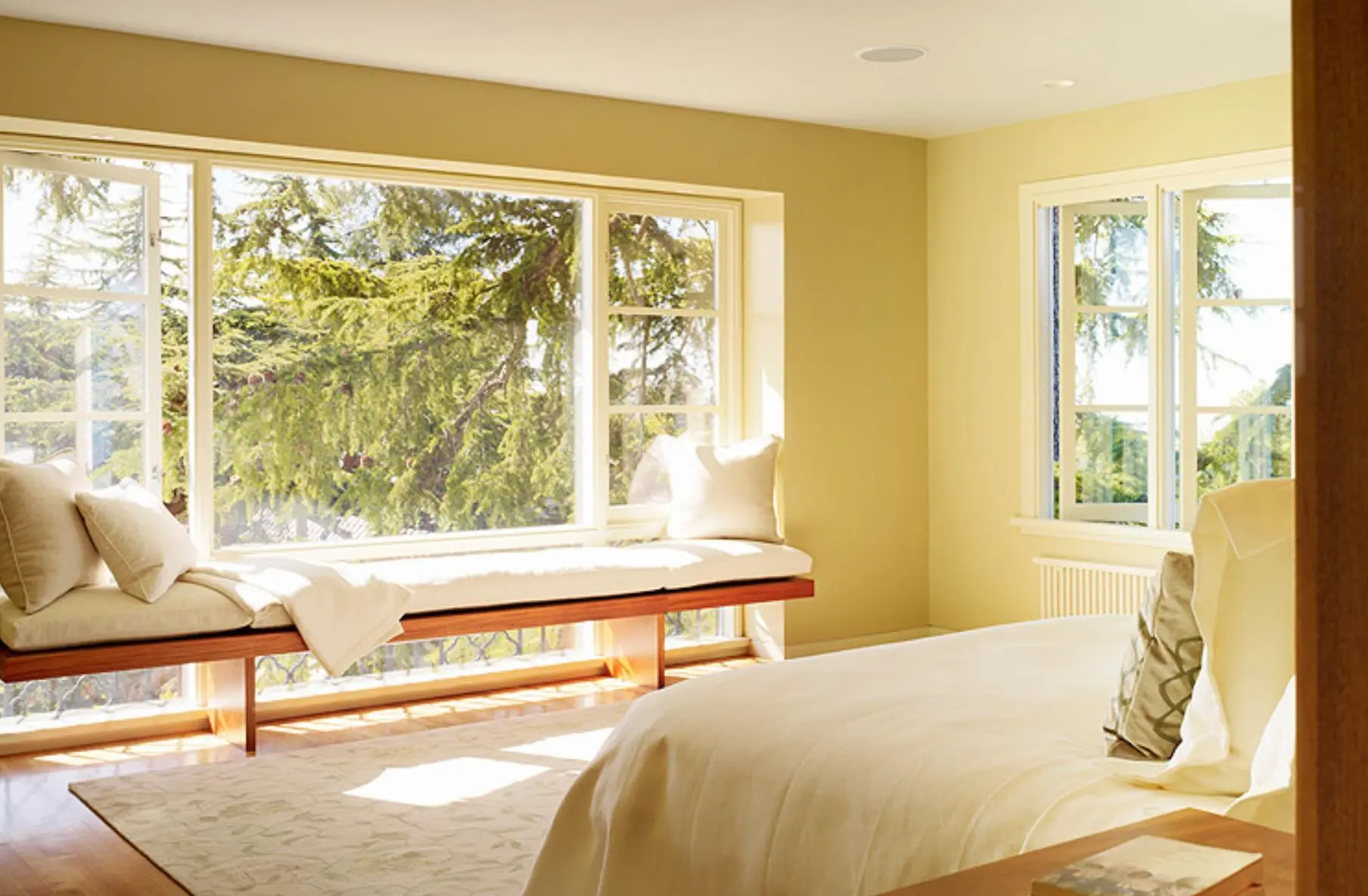
Light is not a backdrop behind your paint. It is part of the color. A wall gets whatever the sky sends it, and yellow is unusually sensitive to that because it sits high in brightness.
Rooms That Face North Need a Warmer Yellow Than You Think
North light is cool and indirect for most of the day. Pale lemons and light butters turn gray or faintly green on a north wall, which is why some people conclude yellow does not work in their house.
It does work. They just picked the wrong depth. Go warmer and slightly richer here. Think honey, soft gold, and buttery ochre. You need a yellow with enough body to warm the room up on its own, because the light will not do it for you.
Rooms That Face South Have the Opposite Problem
South light is strong, and it arrives at an angle that floods the wall. A yellow that felt calm on the chip can look almost fluorescent at midday, and that is where complaints about glare come from.
Pick something more muted here. Take one step lighter on saturation than you normally would and let the sun do the lifting. Deep mustard on a sun-blasted south wall is a lot of energy for a room where you are trying to sleep.
East light is warm in the morning and cooler by afternoon, so a middle depth handles both. West light turns gold late in the day, which flatters almost any yellow you put near it.
The Test Patch That Saves You a Repaint
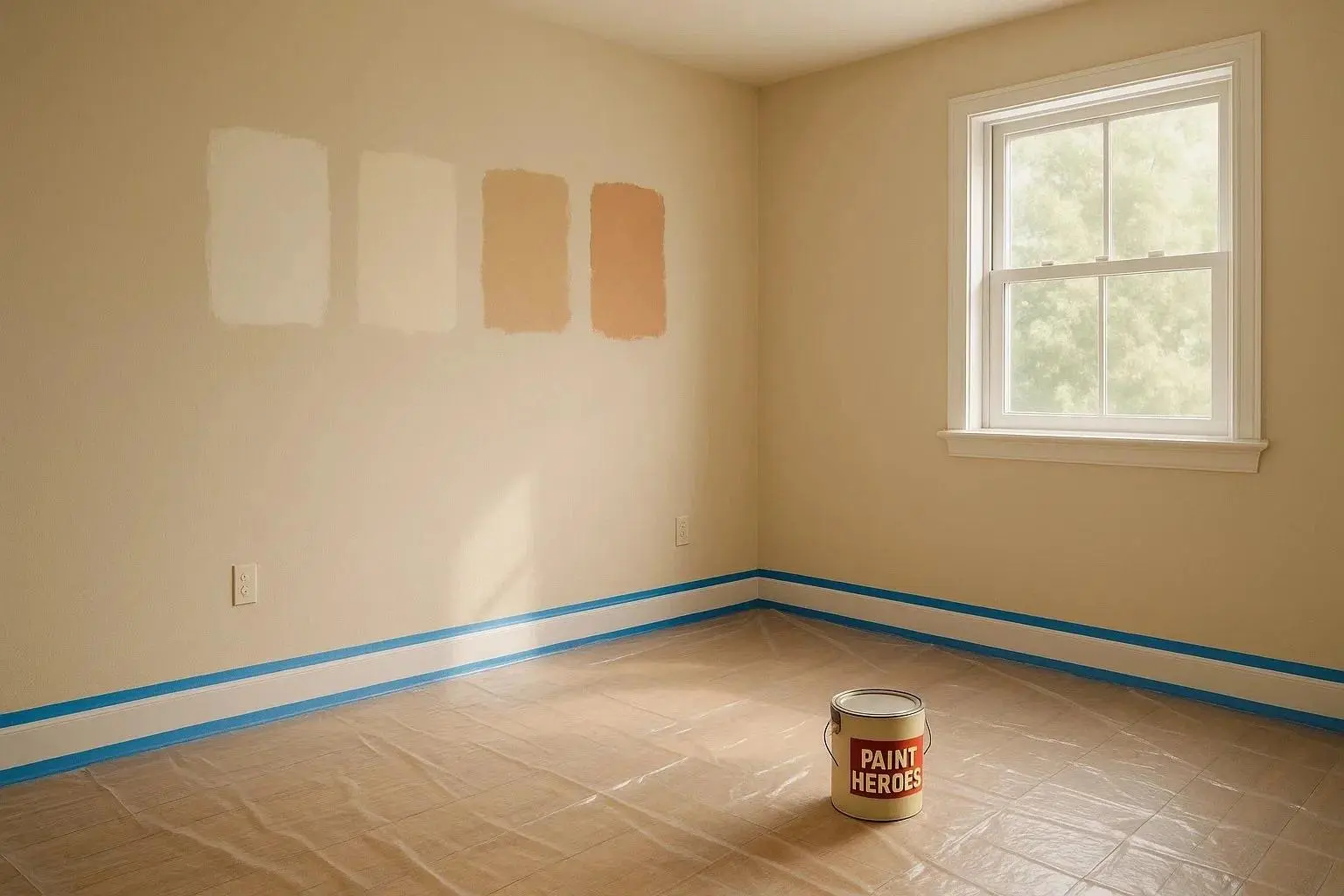
Small patches lie to you. A color that size looks stronger and brighter than it will across a whole wall, so people either panic and go paler than they wanted or commit to something that turns out to be too much.
Paint two or three candidates on the same wall, side by side. Designers I have followed suggest a patch around thirty centimeters square, and I go bigger than that because the bigger the sample, the more honest it is.
Then look at it three times. Morning, midday, and at night with your own lamps switched on. That last look is the one people skip, and it is the look that decides whether you love the room or fight it.
Butter, Ochre, and Mustard: What Each Yellow Depth Does to a Bedroom
Depth is the second decision, and it is separate from color. Two yellows can be the same family and behave completely differently because one gives light back and the other swallows it. Once you understand that, the rest of the choices get easier.
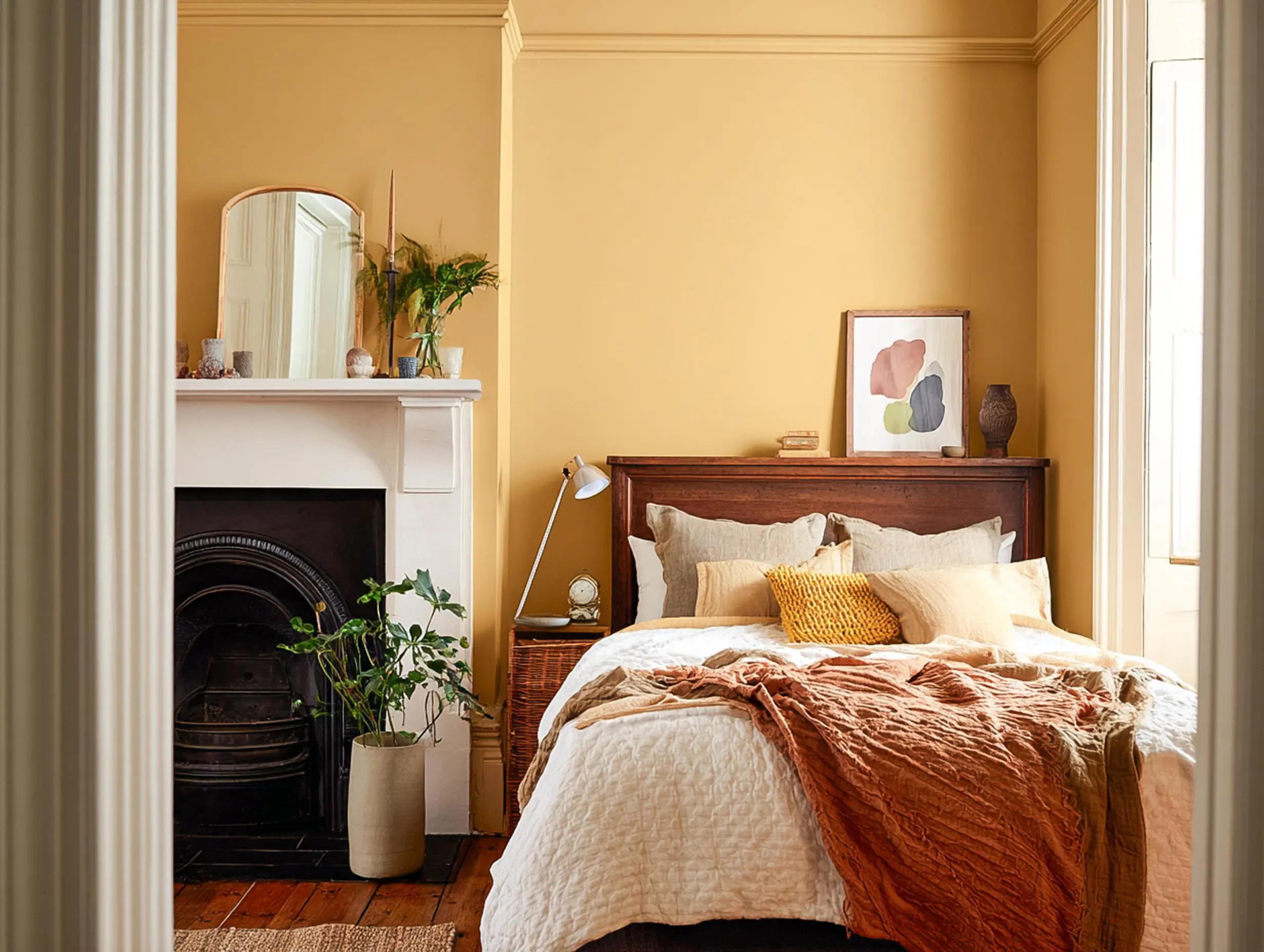
Pale Yellows Make Small Rooms Feel Bigger
Yes, really. Pale butter, cream, and vanilla reflect light around the room instead of holding onto it, so a small yellow bedroom can feel airier than the same room painted dark gray or olive.
If you are searching for light yellow bedroom ideas, this is the paragraph to read twice, because the palest shades are the ones that make a small room work. People assume bright color means a closed-in feeling. Visual weight comes from how much light a surface bounces back, not from how cheerful the color is. A pale yellow wall throws light around a small room, while a deep shade absorbs it and pulls the walls in.
That is also why pale yellows work as warm neutrals. They sit next to white, wood, and gray without competing, which is exactly what you want on four walls. If you are working with a tight footprint, this pairs well with the approach in my guide to designing around a small home.
| Depth | What it does | Put it on | Best for |
|---|---|---|---|
| Pale butter, cream, vanilla | Reflects light, reads as a warm neutral | All four walls | Small rooms, weak light, first attempts |
| Mid, honey or straw | Warm without shouting | Walls in a bright room, or large textiles | Most bedrooms |
| Deep mustard or ochre | Absorbs light, adds drama | One wall, a headboard, curtains, joinery | Big rooms with strong light |
Where Mustard Belongs and Where It Does Not
Mustard and deep ochre add drama, warmth, and depth, and they are genuinely lovely. They just cover less ground well.
Put mustard on one wall, on a headboard, on curtains, or on a chest of drawers. Keep it off all four walls in a room with weak light, because it will absorb what little brightness you have, and the room will feel heavy by late afternoon.
Deep yellow also changes character at night. Under a warm lamp it turns almost brown, which surprises people who bought it in summer daylight.
Farrow & Ball’s India Yellow is the shade most people picture when they say ochre, and it makes a useful reference point even if you buy a cheaper match. Style plays a part too. Mustard and ochre lean boho and mid-century, while pale butters sit more comfortably in traditional rooms. If you are not sure which direction your own room leans, my breakdown of interior design styles explained is a quick way to work it out.
Stop Looking for One Perfect Yellow
There is no single perfect yellow, and chasing it usually produces a flat room.
Designers layer two or three depths from the same family. Pale butter on the walls, a deeper ochre on a textile, and one brighter accent that picks up the light. That layering is what stops yellow looking either washed out or cartoonish, and it is the difference between a room that looks designed and a room that looks painted.
I keep one rule here. Keep the biggest surfaces pale, and let the smaller surfaces carry the color strength. Your eye reads depth without the room ever feeling loud.
How Much Yellow Is Too Much? A Number Nobody Gives You
Most advice stops at using it sparingly, which tells you nothing. The working guideline designers tend to use is that deep or saturated yellow should take up roughly ten to twenty percent of the visible surface in a small bedroom. Visible surface means everything you can see, including bedding, curtains, and large artwork, not just the walls.
That single number explains most yellow bedroom complaints. A room with pale walls, a mustard throw, and two ochre cushions sits comfortably inside the limit. A room with one bold yellow wall, a yellow duvet, and matching curtains blows straight past it, even though only one wall was painted.
Count the visible area before you buy. I check the bed first, because it is the largest single block in most bedrooms, and it is easy to forget when you are focused on paint.
Accent Wall or Full Drench? Pick by Commitment Not Courage
An accent wall is the lower commitment version. It frames the bed, keeps the other three walls neutral, and is easy to reverse. The failure mode is that a single yellow panel can look like a block stuck to the wall if nothing else in the room repeats it, so at least one other element needs to echo the color.
Drenching means painting walls, trim, and ceiling in the same shade. It is the more confident move, and it makes yellow read closer to a neutral, but it only works with a soft shade and something pale to break it up, usually white bedding or white joinery.
If you want options, I have a full set of accent wall ideas that translate from living rooms to bedrooms without much adjusting.
15 Yellow Bedroom Ideas You Can Copy This Weekend
Here is the part everyone clicks for. Read the previous three sections first though, because these ideas work best when you already know which shade suits your light and how much surface to give it. Every idea below is yellow bedroom decorating at a practical level, with an effort tag so you know what you are taking on.
1. One Yellow Wall Behind the Bed
The classic starter move, and it still works in a traditional bedroom as well as a contemporary one. Paint the wall the headboard sits against and leave the other three neutral. The bed frames the color, so the yellow reads as deliberate rather than accidental. If you hate it, one weekend of repainting puts you back where you started.
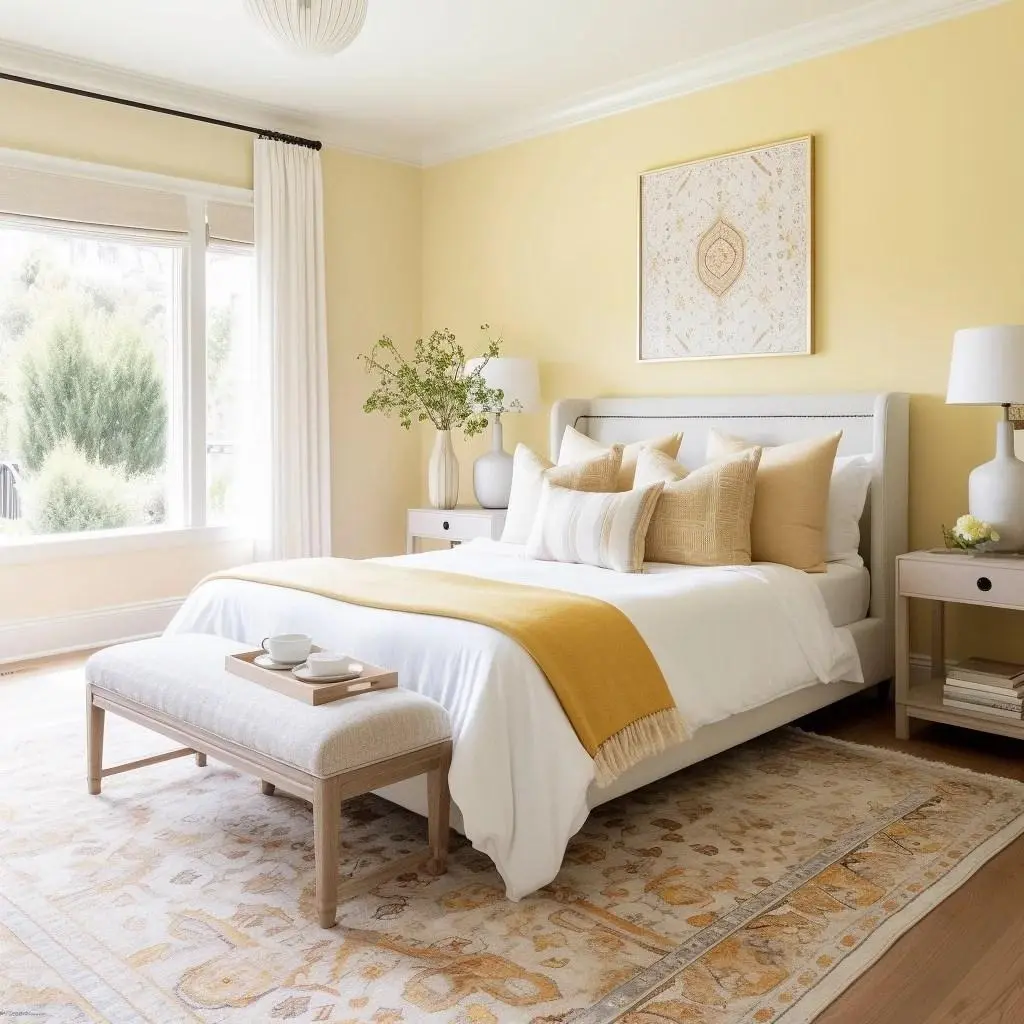
2. Yellow Bedding on White Walls, With One Catch
This is the advice every guide gives, so let me be the one to add the caveat. A bright duvet covers more visible area than a pale painted wall, so it is not automatically the low impact option people think it is. It works beautifully when the duvet is a muted butter or soft ochre. It fights the room when it is a strong yellow.
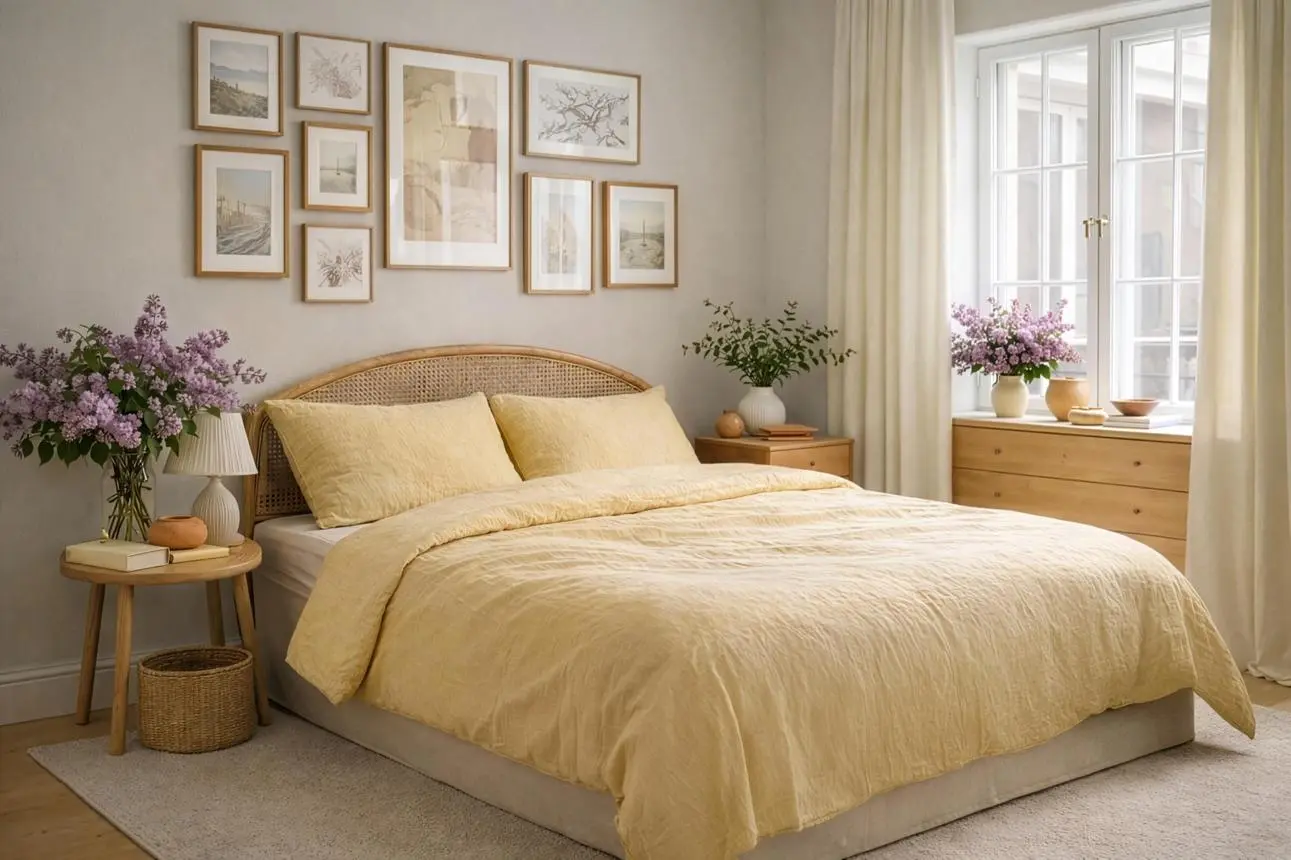
3. Mustard Cushions on a Duvet You Already Own
The cheapest entry point there is, and often the one I recommend first. Two mustard or ochre cushions on white bedding add warmth and cost very little. If you hate it, the mistake lives in the cupboard instead of on the wall.
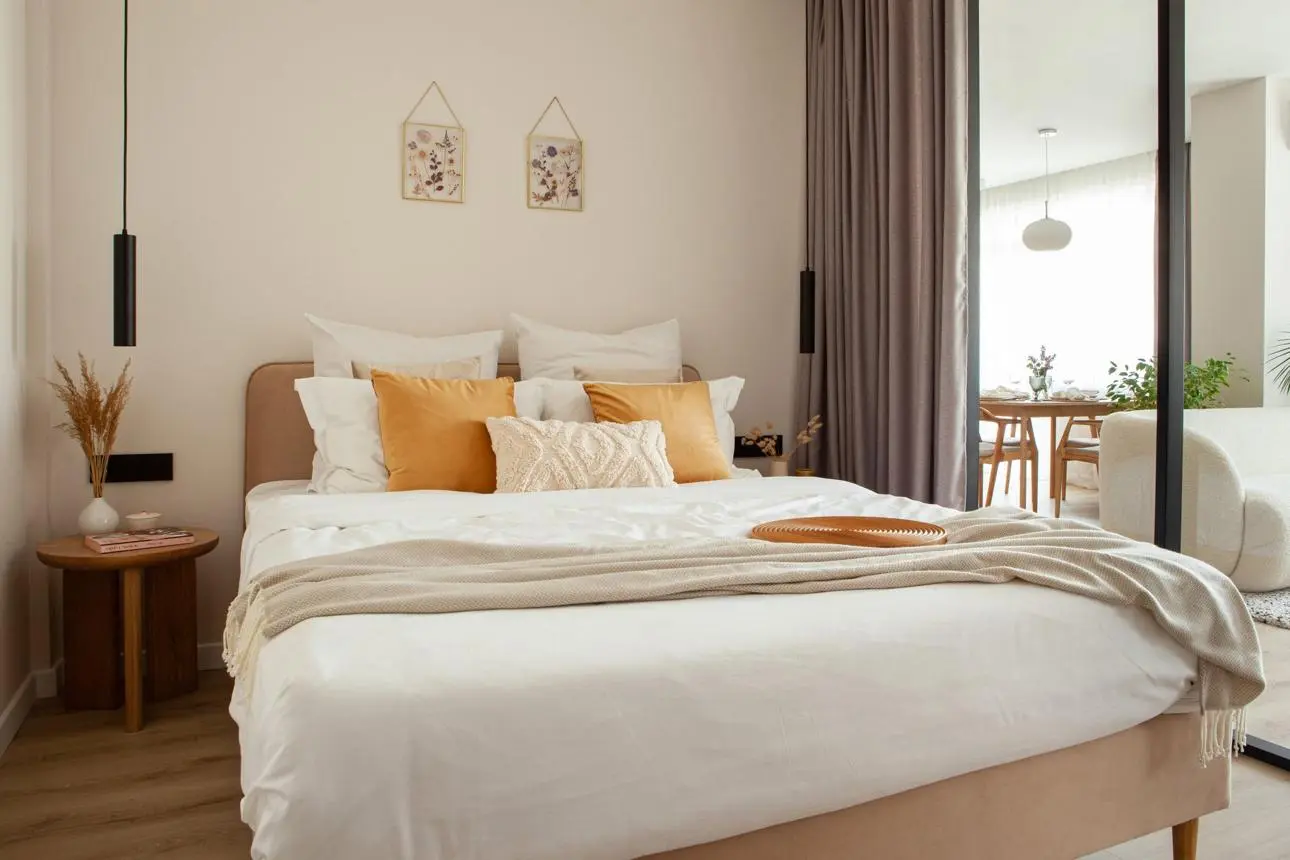
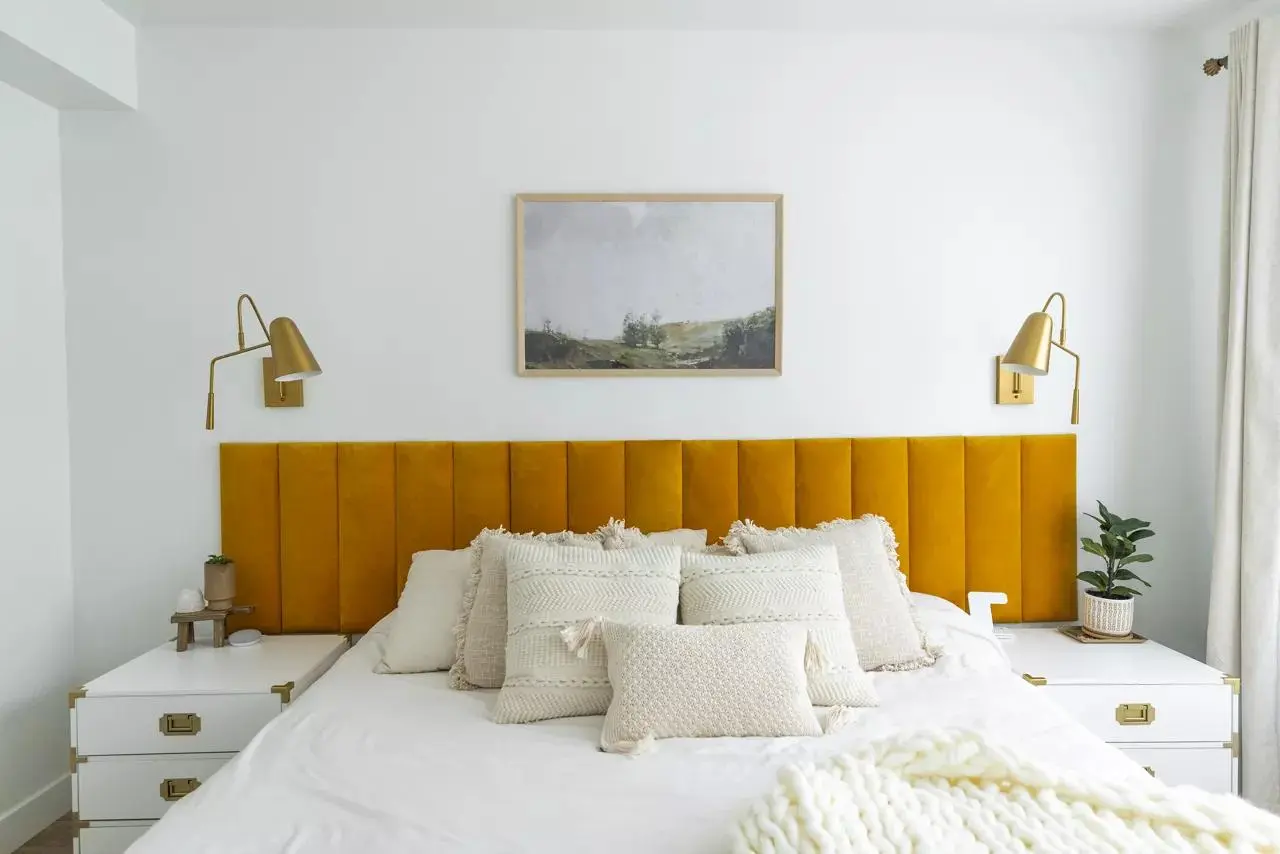
4. A Deep Ochre Headboard Instead of Paint
Upholstered headboards in mustard velvet or ochre linen give you the color without a brush. They sit against a pale wall and do the same job an accent wall does, only softer. Best for renters and for period rooms where you would rather not touch the plaster.
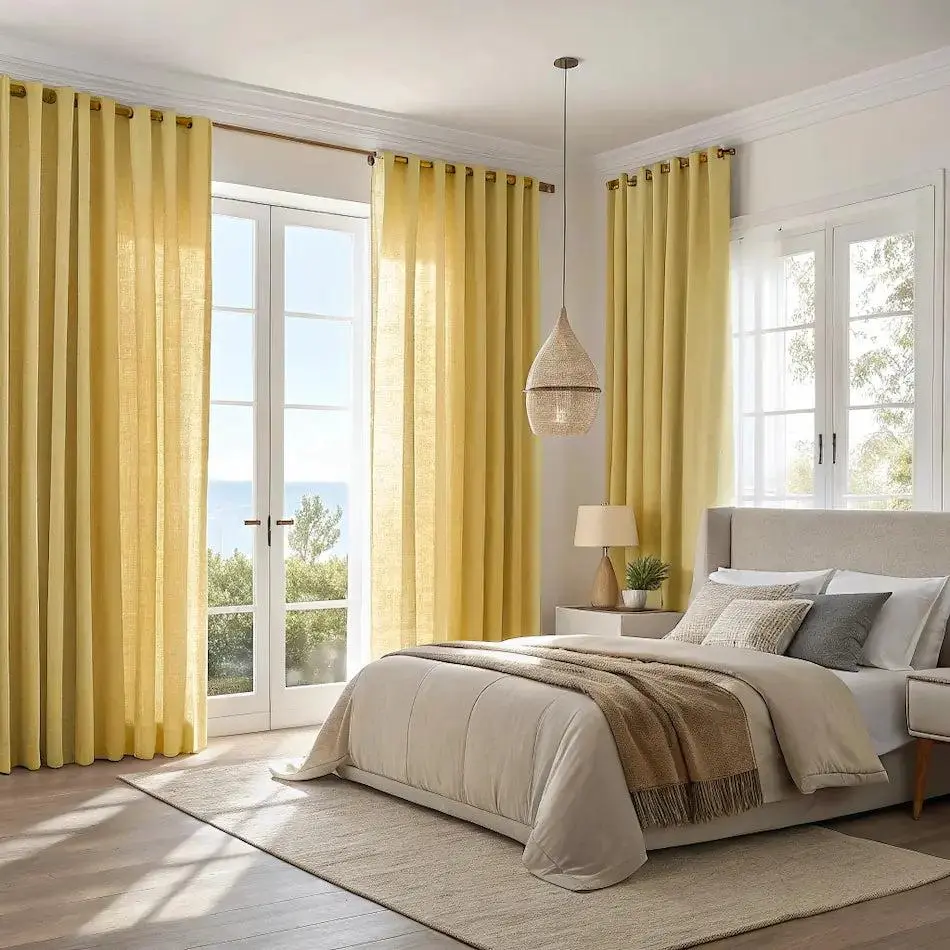
5. Butter Yellow Linen Curtains
Curtains hold color at eye level where you actually look, and linen changes tone through the day as light moves through it. Butter yellow linen on a pale wall is one of the calmest ways to bring yellow into a room without committing to paint. Hang them wide enough to clear the window edges, or the color reads as a stripe rather than a wall.
6. Drenching the Walls, Trim and Ceiling in One Shade
Paint everything the same soft yellow and the color stops behaving like a statement. Keep the bedding white and the wood visible so the room can breathe. This is the technique designers use when they want yellow to feel like a neutral. Get the shade wrong here and you have painted four walls, a ceiling and a door frame in a color you now dislike.
7. Yellow With Warm Gray
If you only try one pairing, try this one. Warm gray with a brown or beige undertone settles yellow down without killing its warmth. Cool gray does the opposite. If a yellow room feels cold and slightly wrong and you cannot say why, take the gray cushion out and look again.
8. Mustard and Midnight Blue
Blue and yellow sit opposite each other on the color wheel, so the combination has natural tension and energy. Keep one color clearly dominant and let the other accent, or the room starts to feel like a sports team. Mustard bedding with navy walls, or navy cushions on a pale yellow room, both work.
9. Peach and Coral Accents for a Sunset Glow
Yellow, peach and coral are neighbors rather than opposites, so the result is soft instead of punchy. It suits bedrooms with warm evening light and rooms facing west. A coral throw and a peach cushion do more than a whole wall would, and they cost less than a tin of paint.
10. Botanical Wallpaper on One Wall Instead of Paint
Pattern does something paint cannot, and a soft botanical yellow paper reads warmer than flat color because the print breaks up the surface. Keep the other walls plain and the bedding simple so the pattern stays the focal point. Best for period rooms and rooms with generous height, because short walls and busy paper fight each other.
11. Light the Room for Yellow, Not Against It
This is the most skipped idea on the list and it costs almost nothing. Warm yellow walls under warm yellow bulbs turn orange at night, and cool white bulbs make the same walls look clinical. Look for bulbs around 2700K to 3000K and layer two sources, one overhead and one at the bedside.
12. Rattan, Wicker and Wood to Soften the Brightness
Texture absorbs some of the glare that flat paint throws back. A rattan headboard, a wood stool, a linen shade, a few plants, all of it gives the eye somewhere soft to land. I go into material choices in more depth in my guide to choosing materials that age well, and the logic holds in bedrooms too.
13. Paint the Baseboards, Not the Walls
A small surface doing a lot of work. Yellow baseboards against pale walls give you the color in a way guests notice immediately, and it takes one afternoon. It also survives badly lit rooms better than a full wall does, because the color sits low where the light is brightest.
14. A Gallery Wall With Yellow in the Frames
If you already have art, reframe a couple of pieces in mustard or soft gold. The color repeats around the room without a single drop of paint, and it lets you test the shade before you commit to it on a wall. Older frames take color beautifully, and my notes on mixing antiques into a modern room apply here just as well.
15. The Zero Cost Version: Shop Your Own Room First
Before you buy anything, carry what you already own into the bedroom. I have rescued more yellow rooms with a cream throw and a green cushion than with any purchase. If your bedding is white and your cushions are green, you are already close to a working yellow palette. The corner of a green cushion is a much cheaper test than a tin of paint.
What Color Goes Best With Yellow in a Bedroom?
Start with a gray that has brown in it rather than blue. That single detail settles the yellow and reads calm, while a cool blue gray fights it and makes both colors look wrong. Navy gives the most contrast, sage is the pairing gaining the most ground right now, and cream is the easiest neutral to add.
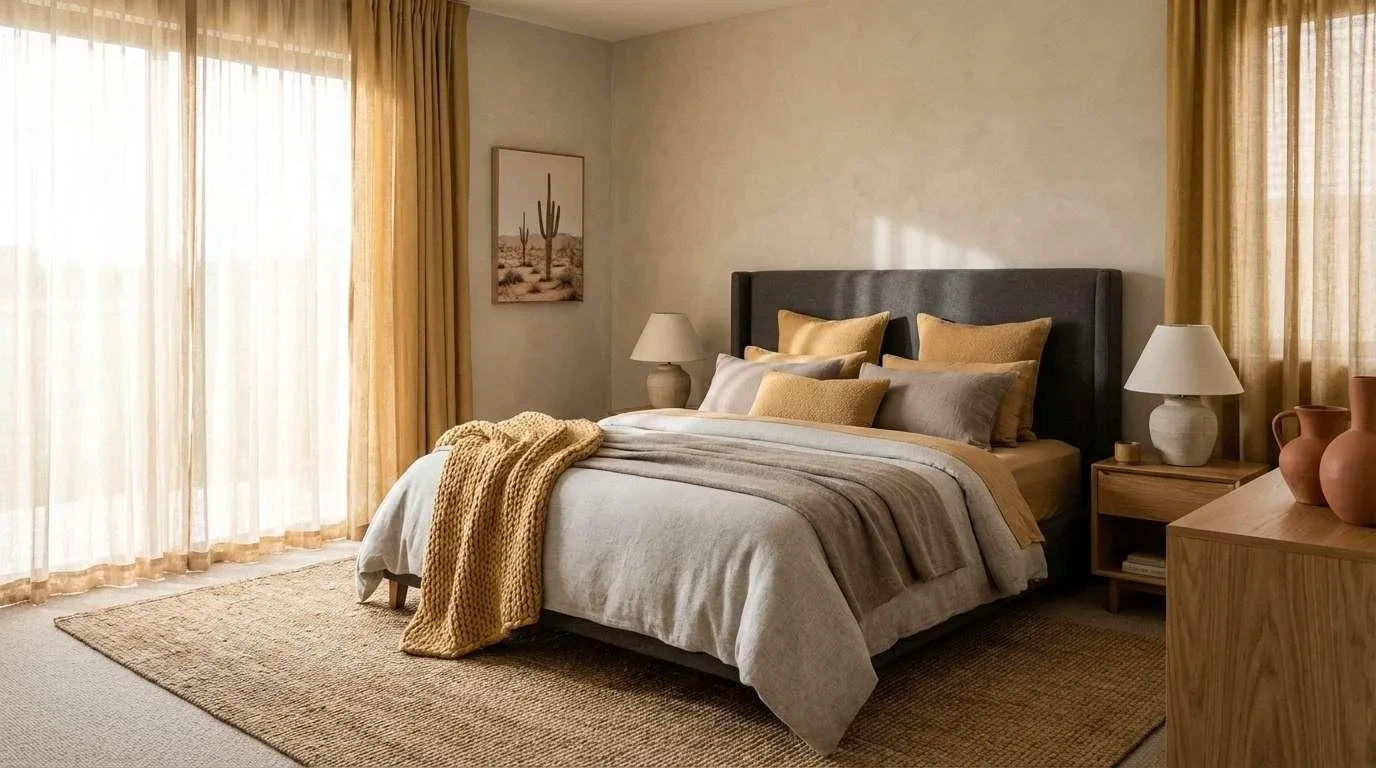
Whatever you pick, use a ratio rather than an equal split. One color dominant, one supporting, one accent. Equal amounts of two strong colors is what makes a room feel unresolved.
| Pairing | Ratio | Effect | Watch out for |
|---|---|---|---|
| Warm gray | Yellow dominant, gray supporting | Calm | Cool blue gray kills it |
| Navy | One dominant, one accent | High contrast | Equal amounts look like a team kit |
| Cream and white | Yellow dominant, white on trim and bedding | Airy | Pure white can look stark in low light |
| Sage and olive | Yellow dominant, green in textiles | Soft, botanical | Too much green turns the room cold |
| Peach and coral | Yellow dominant, peach as accent | Golden, sunset | Peach walls plus yellow walls turns to mush |
Warm Gray, Not Cool Gray
Gray with brown or beige in it calms the yellow without flattening it. Gray with a blue cast does the opposite, and that mismatch is the most common pairing regret I see.
Hold the fabric next to the wall before you buy. If you are building out a palette from scratch, the same thinking sits behind my guide to building a neutral color palette, and it saves a lot of returns.
Blue and Yellow Bedroom Ideas That Do Not Clash
Blue and yellow bedroom ideas are the most searched pairing in this whole article, and also the one people get wrong most often. Blue and yellow sit opposite each other on the color wheel, so the combination carries natural tension. Keep one color clearly dominant and let the other do the accenting, or the room starts to feel like a sports team.
Navy works best as the anchor with mustard as the accent, or as small touches in a pale yellow room. Dusty blue is the gentler version if navy feels heavy for a bedroom.
White and Cream
White is not really a pairing, it is the thing that lets the other color breathe. Use it on bedding, trim and lampshades. Cream is warmer and more forgiving than pure white, and it stops a yellow room looking stark without adding another color to manage.
Sage and Olive
Green and yellow sit beside each other on the color wheel, so they blend rather than contrast. A muted yellow with sage bedding feels calm and slightly botanical. This is the pairing gaining the most ground in current bedroom design, and it suits rooms with a lot of wood and plants.
Peach and Coral
These are yellow’s warm neighbors. The result is soft and golden rather than crisp, which suits rooms with warm light and anyone who finds blue too sharp. Keep the peach in textiles and soft furnishings, because peach walls with yellow walls can turn into mush.
Yellow Bedroom Bedding Ideas That Hold the Room Together
Bedding is where most of the buying decisions actually happen, and it is the layer that decides whether the walls read as warm or washed out. Get the order right and the room looks intentional. Get it wrong and you cannot tell what is off.
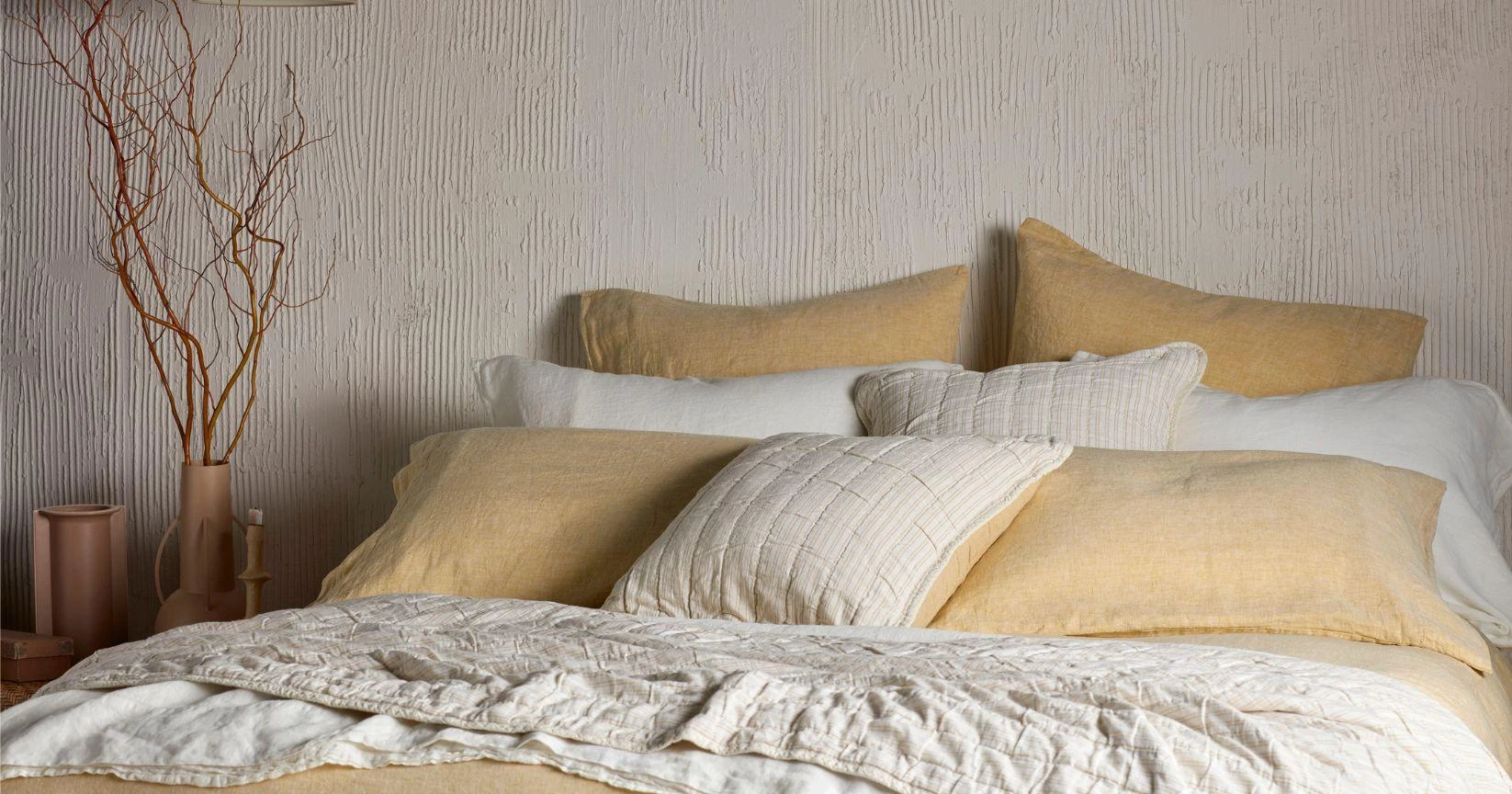
The Layering Order That Looks Intentional
Start with a plain base sheet, usually white or cream. Add your duvet or quilt. Then a textured throw across the foot of the bed. Then build the pillows in three sizes, two large at the back, two medium in front, one accent cushion.
The yellow belongs in one layer, not in four. If the duvet is yellow, keep the sheets and the throw neutral. If the walls are pale yellow, put the color in the throw and one cushion instead.
The Bedding Trap Nobody Warns You About
Everyone calls bedding the safe way to try yellow. It is reversible, so it feels low risk. But the bed is the largest visual block in the room, so a bold duvet makes a louder statement than a pale painted wall ever would.
Save the strong yellows for small surfaces. Keep bedding to muted butter, soft ochre, or a yellow that reads closer to cream in low light.
Three Budget Paths
Refresh is the cheap route. Keep your bedding and add two cushions and a throw in mustard or ochre. That is usually under a small budget and takes ten minutes.
Replace is the middle route. A muted yellow duvet set with neutral sheets and one textured throw. This is the version that photographs best.
Redo is the full pass. Curtains, bedding, a lamp and a rug, all chosen after you have lived with the paint for a week.
Buy in order: paint first, then bedding, then curtains. Every time I see someone buy the textiles first, they end up repainting walls to match a duvet they only half liked. If you are also setting up a second bedroom, the same sequence works well for guest room decorating ideas.
The Ceiling Move That Divides Designers
Painting a bedroom ceiling pale yellow is the one idea on this page that experienced decorators genuinely argue about. Here is the case for it, the conditions it needs, and why I think it earns its place.
The logic holds up. A pale yellow ceiling reflects warm light back down into the room, which matters most in rooms with low ceilings and rooms that get little natural light. White walls stay quiet while the ceiling does the warming, so the room never feels yellow, only warm.
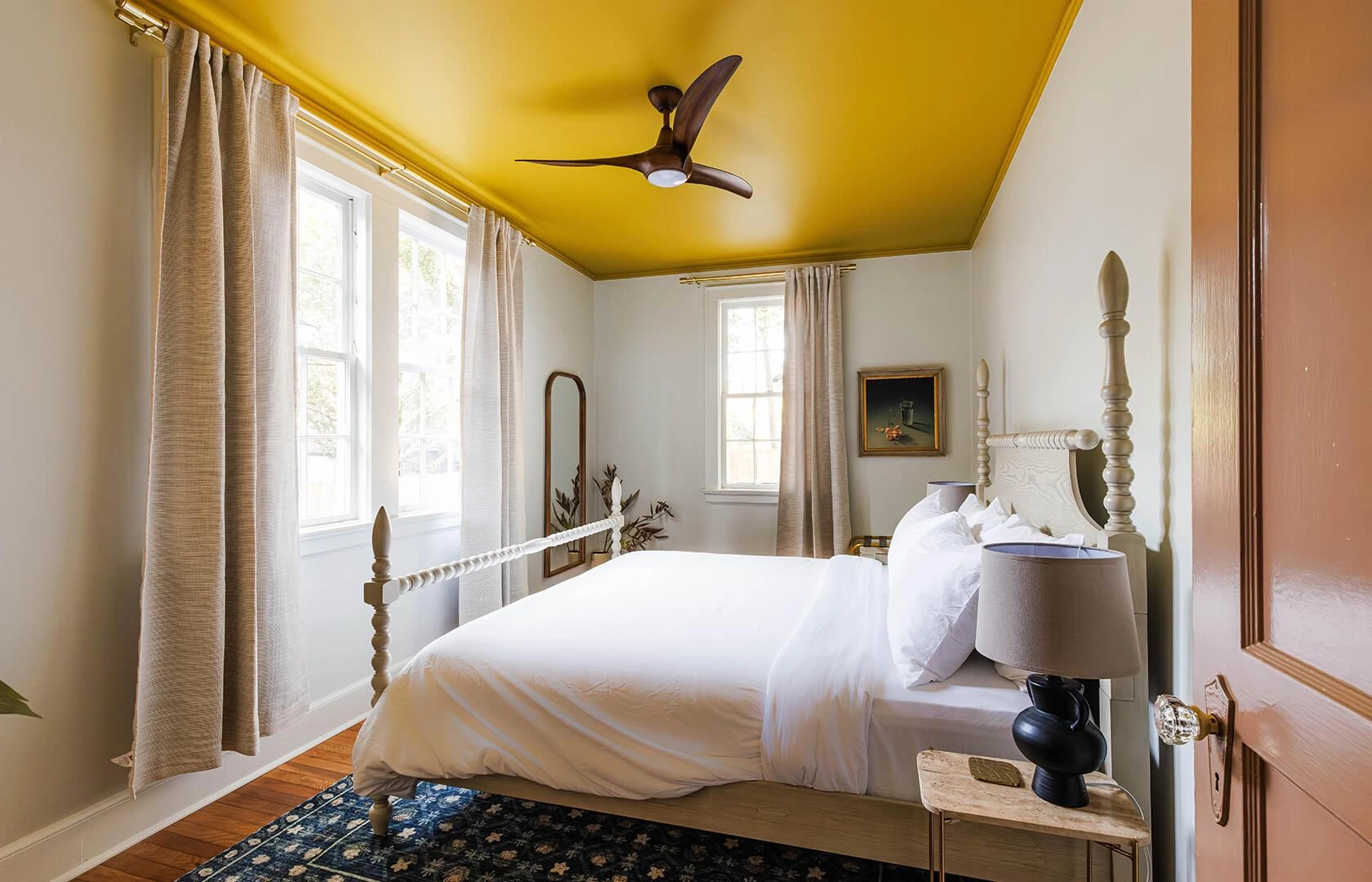
The conditions are narrow. It has to be a pale shade, closer to cream than to butter. It has to be a matte finish, because sheen on a ceiling shows every imperfection and looks like a stain from below. And the room needs dimmable light, since a yellow ceiling under one bright bulb at night can feel heavy rather than warm.
Where I disagree with the cautious side is the low ceiling argument. The rooms that benefit most are exactly the ones people assume they should leave alone, the small spare bedroom, the box room, the north facing space that never feels bright.
If you have already painted your walls a strong yellow, skip this. One yellow surface per room is plenty unless you are drenching the whole space in the same soft shade.
7 Mistakes That Make Yellow Feel Harsh and the Quick Fix for Each
Almost every complaint about a yellow bedroom traces back to one of these seven. They are listed in the order most people hit them, from choosing to living with it.
| Symptom | Likely cause | Fix |
|---|---|---|
| Room feels agitated | All four walls in a saturated yellow | Repaint two or three walls in a paler shade |
| Feels cold and slightly wrong | Cool gray textiles against warm yellow | Swap for a gray with brown in it, or navy |
| Turns orange at night | Bulbs over 3000K | Change to 2700K to 3000K |
| Looks flat | One shade across everything | Add a second depth in a throw or cushion |
| The bed dominates the room | A bold duvet | Move the color into cushions |
Full saturation on four walls. The room feels agitated and you cannot settle in it. The fix is not a new color, it is a duller version of the same one.
Cool gray paired with warm yellow. Both colors look wrong and you cannot work out why. Swap the cool cushion for one with brown or beige in it and the room resolves immediately.
The wrong bulbs. Warm walls under warm bulbs turn orange at night, and this is the single most common reason a finished yellow room feels off. Switch to bulbs around 2700K to 3000K.
A bold duvet outweighing a pale wall. The bed dominates because it covers more area than the wall does. Swap the duvet for a muted shade and put the strong yellow into cushions.
One flat shade everywhere. The room looks flat or faintly cartoonish. Add a second depth in a textile, not on the wall.
Ignoring which way the window faces. A yellow chosen for a sunny room goes gray in one that faces north. Test the patch in the actual room before you commit.
Nothing to break it up. Yellow with no white, wood or texture has nothing to push against. Add a pale surface and the color stops shouting.
Yellow Bedroom Ideas: Quick Answers
Is yellow a good color for a bedroom?
Yes, if the shade is muted. Soft butters and pale ochres feel warm and calm. Bright saturated yellows push the eye toward alertness, which is the opposite of what a bedroom needs.
What color goes best with yellow in a bedroom?
Start with a gray that has brown in it rather than blue. That one detail decides whether the pairing feels calm or cold. Navy and sage are the two to try after that, and cream is the easiest neutral to add.
Is it okay to have a yellow bedroom?
It is. Most yellow bedroom regret comes from the shade rather than the color itself. Choose a desaturated yellow with gray or brown in it and keep it to roughly ten to twenty percent of the visible surface.
Is yellow a good color for a room in general?
It depends on the room. Yellow is easy and welcoming in kitchens, hallways and dining rooms. A bedroom asks more of it because the room needs to help you wind down rather than wake up.
Will yellow walls make a small bedroom look smaller?
No, and the opposite is often true. Pale yellow reflects light and can make a small bedroom feel larger than a dark neutral would. Deep yellows absorb light and those are the shades that pull walls in.
Does yellow work if my bedding is already green?
Yes, and it is a pairing I like. Green and yellow sit beside each other on the color wheel so they blend instead of fighting. Keep the yellow on the muted side and let the green lead, especially if your bedding is a strong green.
What is the calmest shade of yellow for a bedroom?
A desaturated yellow with gray or brown undertones. The test is that it looks slightly dull, even a bit dirty, on the paint chip. If the chip looks bright and clean, it will look louder once it covers a wall.
Your Weekend Plan: What to Do First, Second and Third
Do this in order and you will avoid most of the mistakes above.
First, stand in your bedroom and work out which way the window faces. That tells you whether you need a warmer yellow or a more muted one.
Second, live with the color on the wall for three days before you buy anything else. Paint chosen in one evening is the paint people end up hating.
Third, buy nothing else until you have picked the shade. Not the duvet, not the cushions, not the curtains. Bedding chosen before the paint is the most common reason a finished yellow bedroom feels wrong.
If you want a cheap way to practise the whole process first, try it in a smaller space using some of these DIY decor ideas for small apartments. The same decisions apply on a smaller scale and the mistakes cost less.
Yellow bedroom ideas are not really about picking a pretty color. They are about choosing the shade your room can actually support. Get that right and almost any idea on this page will work.